
What Tools Do I Need for Basic Home Repairs as a Beginner?
Walk into a hardware store as a new homeowner and the tool aisle is overwhelming — walls of specialized gadgets, each implying your house will fall down without it. Relax. When people ask what tools do I need for basic home repairs as a beginner, the real answer is refreshingly short: about fifteen tools handle 90% of what a home throws at you. Everything else you buy as needed, per project.
The Core Kit: Buy These First
These are the non-negotiables — the tools you’ll reach for constantly:
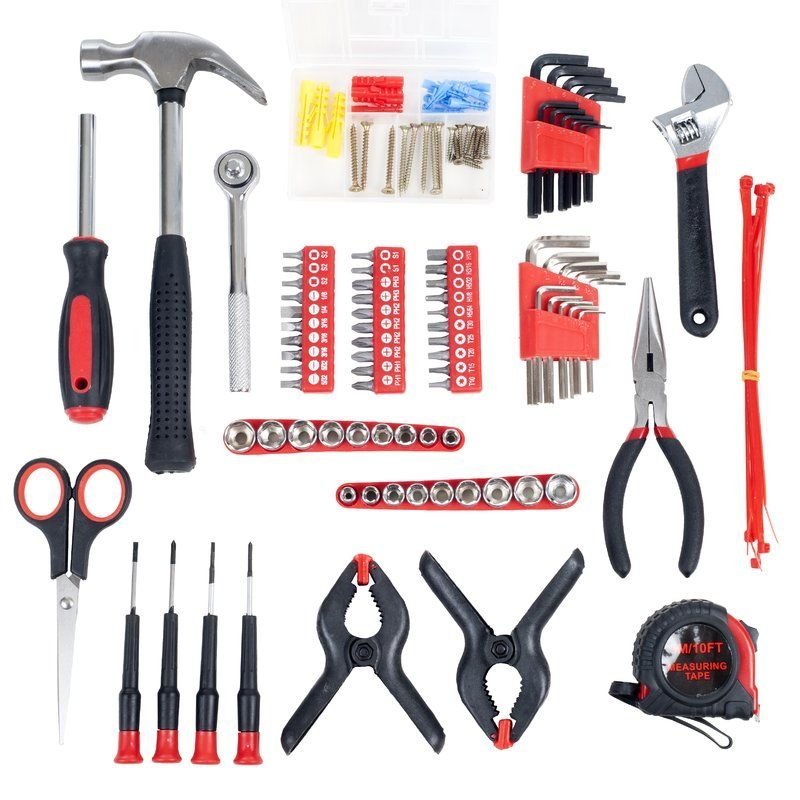
- 16 oz claw hammer. The classic. Fiberglass handle absorbs shock; curved claw pulls nails. Don’t overthink it.
- Tape measure (25 ft). Get one with a standout of at least 7 feet and a lock. You’ll use it for everything.
- Utility knife + extra blades. Opening boxes, trimming, scoring — endlessly useful. Retractable for safety.
- Screwdriver set. At minimum: #2 Phillips and a medium flathead. Better: a multi-bit ratcheting screwdriver that covers everything in one tool.
- Adjustable wrench (10″). Handles most nuts and bolts. One good one beats a cheap set.
- Slip-joint pliers + needle-nose pliers. Gripping, bending, pulling, holding. The two together cover most plier needs.
- Level (24″ or torpedo). For hanging anything straight. Your phone has a level app in a pinch, but a real level is better.
- Stud finder. Electronic, with electrical wire detection. Essential before drilling into any wall.
What Tools Do I Need For Basic Home Repairs As A Beginner?
- Cordless drill/driver (12V or 18V). The single most transformative tool a beginner can own. Drilling holes, driving screws — it turns hour-long jobs into minutes. Buy into a battery platform (DeWalt, Milwaukee, Ryobi, Makita) because you’ll add tools to it later. Get a basic bit set with it.
- (Later) Circular saw or jigsaw. Not day-one purchases. Buy when a project demands it.
That’s it for power tools at the start. The drill handles the vast majority of beginner needs. Everything else is project-specific.
The Supporting Cast
- Allen key / hex key set. Furniture assembly demands these constantly. A folding set lives in my junk drawer permanently.
- Putty knife (1.5″ flexible). Spackling, scraping, prying — $5 of pure utility.
- Handsaw or hacksaw. For the occasional cut before you own power saws.
- Flashlight or headlamp. Under sinks, in attics, behind appliances — half of home repair is just seeing the problem. A headlamp keeps both hands free.
- Safety gear: safety glasses, work gloves, dust masks, ear protection. Unsexy, non-negotiable. Eye injuries from “quick jobs” are depressingly common.
- Step stool or small ladder. A sturdy 3–4 ft step ladder handles most indoor needs.
- Bucket, rags, and painter’s tape. The unglamorous supplies that every project needs.
What NOT to Buy Yet
The beginner trap is buying specialized tools “just in case.” Don’t buy: a table saw, a router, a miter saw, a full socket set, plumbing snakes, or tile saws — until a specific project requires them. Buy tools per project, not per fantasy. The project justifies the tool; the tool doesn’t justify itself sitting in your garage.
Similarly, avoid the giant 200-piece tool kits. They’re full of low-quality filler you’ll never use. Buy fewer, better tools individually. A $40 hammer you’ll use for decades beats a $40 kit you’ll replace piece by piece.
Where to Buy and How Much to Spend
Total starter budget: $200–$350 for a solid core kit. The drill is the big purchase ($80–$150 for a good kit with battery and charger); hand tools are $10–$30 each. Buy the drill new (battery warranty matters); hand tools can come from anywhere reputable.
For one-off project tools, rent instead of buying — floor sanders, wallpaper steamers, drain augers, and tile saws all rent for $30–$70/day. And borrow from neighbors for the truly occasional stuff. The tool library movement is growing in many cities — free tool borrowing, which is perfect for beginners.
Storage and Maintenance
A $30 tool bag or small toolbox keeps everything findable — which is half the battle. (The number one beginner tool problem isn’t lacking tools; it’s not finding them.) Wipe tools down after use, keep drill batteries charged but not perpetually on the charger, and replace utility blades often — dull blades cause more injuries than sharp ones.
The Next 10 Tools (Buy As Projects Demand)
Once the core kit is handling daily life, add these as specific projects call for them: stud finder with deep scan (upgrade from basic), oscillating multi-tool — the most versatile next power tool (cuts, sands, scrapes, removes grout), circular saw (for any serious woodworking), caulk gun (dripless type, $15–$20), pipe wrench (plumbing projects), wire strippers + voltage tester (electrical work), pry bar set (demo and trim work), 4-foot level (tile, shelving, bigger projects), shop vacuum (every project makes a mess), and headlamp (if you skipped it initially — under sinks and attics demand both hands). Buy each when its project arrives, not before. In two years of homeownership, you’ll own them all — each one earned by the job that needed it.
Borrow, Rent, or Buy? The Decision Rule
Use the three-use rule: if you’ll use a tool three or more times, buy it. Twice or less, borrow or rent. Tile saws, floor sanders, drain augers, wallpaper steamers, and pressure washers all rent for $30–$70/day — far cheaper than buying a $300 tool you’ll use once. Borrowing from neighbors builds community (and they’ll borrow from you). Tool libraries — free in many cities — are the best deal in DIY. The only exception: safety gear. Own your own glasses, gloves, masks, and ear protection — never borrow those.
The Takeaway
What tools do you need for basic home repairs as a beginner? A hammer, tape measure, utility knife, screwdrivers, adjustable wrench, two pliers, level, stud finder, and one good cordless drill — plus safety gear and basic supplies. $200–$350 total. Buy project-specific tools only when projects demand them.
Start with this kit and you’ll be amazed how many “call someone” moments become “I can handle this” moments. Ready to use them? Our leaky faucet fix is the perfect first project, and hanging shelves without studs is a great second.
[…] in home improvement. Mounting more things? Our drywall patching guide fixes the mistakes, and beginner home repair tools covers the […]