
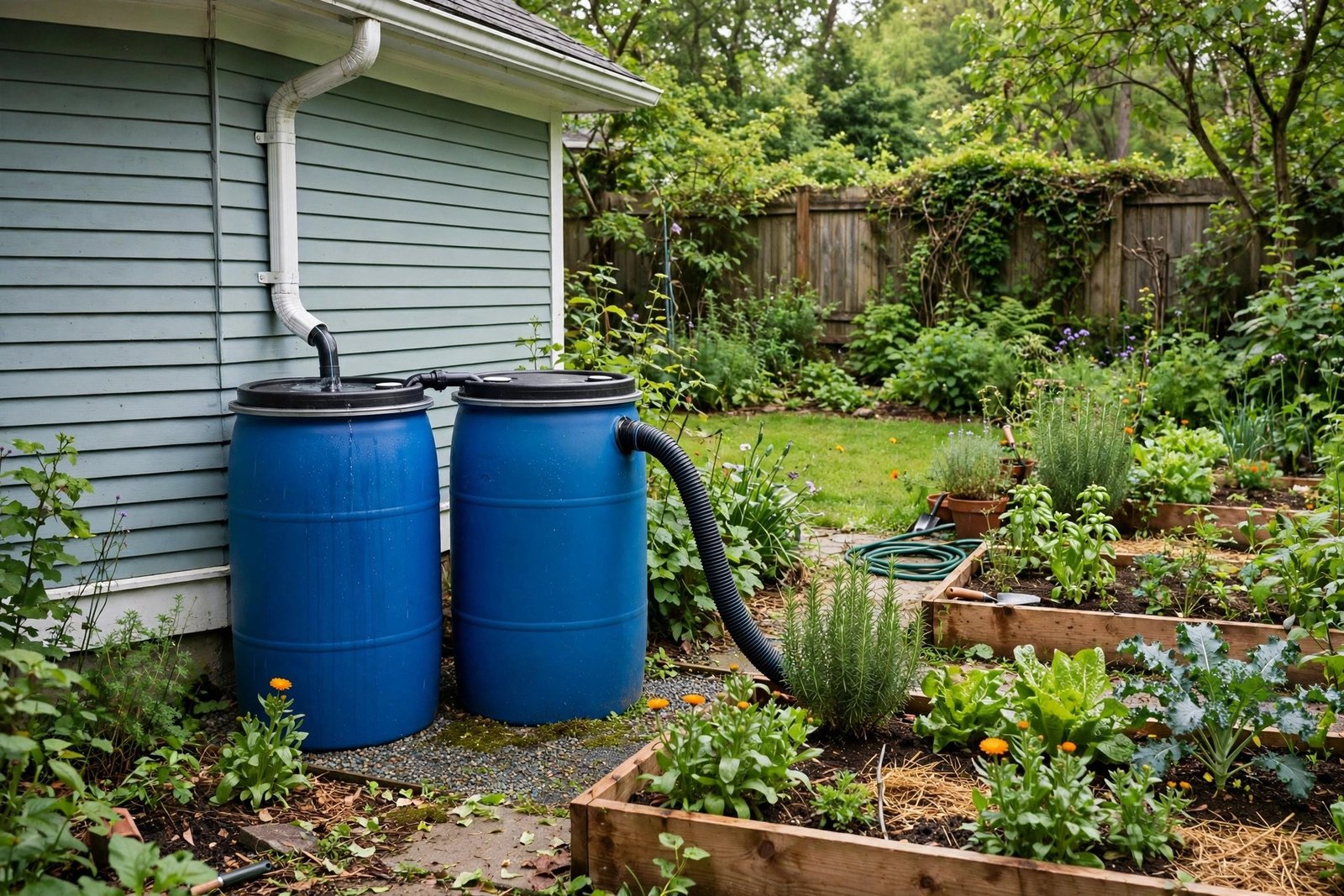
A 1,000-square-foot roof sheds roughly 600 gallons of water per inch of rain — thousands of gallons a year that most homeowners watch run down the driveway. Harvesting rainwater for your garden is one of the highest-impact sustainable moves a gardener can make: free water, no chlorine or salts, and plants visibly prefer it. But is it legal? In most states, absolutely — with nuances worth knowing.
This guide covers how to harvest rainwater legally in your state: where restrictions exist, what permits you might need, practical barrel and system setups, and how to use harvested water safely.
The Legal Landscape: It Is Legal Almost Everywhere
Let us clear the biggest myth first: rainwater harvesting is legal in all 50 states. The confusion comes from a handful of Western states with prior-appropriation water law, where rain was historically considered part of streams downstream users owned. Even there, laws have liberalized dramatically — Colorado, once the poster child for rainwater bans, legalized residential collection (up to 110 gallons in two barrels) in 2016.
Current nuances: Colorado allows limited residential barrels; Utah allows up to 2,500 gallons without registration; Washington explicitly legalized rooftop collection; Oregon allows rooftop harvesting (ground-level collection may need water rights). Many states actively encourage harvesting with tax incentives and rebates — Texas, Arizona, and Florida among them. The National Conference of State Legislatures maintains the definitive state-by-state policy tracker — check your state’s current status there before building.
Local rules matter more than state law
Even where states allow harvesting, cities, counties, and HOAs may add rules: mosquito-control requirements (screens on all openings — nearly universal), setback requirements for large tanks, plumbing codes for indoor use, and HOA aesthetic restrictions on visible barrels. A quick call to your city planning office and a read of HOA covenants prevents expensive surprises. Permits are rarely required for simple barrel systems; larger cistern systems sometimes need them.
Barrel Systems: The $100 Starting Point
A basic rain barrel system needs: a food-grade barrel (55-gallon, $20–$50 used — avoid chemical barrels; many municipalities sell discounted barrels), a diverter kit ($25–$40 — routes roof water into the barrel and overflows back to the downspout when full), window screen or mesh over all openings (mosquito control — legally required most places), a spigot near the barrel’s base, and elevation (cinder blocks — gravity provides the water pressure).
Installation is a Saturday project: cut the downspout, install the diverter, position the barrel on a level elevated platform, screen every opening, and connect an overflow hose directing excess away from foundations. Link multiple barrels in series with connector kits for more capacity — two barrels fill shockingly fast in a real storm. The EPA’s WaterSense program offers rain barrel guides including sizing calculators.
Sizing: how much can you catch?
Roof square footage × inches of rain × 0.6 = gallons per storm. A 1,000 sq ft roof in a 1-inch storm yields ~600 gallons — ten full barrels. This math surprises everyone: a single moderate storm overwhelms barrel capacity, which is why serious harvesters graduate to larger cisterns or accept that barrels are for bridging dry spells, not storing seasons.
Scaling Up: Cisterns and Advanced Systems
When barrels are not enough, above-ground cisterns (200–2,500 gallons, $500–$3,000) store meaningful reserves — enough to water a garden through dry months in rainy-winter climates. Underground cisterns cost more ($3,000–$10,000+) but hide the infrastructure and stay cool. Add first-flush diverters (discard the first dirty gallons off the roof), leaf filters, and pumps for pressure.
Advanced systems need more planning: structural support for tons of water weight, freeze protection in cold climates, and occasionally permits. The economics: at typical water rates, a $1,500 cistern system pays for itself in 5–10 years through water savings — faster where water is expensive or restricted. Many utilities offer rebates that cut the payback period in half. Pair the water supply with rich soil biology — start composting at home and rainwater-fed compost grows gardens that practically glow.
Using Harvested Rainwater Safely
For garden irrigation, rainwater is ideal as-is — plants prefer its softness and lack of treatment chemicals. Drip systems clog less with filtered rainwater than with hard tap water. For vegetable gardens, standard practice considers rooftop rainwater safe for food crops, with sensible precautions: first-flush diverters, no collection from treated-wood or old asbestos roofs, and washing produce normally.
For indoor household use (toilets, laundry), most jurisdictions allow it with proper plumbing separation (backflow prevention is mandatory — never cross-connect with potable supply without code-compliant safeguards). Drinking harvested rainwater requires filtration and disinfection meeting local health codes — doable but regulated; most harvesters stick to outdoor use where the value is highest and the rules simplest. And the ultimate efficiency: growing food with free rainwater is the garden-scale version of how you reduce food waste in your kitchen each week — resourcefulness compounding across the whole household.
Maintenance: Keeping the System Working
Rainwater systems need modest, regular care: clean gutters twice yearly (clogged gutters starve the system), check screens monthly in mosquito season, flush barrels annually (sediment accumulates), inspect diverters and overflow before rainy season, and winterize in freezing climates (drain barrels or use freeze-tolerant setups).
Watch water quality: if stored water smells, the system needs cleaning and better light-exclusion (algae needs light — opaque barrels prevent it). Mosquitoes mean a screen failed somewhere — find and fix it immediately, both for legality and sanity. A well-maintained barrel system lasts a decade; cisterns last decades.
Conclusion
Harvesting rainwater is legal in every state, practical on any budget, and transformative for gardens: start with a $100 barrel system (checking local rules first), size to your roof’s potential, scale to cisterns as ambition grows, and use the soft, free water your plants prefer. Every gallon you catch is a gallon you do not buy — and a small act of independence from the tap. The rain is already falling on your roof. Catch it.
Frequently Asked Questions
Is it illegal to collect rainwater in the US?
No — rainwater harvesting is legal in all 50 states. A few Western states have volume limits or registration requirements rooted in prior-appropriation water law, but even the strictest (Colorado) now allow residential barrel collection. Always check current state and local rules.
How many rain barrels do I need?
Start with two 55-gallon barrels — one fills astonishingly fast (a 1,000 sq ft roof yields ~600 gallons per inch of rain). Link barrels in series to expand. Size to your garden’s weekly water need and your roof’s storm yield.
Is rainwater safe for vegetable gardens?
Yes, with standard precautions: use first-flush diverters, avoid collection from treated-wood shingles or pre-1980s roofs, screen for mosquitoes, and wash produce as normal. Rooftop rainwater is widely considered safe for food crops.
Do I need a permit for rain barrels?
Usually not for simple above-ground barrel systems. Larger cisterns, underground tanks, or indoor plumbing connections may require permits depending on your jurisdiction. Check with your city planning office before major installations.
How do I keep mosquitoes out of rain barrels?
Seal every opening with fine mesh screen (legally required in most places), use a closed diverter system rather than open tops, and add mosquito dunks (Bti — safe for plants and pets) as backup. A properly sealed barrel breeds zero mosquitoes.