
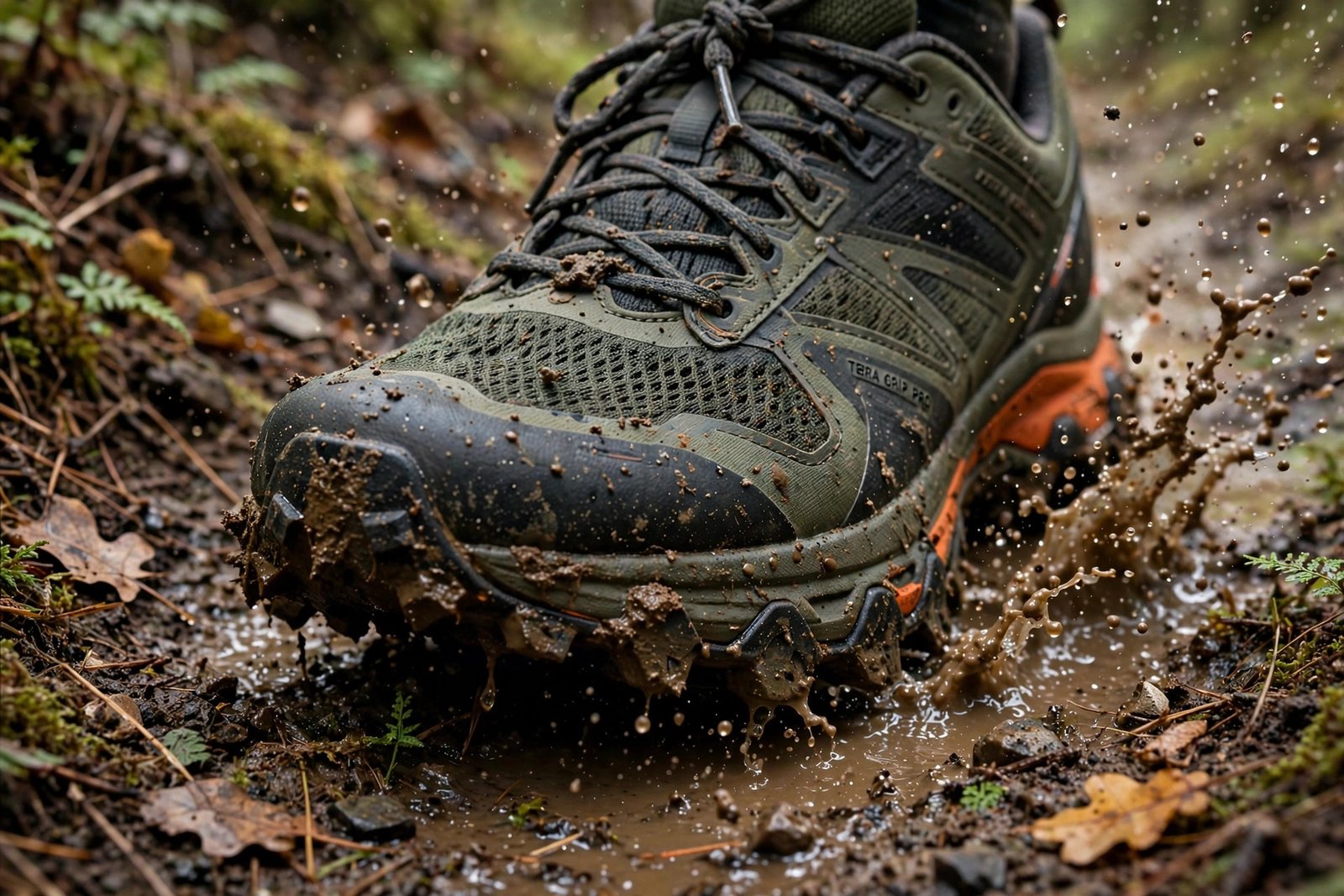
Mud is the great equalizer of trail running: the fanciest carbon-plated shoe becomes a comedy prop on a slick clay descent. For muddy paths, the shoe equation flips — grip and mud-shedding matter more than cushioning, weight, or brand prestige.
After comparing lab data, racer feedback, and real-world mud performance, here are the shoes that actually hold traction when the trail turns to soup — and what to look for if you shop beyond this list.
What Makes a Shoe Good in Mud
Three features dominate mud performance. First, lug depth and spacing: 5–6mm deep lugs spaced widely shed mud instead of packing into a slick sole — tightly-spaced shallow lugs clog instantly and become ice skates. Second, rubber compound: softer, stickier rubber grips wet rock and roots far better than hard-wearing compounds (at the cost of faster wear). Third, drainage and upper design: muddy runs mean wet feet, so shoes that drain and dry quickly beat waterproof membranes, which trap water inside.
Fit matters more in mud too: a precise heel lock prevents the foot sliding that causes blisters on slippery descents, and a gusseted tongue keeps debris out. Drop (heel-to-toe offset) is personal preference, but lower drops (4–6mm) give better ground feel on technical slippery terrain. Ignore waterproofing marketing — for real mud, you want drainage, not a bathtub.
Top Picks for 2026
The mud-racing benchmark remains the Inov-8 Mudclaw line — 8mm lugs, famously sticky rubber, and a fit built for fell-running slop. They're narrow and minimally cushioned, so they're a racer's tool rather than a daily trainer, but nothing grips deep mud better. Salomon's Speedcross 6 is the mainstream answer: aggressive 5mm chevron lugs, a snug Sensifit upper, and wide availability — the shoe you'll see most on muddy start lines.
For runners wanting mud capability plus everyday versatility, the Nike Pegasus Trail and Hoka Speedgoat lines offer 4–5mm lugs that handle moderate mud while remaining comfortable on dry miles — the right call if your trails are muddy sometimes rather than always. La Sportiva's Bushido and Akasha bring sticky FriXion rubber that excels on wet rock, a common mud-adjacent hazard. Match the shoe to your mud: occasional slop favors versatile trainers; chronic bog demands dedicated mud shoes.
The full background is available at REI's trail shoe buying guide.
Fit, Sizing, and When to Replace
Buy trail shoes a half-size up from road shoes — feet swell on trails, and downhill toe-bang in mud (where you brake harder) destroys toenails in short shoes. Try them on in the afternoon, with running socks, and jog the store's incline board if it has one. Heel slip on a dry test means disaster on a muddy descent.
Replace mud shoes when lugs wear smooth — on soft rubber compounds that's 200–300 miles, far less than road shoes. Worn lugs on mud are genuinely dangerous, not just slower. Rotate two pairs if you run daily: shoes (especially non-waterproof ones) need 24+ hours to dry fully, and running in damp shoes accelerates both blistering and material breakdown. Stuff them with newspaper after wet runs — it draws moisture far faster than air-drying alone.
Technique Matters More Than Treads
Honest caveat: the best mud shoe can't fix bad mud technique. Shorten your stride, keep feet under your center of mass, and stay light on descents — overstriding on mud is how runners get hurt. Walk the worst sections without shame; even elite racers hike un-runnable bog.
Choose lines deliberately: grassy edges often grip better than the polished mud center of a trail. And strengthen ankles proactively — single-leg balance work and calf raises prevent the rolls that slippery trails invite. The shoe is maybe 40% of mud performance; the other 60% is the runner attached to it.
For official guidance, see RunRepeat lab-tested shoe data.
Cleaning and Drying: Making Mud Shoes Last
Mud shoes die from neglect, not mileage. The routine: knock off dried mud (never put caked shoes directly in water — the grit abrades the uppers), rinse with a hose, remove insoles and laces, and stuff with newspaper to draw moisture from inside. Never machine-wash trail runners — the heat and agitation delaminate soles and destroy the shoe's structure far faster than any trail will.
Drying matters as much as cleaning: air-dry at room temperature away from direct heat (no radiators, no dryers — heat kills the adhesives and warps the midsole), and expect 24–48 hours for full drying. This is the real argument for rotating two pairs. For smell, the freezer trick is a myth — instead, use enzyme-based shoe deodorizers and ensure shoes dry completely between runs; bacteria need moisture, and dry shoes don't stink. A $150 mud shoe maintained well outlasts a $200 shoe abused — maintenance is the cheapest performance upgrade in running.
Sock strategy is the unsung hero of mud running: merino wool or synthetic moisture-wicking socks (never cotton) prevent the blister cascade that wet feet invite, and some runners swear by toe socks for mud season to eliminate skin-on-skin friction. Carry a dry pair in your car for the drive home — the psychological boost of dry socks after a muddy run is disproportionate to the effort. And gaiters, while dorky-looking, keep debris and slop out of your shoes on truly boggy courses; trail racers in the UK consider them essential kit.
Finally, respect the trails you run: in many areas, running on saturated trails causes real erosion damage, and land managers occasionally close trails during the wettest periods. Check local trail status before heading out, stick to durable surfaces when everything is soup, and consider road or track workouts during the absolute worst conditions. The mud will wait — and the trails you protect today are the ones you'll race on tomorrow.
For more on this topic, see whether morning or evening exercise is better and walking 30 minutes a day for health.
The best trail running shoe for muddy paths is the one with deep, widely-spaced lugs, sticky rubber, and drainage-first design — the Inov-8 Mudclaw for dedicated mud, Salomon Speedcross 6 for the mainstream, versatile options like the Speedgoat for mixed conditions. Size up a half size, replace when lugs wear, and remember that technique does half the work. Now go embrace the slop.
Frequently Asked Questions
What lug depth is best for muddy trails?
5–8mm deep lugs with wide spacing. Shallow, tightly-spaced lugs pack with mud and lose all traction; deep widely-spaced lugs bite through and self-clean.
Should trail shoes be waterproof for mud?
No — waterproof membranes trap water inside once it enters over the collar (which it will in mud). Choose shoes that drain and dry quickly instead.
How long do mud running shoes last?
Soft sticky-rubber compounds wear fast: expect 200–300 miles before lugs smooth out. Replace when lugs visibly wear — traction loss on mud is a safety issue.
Can I use regular running shoes on muddy trails?
You can, but road shoes clog instantly and grip nothing on mud. Even a budget trail shoe with real lugs dramatically outperforms any road shoe off-road.