
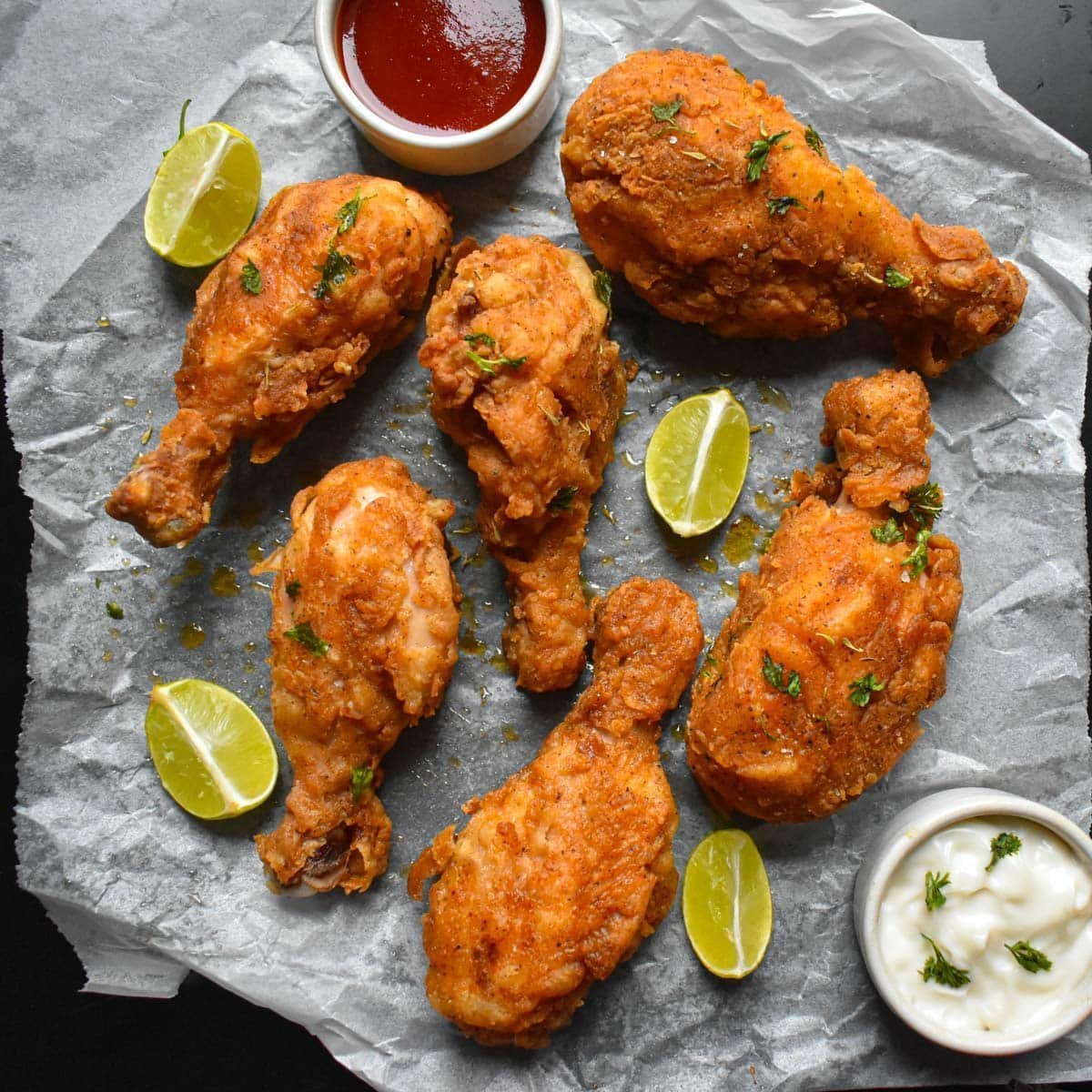
How Do I Make Crispy Fried Chicken at Home Without a Deep Fryer?
Restaurant-crisp fried chicken at home, no deep fryer, no vat of oil, no lingering fried smell for three days. It sounds like a compromise — but when you know the techniques, the answer to how do I make crispy fried chicken at home without a deep fryer is simpler than you think — it can genuinely rival the deep-fried version. I’ve tested every method below, and the winners aren’t close calls.
Method 1: Shallow-Fry in a Cast Iron Skillet (Best Results)
This is the closest to real fried chicken without a fryer — and honestly, it’s how much of the American South has always done it.
- Brine or buttermilk-soak the chicken 4–24 hours. Buttermilk + hot sauce + salt is the classic. This is non-negotiable for juicy meat — it makes more difference than any frying technique.
- Season the flour aggressively. 2 cups flour + 1 tbsp each salt, pepper, paprika, garlic powder + 1 tsp cayenne. Under-seasoned flour is the #1 homemade fried chicken flaw.
- Double-dredge: buttermilk → flour → back in buttermilk → flour again. Press the flour on firmly. Let the coated chicken rest 15 minutes — this hydrates the coating so it adheres instead of sliding off.
- Heat 1/2″ of oil (peanut or vegetable) in a cast iron skillet to 325–350°F. Use a thermometer — guessing oil temperature is how chicken burns outside and stays raw inside.
- Fry in batches without crowding (crowding drops oil temp = soggy chicken). 6–8 minutes per side for bone-in pieces.
- Rest on a wire rack over a sheet pan — not paper towels. Paper towels trap steam and soften the crust you just built. Season with salt immediately.
Target internal temp: 165°F (check with a meat thermometer at the thickest part, avoiding bone). Our cast iron seasoning guide keeps your skillet in prime frying condition.
Method 2: Oven-“Fried” (Easiest Cleanup)
For crispy chicken with almost no active cooking:
- Buttermilk-soak and double-dredge as above.
- Place on a wire rack over a sheet pan (air circulation = crisp bottom).
- Spray generously with oil — this is the critical step most recipes underplay. Dry flour spots stay pale and powdery; oil spray fixes it.
- Bake at 425°F for 40–50 minutes (bone-in), flipping once, spraying again at the flip.
Result: genuinely crispy, maybe 85% of fried. The crust is slightly less shattering but the cleanup is trivial and there’s no hot oil to manage.
How Do I Make Crispy Fried Chicken At Home Without A Deep Fryer?
The air fryer was born for this:
- Same brine and dredge.
- Oil-spray the coating thoroughly — air fryers punish dry flour worse than ovens.
- Cook at 380°F for 20–25 minutes (bone-in thighs/legs), flipping halfway.
- Don’t overcrowd — air circulation is the whole mechanism.
Fast, crispy, minimal oil. Slightly less even browning than shallow-frying, but weeknight-convenient in a way nothing else matches.
The Science of Crispiness
What makes coating crispy: moisture leaving fast + starch setting + fat conducting heat. Every technique above serves this: the rest after dredging hydrates starch so it fries instead of falling off; proper oil temp (325–350°F) vaporizes surface moisture instantly; the wire rack prevents steam-softening. A little cornstarch mixed into the flour (replace 1/4 of the flour) adds extra shatter — it’s the Korean fried chicken secret, and it works in every method.
Common Failures and Fixes
- Coating falls off: you skipped the 15-minute rest after dredging, or the chicken was too wet going into the flour. Pat dry, dredge, rest.
- Burnt outside, raw inside: oil too hot. Thermometer, 325–350°F, and don’t rush.
- Soggy crust: crowded pan (oil temp crashed), or rested on paper towels instead of a rack.
- Bland: under-seasoned flour. The flour needs to taste too salty on its own — the chicken dilutes it.
- Pale spots (oven/air fryer): missed with the oil spray. Be generous.
The Buttermilk Brine: Why It’s Non-Negotiable
If you take one technique from this article, make it the brine. Buttermilk does two things: its mild acidity tenderizes the meat by gently denaturing proteins (unlike strong acids, it won’t turn the exterior mushy), and its thickness helps the coating adhere — the flour has something to grip. The classic ratio: 2 cups buttermilk + 1 tablespoon salt + 1 tablespoon hot sauce per 2 lbs chicken, 4–24 hours refrigerated. No buttermilk? Make it: 1 cup milk + 1 tablespoon lemon juice or vinegar, rested 10 minutes. Or use plain yogurt thinned with a little milk. Dry brine alternative: salt the chicken generously 12–24 hours ahead (no liquid) — less traditional for fried chicken but excellent, producing seasoned meat throughout. Either way, pat the chicken dry-ish before dredging (damp, not dripping) and season the meat itself, not just the flour — salt on the chicken, spices in the flour, both layers working.
Sides That Complete the Plate
Fried chicken deserves proper company: coleslaw (the acid and crunch cut the richness — make it an hour ahead so it softens slightly), buttermilk biscuits (use that leftover brine buttermilk), mac and cheese (baked, with a crunchy top), collard greens or green beans (something green for balance and conscience), pickles (the Nashville hot chicken tradition — acid against fat, always), and sweet tea or lemonade. The architecture of the meal matters: rich + acidic + crunchy + fresh. And make extra — cold fried chicken the next day, eaten standing in front of the fridge, is one of life’s great pleasures. Our 30-minute dinner guide has faster weeknight options for when frying feels ambitious.
The Takeaway
How do you make crispy fried chicken at home without a deep fryer? Buttermilk-brine, aggressively seasoned double-dredge with some cornstarch, rest before cooking, then shallow-fry in cast iron at 325–350°F (best), oven-bake on a wire rack at 425°F (easiest), or air-fry at 380°F (fastest). Rest on a rack, thermometer to 165°F, salt immediately.
Pick the method that fits your evening — all three beat takeout, and the cast iron version might ruin restaurant chicken for you. Hungry for more? Our restaurant-style tacos at home and homemade pizza dough continue the homemade-better-than-takeout theme.