
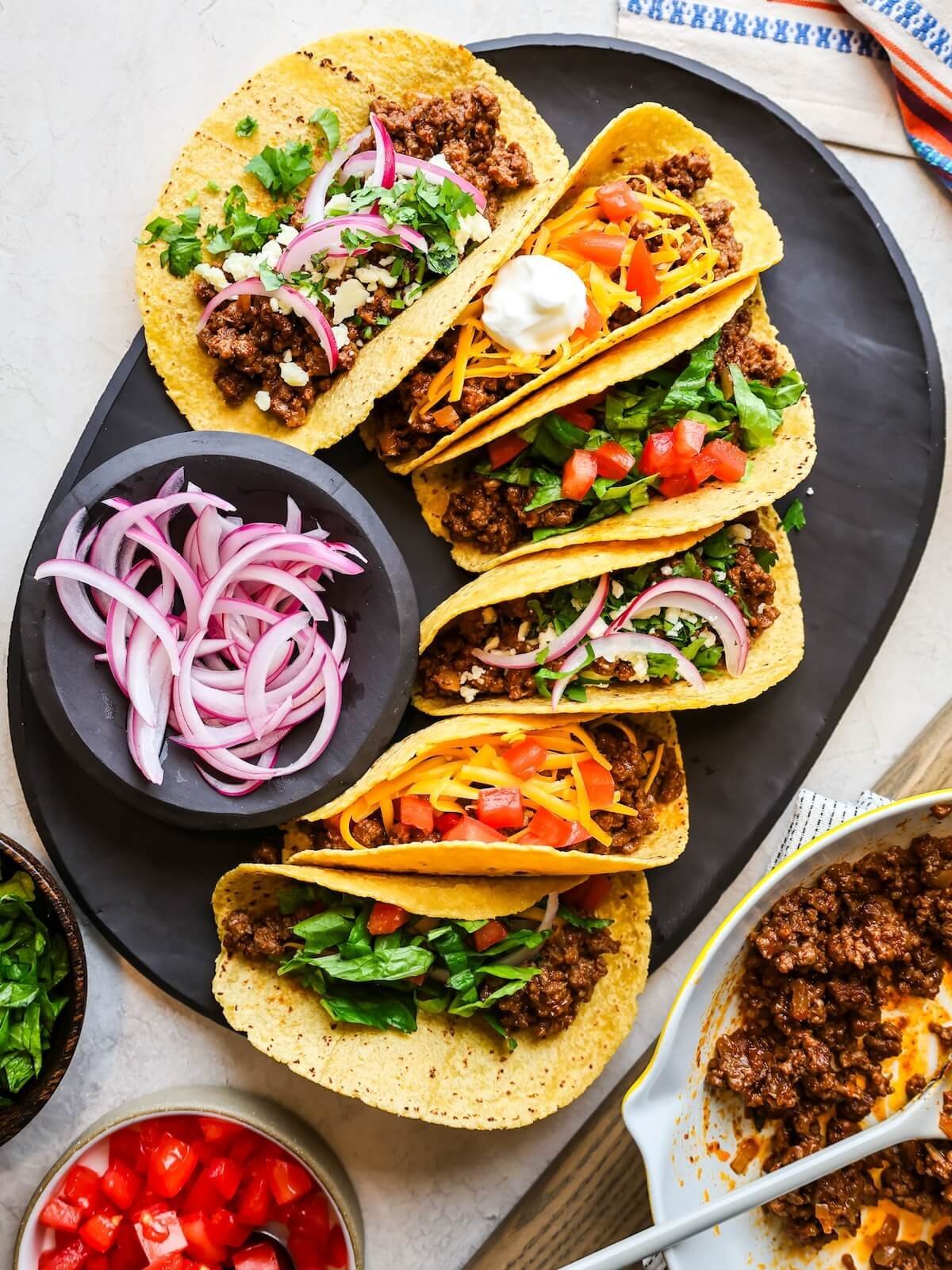
How Do I Make Restaurant-Style Tacos at Home?
There’s taco night, and then there’s taco night — the kind where the tortillas are warm and pliable, the meat is deeply seasoned, and every bite has that bright-acidic-crunchy balance that great taquerias nail. If you’re asking how do I make restaurant-style tacos at home, the secret is that restaurants don’t do anything magical — they just don’t skip steps. Warm tortillas, real seasoning, fresh toppings, and balance. Here’s the full playbook.
How Do I Make Restaurant-Style Tacos At Home?
Cold, stiff tortillas from the bag are the #1 difference between home tacos and restaurant tacos. Fix it:
- Warm them properly: directly over a gas flame (15 seconds per side, char spots welcome), in a dry cast iron skillet, or wrapped in a damp towel in the microwave for 30 seconds. They should be soft, pliable, and steaming.
- Keep them warm: stack in a clean kitchen towel or tortilla warmer as you go. Cold tortillas crack; warm ones fold.
- Corn vs. flour: corn is the taqueria standard — more flavor, gluten-free, and the right texture for most tacos. Flour suits Baja/breakfast styles. Double up corn tortillas (two per taco) like taquerias do — it prevents blowouts and it’s authentic.
- Consider making your own with masa harina — 2 ingredients (masa + water), a tortilla press or rolling pin, and 20 minutes. Homemade corn tortillas are a revelation and easier than you’d think.
Step 2: The Protein (Season Like You Mean It)
Restaurant taco meat is aggressively seasoned — home cooks consistently under-season. Pick your protein:
- Carne asada: flank or skirt steak, marinated in lime, garlic, cumin, and oil, seared screaming-hot and sliced thin against the grain. Rest before slicing.
- Carnitas: pork shoulder slow-cooked until shreddable, then crisped in a hot skillet. The crispy-creamy contrast is the whole point.
- Ground beef (weeknight hero): brown hard for crust, drain fat, then season with cumin, chili powder, smoked paprika, garlic powder, onion powder, oregano, and salt — plus a splash of tomato sauce or beef broth to bind. Our crispy chicken technique uses the same seasoning logic.
- Fish/shrimp (Baja style): battered and fried, or simply seasoned and seared. Cabbage slaw + chipotle crema is mandatory.
- Veggie: roasted sweet potato + black beans, or cauliflower al pastor — seasoned boldly, these convert skeptics.
The universal rule: salt early, season boldly, taste the filling on its own — it should taste slightly too intense alone, because the tortilla and toppings dilute it. (Yes — too intense. The balance comes later.)
Step 3: The Toppings (Fresh and Contrasting)
Great tacos are architecture — every element has a job:
- Acid: lime wedges (non-negotiable), pickled red onions (15-minute quick pickle: red onion + lime juice + salt)
- Fresh: diced white onion, chopped cilantro — the classic taqueria duo. Keep your cilantro alive with our fresh herb storage guide.
- Crunch: shredded cabbage, radishes — texture contrast against soft tortilla and meat
- Creamy: Mexican crema, or sour cream thinned with lime juice
- Heat: fresh jalapeño, salsa roja, salsa verde — homemade salsa (tomatoes/tomatillos + onion + cilantro + lime, blended) takes 10 minutes and outclasses jars completely
- Cheese: cotija (salty, crumbly) or Oaxaca (melty) — not pre-shredded cheddar
Assembly: The Order Matters
- Warm double tortillas
- Protein (generous but not stuffed — 3–4 oz per taco)
- Onion + cilantro
- Salsa of choice
- Crema drizzle
- Lime wedge on the side, always
Serve immediately. Tacos wait for no one — set up a taco bar and let everyone assemble their own. It’s more fun, accommodates all diets, and the cook actually gets to eat with everyone.
Three Essential Salsas (10 Minutes Each)
Jarred salsa is fine; fresh salsa is transformative. Salsa roja: char 4 tomatoes, 1 onion (quartered), 2 jalapeños, and 3 garlic cloves in a dry skillet until blackened in spots; blend with cilantro, lime juice, and salt. Smoky, fresh, incredible. Salsa verde: simmer 8 tomatillos (husked) 5 minutes until soft; blend with 1 jalapeño, 1/2 onion, cilantro, lime, salt. Bright, tangy, perfect on everything. Pico de gallo: dice 3 tomatoes, 1/2 onion, 1 jalapeño (seeded), chop cilantro, toss with lime juice and salt. No cooking, maximum freshness — use within a day. Make one salsa per taco night; rotate through the three. Each takes 10 minutes and outclasses anything from a jar so completely that you’ll never go back.
Taco Night Economics
Here’s why taco night deserves weekly status: feeding four costs roughly $12–$18 total — $4–$5 for protein (1.5 lbs ground beef, chicken thighs, or pork), $3 for tortillas, $3–$5 for toppings, $2 for limes and cilantro. That’s $3–$4.50 per person for a meal everyone loves, versus $12–$15 per person for takeout tacos. The math gets better with pantry staples (spices, oil) amortized across weeks. Stretch strategies: mix black beans into ground beef (50/50 — cheaper, healthier, nobody minds), use cheaper cuts (chicken thighs over breast, pork shoulder over loin), and make toppings do heavy lifting (a great salsa makes humble fillings shine). Our meal prep cost guide has more family-feeding economics. Taco Tuesday isn’t just fun — it’s financial wisdom.
Level Up: Regional Taco Styles to Try
Once the basics click, explore Mexico’s regional taco traditions: Tacos al pastor — marinated pork with pineapple, the Mexico City icon (home version: pork shoulder + achiote + pineapple, roasted hot and sliced thin). Baja fish tacos — battered fried fish + cabbage slaw + chipotle crema + lime. The crunch-creamy-acid balance is perfection. Tacos de canasta — “basket tacos”: soft fillings (potato, beans, chicharrón) steamed in a basket, sold by street vendors. Birria tacos — slow-braised beef, tacos dipped in the rich consommé. The viral quesabirria (with melted cheese) broke the internet for good reason. Each style teaches something: al pastor is about marinade, Baja about contrast, birria about patience. Master one per month and you’ll have a taco repertoire most restaurants envy.
Curious where tacos came from? The taco’s history and regional varieties trace the dish from pre-Columbian Mexico to the modern taqueria.
The Takeaway
How do you make restaurant-style tacos at home? Warm your tortillas properly (this is half the battle), season protein aggressively, build contrast with acid + fresh + crunch + creamy + heat, and serve immediately. No single step is hard — restaurants just do all of them.
Taco night done right rivals any restaurant, at a fraction of the cost. And once the formula clicks, you’ll improvise endlessly — that’s when home cooking gets really fun. More homemade favorites? Our homemade pizza dough is the next weekend project.