
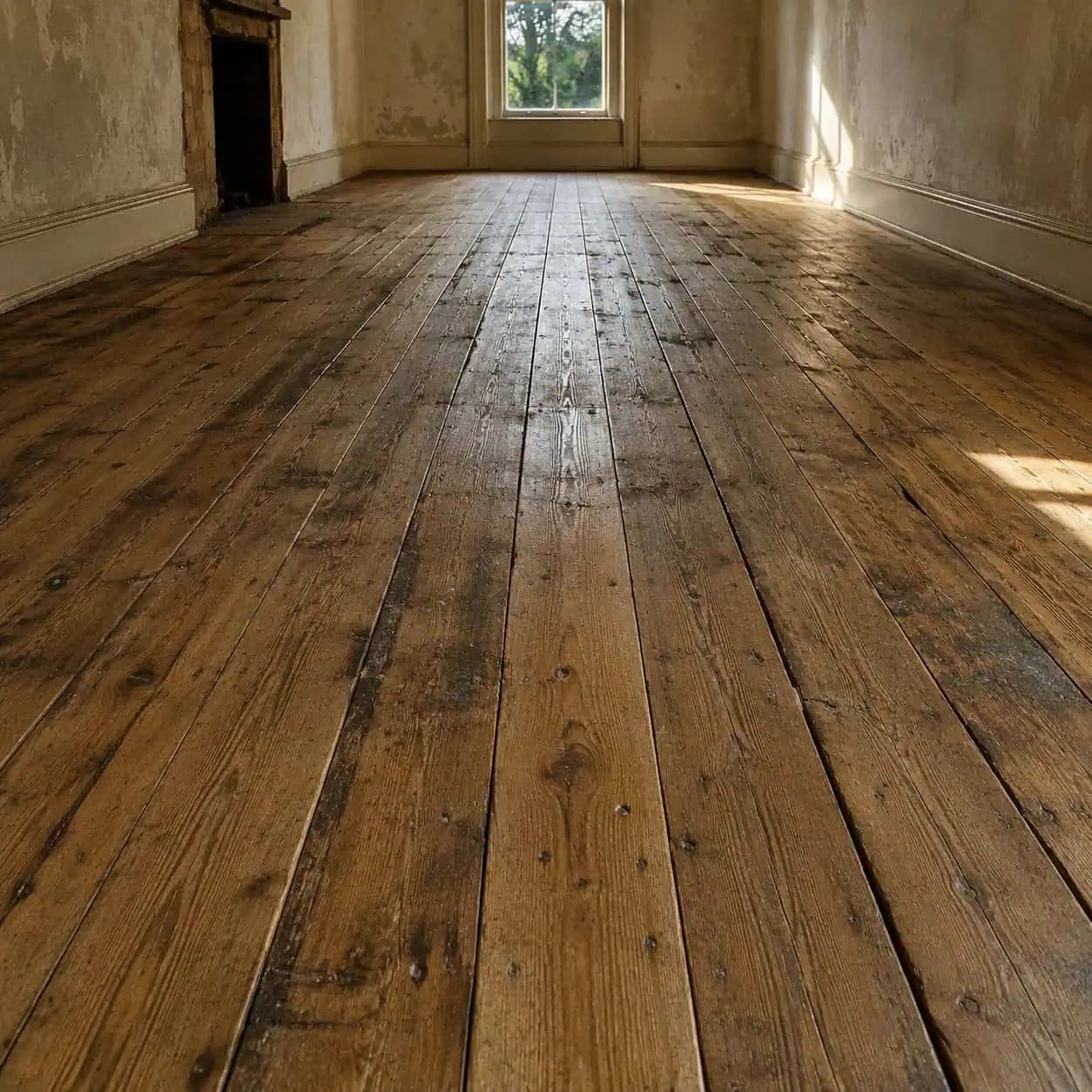
How Do I Fix Squeaky Floorboards in an Old House?
Every old house has a soundtrack: the third stair that announces you, the hallway board that creaks at 2 a.m. like it’s telling secrets. Charming in a movie. Less charming when it’s your bedroom floor. If you’re asking how do I fix squeaky floorboards in an old house, the good news is that most squeaks are a simple physics problem — wood moving against wood or against a nail — and the fixes are cheap, fast, and permanent.
Why Floors Squeak: The 30-Second Explanation
A squeak happens when a floorboard moves slightly as you step on it, rubbing against a neighboring board, a joist, or a nail. In old houses, the causes are predictable: nails that have worked loose over decades, boards that have shrunk and developed gaps, subfloor that was never glued (glue wasn’t standard until recent decades), or joists that have shifted slightly. The fix, in every case, is the same principle: stop the movement.
Step 1: Find the Exact Squeak
Have someone walk slowly across the floor while you listen from below (basement or crawl space) if possible — you’ll hear and often see the movement. From above, walk heel-to-toe and mark each squeak with painter’s tape. Squeaks often come in clusters along a joist line. Finding them precisely matters because the fixes are targeted.
If you have basement/crawl space access, you’re in luck — the best fixes are done from below. If not, everything below works from above too.
Fixes From Below (Best, When Accessible)
- Shim the gap. If you can see daylight between the joist and the subfloor, tap a thin wood shim coated in construction adhesive into the gap. Don’t force it — you’re filling space, not jacking the floor up. This is the #1 fix for the most common squeak.
- Sister a 2×4 alongside the joist. For a squeaky section, screw a short 2×4 to the side of the joist, tight up against the subfloor, with construction adhesive on top. This bridges the gap and locks everything together.
- Add blocking between joists under the squeaky area for extra stiffness.
From below, use screws, not nails — screws grip and don’t work loose the way nails do. That’s the whole story of why old floors squeak: they were nailed, and nails back out over decades.
Fixes From Above (No Basement Access)
- Breakaway screws (the pro choice). Products like Squeeeeek No More are screws designed to pull the board tight to the joist, then snap off below the surface. Drill through the board into the joist, drive the screw until it snaps, fill the tiny hole. Nearly invisible, extremely effective. A kit costs ~$20–$30.
- Trim-head screws. Pre-drill, drive a trim-head screw through the board into the joist at a slight angle, countersink, fill with wood filler. The small head hides easily under filler and touch-up.
- Locate the joist first. Use a stud finder, or look for the existing nail lines in the boards — they mark joist locations. Missing the joist means the screw grips nothing.
- For gaps between boards: work powdered graphite or talcum powder into the seams. It lubricates the wood-on-wood rubbing. This is a quick fix, not a permanent one, but it works surprisingly well for minor squeaks.
The Carpeted-Floor Trick
Squeak under carpet? You don’t need to pull it up. The breakaway screw kits work through carpet — the tool finds the joist, drives the screw through carpet and pad into the joist, and snaps off below the surface. The carpet hides the tiny entry point completely. This feels like cheating. It’s not; it’s just good product design.
How Do I Fix Squeaky Floorboards In An Old House?
Old houses deserve special mention when you fix squeaky floorboards in an old house:
- Don’t over-tighten or over-shim. Old wood is brittle. Forcing things cracks boards that have survived a century.
- Expect the floor to move seasonally. Wood expands and contracts with humidity. A squeak that appears every winter and vanishes in summer is normal — a humidifier in dry months often quiets it.
- Preserve what you can. Old-growth floorboards are irreplaceable. Favor the least invasive fix (shims, breakaway screws) over anything involving removal.
- Check for structural issues first. Widespread new squeaking, bouncing, or sagging can indicate joist problems, not just loose boards. If the floor feels soft or slopes, get a professional assessment before DIY-ing.
The This Old House squeaky floor guide has great detail on diagnosing from below, worth reading before you start.
Prevention for the Future
If you’re ever installing new flooring or have floors opened up: glue the subfloor to joists with construction adhesive, screw (don’t nail) everything, and leave proper expansion gaps. Modern installation methods exist specifically because builders learned from a century of squeaky nails. Our refinish vs. replace hardwood guide covers what to do when old floors need more than squeak repair.
Graphite vs. Talc vs. Oil: The Lubricant Question
For minor board-on-board squeaks, dry lubricants worked into the seams help — but choose correctly. Powdered graphite is the pro choice: it’s a superior dry lubricant and doesn’t attract moisture. Talcum powder works nearly as well and is easier to find. Avoid WD-40 and oils for this — they attract dust, can stain, and go rancid in the gaps. Whatever you use, it’s a treatment for minor squeaks between boards, not a substitute for fixing movement with screws or shims. Think of it as the finishing touch after the real fix, or a quick quiet-down for a squeak that only appears in one season.
The Takeaway
How do you fix squeaky floorboards in an old house? Find the exact spots, then stop the movement: shims and sistered 2x4s from below, breakaway screws or trim-head screws from above, graphite powder for minor board-on-board rubbing. Screws beat nails, always.
Most squeaks take 15 minutes each to silence permanently. Walk your house with painter’s tape, fix them in an afternoon, and enjoy the unfamiliar sound of silence. Old house full of projects? Our beginner home repair toolkit has you covered for what’s next.
[…] where to aim, and you’ll feel the difference the same evening. Old house full of drafts? Our squeaky floorboard fixes tackle the next old-house […]