
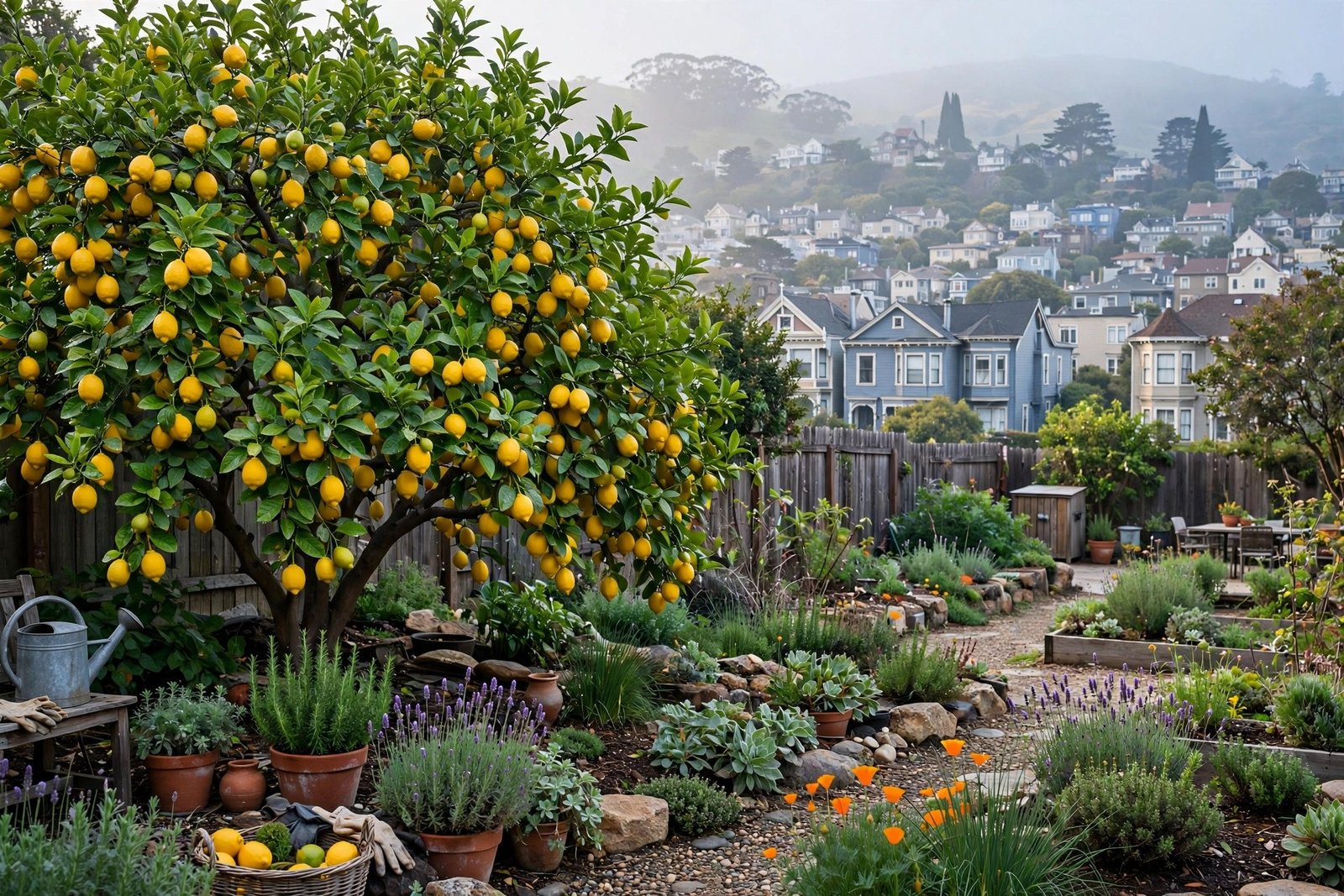
Few things beat picking a sun-warmed Meyer lemon off your own tree in January while the rest of the country shovels snow. The San Francisco Bay Area — with its mild winters and long growing season — is one of the best places in America for backyard citrus. But timing your planting right makes the difference between a tree that thrives and one that sulks for years.
This guide covers exactly when to plant citrus trees in the Bay Area, how frost and microclimates change the answer, which varieties perform best, and the planting technique that sets trees up for decades of harvests.
The Short Answer: Plant in Spring
For most of the Bay Area, the ideal planting window is late March through May, after the last frost risk has passed and soils are warming. Spring planting gives young trees the entire warm season to establish roots before their first winter — critical because a citrus tree’s frost tolerance depends heavily on established, mature wood.
Fall planting (October) works in the warmest Bay Area microclimates — the inland East Bay, South Bay, and sheltered San Francisco spots — where winter lows rarely threaten. But for beginners, spring is the safer bet everywhere: it forgives mistakes, and nursery stock is freshest. Avoid planting in summer heat waves (transplant shock is brutal above 95°F) and in the dead of winter (cold wet soil invites root rot in young trees).
Know your last frost date
The Bay Area’s last frost varies wildly: mid-February in sheltered San Francisco, late March in Walnut Creek and San Jose, and “what frost?” in the warmest pockets. The Old Farmer’s Almanac publishes frost dates by zip code — look yours up, then add two weeks of buffer for a young citrus tree. One hard freeze on a newly planted tree can set it back a full year.
Microclimates Change Everything
The Bay Area is not one climate but dozens. San Francisco’s Sunset District (cool, foggy summers, rarely below 40°F) grows lemons beautifully but struggles with heat-loving varieties like grapefruit. Inland valleys (Walnut Creek, Concord, San Jose) get the heat citrus loves but also the frost that kills it — winter protection matters there. The Peninsula sits in between, with sheltered spots performing wonderfully.
Assess your specific yard: south-facing walls radiate heat and create warm pockets ideal for citrus; low spots collect cold air and frost. Urban heat islands buy you 2–3 degrees of frost protection. If your winter lows regularly dip below 28°F, plan on frost cloth and possibly Christmas lights (the old incandescent kind generate protective warmth) for young trees. The University of California’s agriculture extension offers microclimate-specific citrus guidance for Bay Area growers.
Best Citrus Varieties for the Bay Area
Meyer lemon: the undisputed Bay Area champion — productive, relatively cold-hardy, and the fruit is sublime. Every Bay Area citrus grower should start here. Bearss/Persian lime: does well in warm microclimates; needs more heat than lemon. Satsuma mandarin (Owari): the most cold-hardy citrus widely available, ripening in fall — perfect for inland areas with frost.
Kumquat (Nagami): extremely cold-hardy and ornamental; the whole fruit is edible. Blood orange (Moro): needs heat to develop its color but rewards warm South Bay spots spectacularly. Calamondin: a great container citrus for small spaces and foggy zones. Buy grafted trees on dwarf or semi-dwarf rootstock from reputable California nurseries — and always buy from in-state sources to comply with citrus quarantine regulations. Soil preparation matters enormously; start composting at home so you have rich organic matter to amend the planting hole.
Planting Technique for Long-Term Success
Dig a hole twice as wide as the root ball but no deeper — citrus must sit at or slightly above grade, never buried. The graft union (the knobby scar on the trunk) should sit 4–6 inches above the soil line. In the Bay Area’s heavy clay soils, planting slightly high in a mound prevents the crown rot that kills more young citrus than frost does.
Backfill with native soil amended with compost (not pure potting mix, which creates a “bathtub” effect in clay). Water deeply immediately, then build a watering basin and mulch 3–4 inches deep — keeping mulch away from the trunk. Stake only if the tree is top-heavy, and remove stakes within a year. First-year care decides the tree’s future: consistent deep watering (not daily sprinkles), no fertilizer for the first month, then light feeding through the growing season. The patience you learn keeping citrus alive translates well — even keeping houseplants alive if you travel a lot uses the same deep-watering principles.
First-Year Care Calendar
Spring (planting): plant after frost, water deeply twice weekly, no fertilizer for 4–6 weeks. Summer: deep water 1–2 times weekly depending on heat; light nitrogen feeding monthly; watch for pests (scale, aphids, leaf miners). Fall: reduce watering as rains arrive; stop fertilizing by October so new growth hardens before winter; harvest satsumas. Winter: protect young trees below 32°F with frost cloth; water only if rains fail; enjoy Meyer lemons ripening.
Do not panic about leaf drop in the first months — transplant shock is normal. Do panic (a little) about yellowing with green veins: that is iron chlorosis, common in Bay Area alkaline soils, fixed with chelated iron and soil acidification. Most first-year problems are water-related: too much kills faster than too little.
Conclusion
Plant citrus in the Bay Area in spring — late March through May — after your microclimate’s last frost, and you give young trees the full warm season to establish. Match varieties to your specific conditions (Meyer lemon nearly everywhere, satsumas where frost bites), plant high in clay soil, and commit to attentive first-year care. Do it right, and in three years you will be giving away lemons to neighbors who ask how you did it. Start with one tree; citrus is addictive.
Frequently Asked Questions
Can I plant citrus in the Bay Area in fall?
Yes, in the warmest microclimates (inland East Bay, South Bay, sheltered city spots) where winter lows stay above freezing. Fall planting lets winter rains establish roots. But spring is safer for beginners and for cooler or frost-prone areas.
What is the most cold-hardy citrus for the Bay Area?
Satsuma mandarins (especially Owari) and kumquats handle temperatures into the low 20s°F once established. Meyer lemons handle brief dips to around 28°F. True limes and grapefruit need the warmest microclimates.
How long until a newly planted citrus tree produces fruit?
Grafted nursery trees often carry a few fruits in year one (remove most to direct energy to roots), with meaningful harvests starting in years 2–3 and full production by years 4–5. Patience in the early years pays off in decades of harvests.
Why are my citrus leaves yellow with green veins?
That is iron chlorosis, very common in the Bay Area’s alkaline soils — the tree cannot absorb iron at high pH. Treat with chelated iron and acidify the soil with sulfur or acidic mulch. It is cosmetic at first but weakens the tree if ignored.
Do I need to cover citrus trees in Bay Area winters?
Established trees in most Bay Area locations need no protection. Young trees (first 2–3 years) and cold-sensitive varieties should be covered with frost cloth when temperatures threaten 32°F or below, especially in inland valleys.