
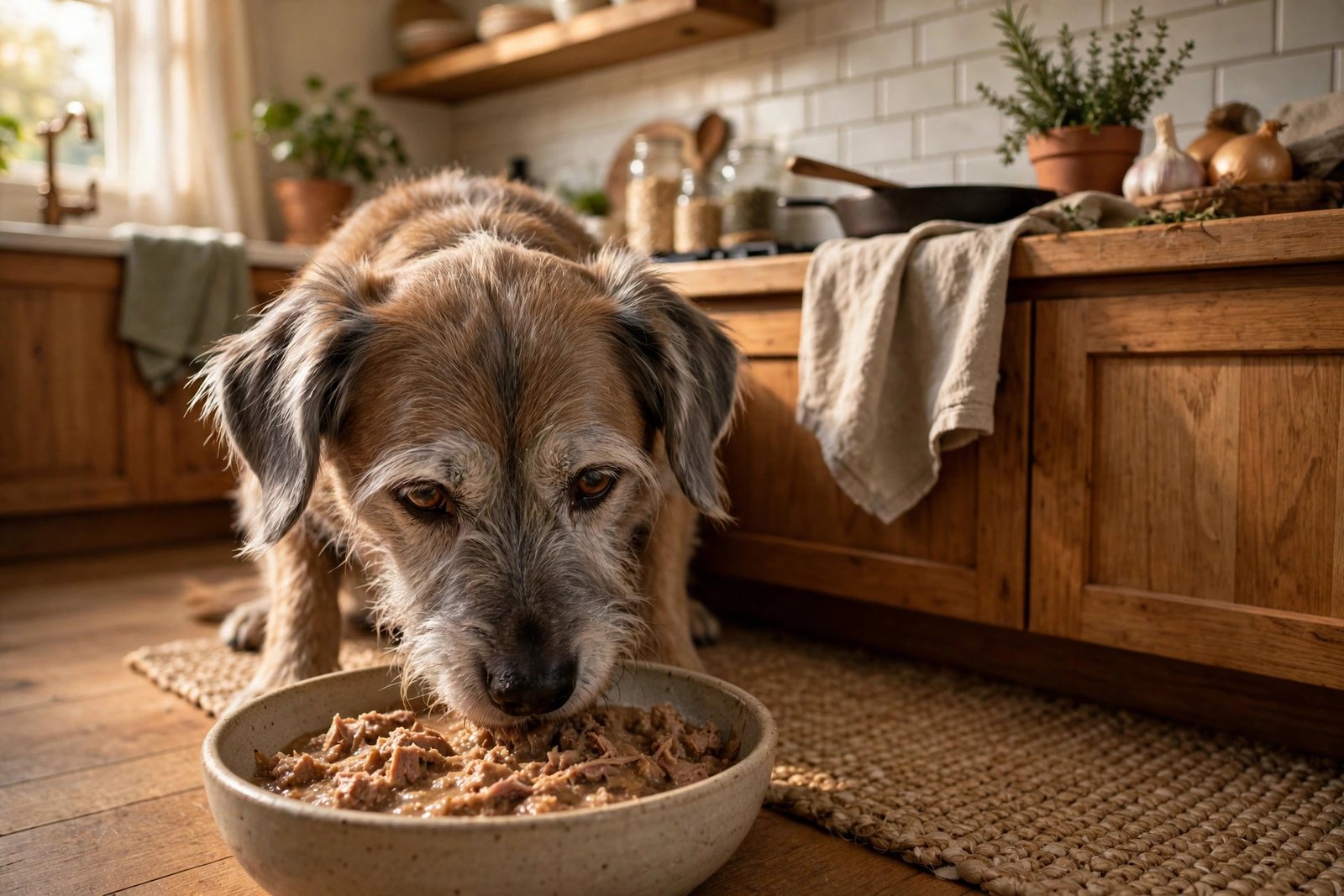
The gray muzzle appears, the naps get longer, and one day you notice your dog struggling with the kibble they’ve eaten happily for years — dropping pieces, chewing on one side, walking away from the bowl. Dental pain, weaker jaws, and changing nutritional needs all converge in the senior years, and food texture becomes a genuine quality-of-life issue.
This guide explains when senior dogs should switch to softer food: the signs it’s time, what “softer” actually means, how senior nutrition differs, and how to transition without digestive drama.
When: Age Guidelines and Individual Signs
The rough ages: large and giant breeds are seniors at 6–7, medium breeds at 7–8, small breeds at 8–10. But age is just the calendar — watch the dog. Signs it’s time to soften the diet: dropping kibble or eating very slowly, chewing on one side, pawing at the mouth, bad breath or visible tartar (dental disease affects most dogs over 3, and worsens with age), weight loss despite normal appetite, or simply declining interest in hard food.
Critical first step: a vet dental check before assuming “old age.” Many dogs labeled “slowing down” are actually in dental pain — fractured teeth, abscesses, advanced periodontal disease — and a dental cleaning transforms them. Softening food without addressing dental disease masks suffering. If your vet finds dental issues, treat those first; then decide on texture. Other medical causes of appetite change (kidney disease, organ issues) also need ruling out — “just getting old” is a diagnosis of exclusion, not a first guess.
What “Softer” Means: The Options
There’s a spectrum, not a single switch. Level 1: soak the current kibble in warm water or low-sodium broth for 10–15 minutes — same nutrition, easier chewing, zero transition needed. Level 2: mix wet food with kibble (half and half), softening the overall texture while keeping some crunch for dental benefit. Level 3: switch to wet/canned food entirely — highly palatable, hydrating, easy to eat. Level 4: fresh-cooked or commercial fresh diets (soft by nature, often more appetizing for picky seniors).
Each has trade-offs: soaked kibble is cheapest and simplest; wet food costs more and needs refrigeration; fresh diets are priciest but often the most enticing for dogs who’ve gone off food. Avoid the mush trap: food doesn’t need to be pureed unless the vet says so — most seniors do fine with softened textures, and some chewing (even gentle) supports jaw strength and dental health. The goal is comfortable eating, not baby food. For the protein question that underlies senior nutrition, see how protein needs change with age and activity — the muscle-maintenance logic is strikingly similar.
Senior Nutrition: What Changes Beyond Texture
Aging dogs need: fewer calories (metabolism slows 20–30%; obesity worsens arthritis — the vet should set the target), sustained protein (older research said restrict protein; current evidence favors adequate-to-high quality protein to preserve muscle mass — discuss with your vet), joint support (glucosamine, chondroitin, omega-3s — via diet or supplements), fiber (for digestive regularity), and antioxidants (vitamins E and C, beta-carotene for cognitive support).
Watch for: kidney disease (needs phosphorus restriction — vet-formulated diets), heart disease (sodium restriction), and cognitive decline (diets with medium-chain triglycerides and antioxidants show modest benefits). “Senior” labeled foods vary wildly in quality — read the actual nutrient profiles, don’t trust the marketing. And hydration matters more with age: wet food’s 75%+ moisture content is a genuine advantage for seniors prone to kidney issues or low thirst drive. The AKC’s senior dog resources at AKC senior dog care cover the full picture.
Dental Care: The Real Fix Behind the Food Switch
Here’s what many senior-dog owners miss: the kindest thing you can do for a dog struggling with kibble isn’t softer food — it’s a professional dental cleaning. Veterinary dentistry under anesthesia (the only safe, thorough method — “anesthesia-free” cleanings can’t clean below the gumline where disease lives) removes tartar, extracts unsalvageable teeth, and takes X-rays to find hidden abscesses. Dogs routinely “age backward” after dentals: eating eagerly, playing again, acting years younger.
Cost is the objection — $800–$2,000 depending on region and extractions — but compare it against years of soft-food premiums and, more importantly, chronic pain. Prevention for the next dog (or your current one’s remaining teeth): daily brushing (the gold standard, and most dogs accept it with training), dental chews with VOHC acceptance, and annual dental checks. Soft food accommodates dental decline; dental care reverses it. Do both, in that order.
Transitioning Without the Digestive Rebellion
Senior digestive systems are less forgiving — transition over 10–14 days (slower than the standard week): 25% new/75% old for 3–4 days, 50/50 for 3–4 days, 75/25, then full. Watch stools: mild softness is okay, persistent diarrhea or vomiting means slow down or reconsider. Probiotics (vet-recommended strains) can ease the transition.
Mealtime management for seniors: smaller, more frequent meals (2–3 per day instead of one) ease digestion and maintain energy; elevate bowls for arthritic necks (raised feeders reduce strain); warm the food slightly (enhances aroma for dogs with fading senses of smell — a major appetite driver); and keep the routine sacred — seniors thrive on predictability. If appetite collapses during transition, stop and call the vet rather than pushing through; inappetence in seniors is always worth investigating. Senior dogs are wonderfully low-key companions — see the best low-maintenance pets for why older animals suit calmer households.
When Soft Food Isn’t Enough: Red Flags
See the vet promptly if: the dog stops eating entirely for 24+ hours, there’s drooling, bleeding, or facial swelling (dental emergency), weight loss continues despite softer food, or you notice difficulty swallowing (could indicate neurological or esophageal issues, not just dental). These aren’t “soft food will fix it” situations.
Also reassess quarterly: senior needs change fast. What works at 9 may need adjusting at 11. Keep a simple log (appetite, weight, energy, stool quality) — trends beat memories at vet visits. When should senior dogs switch to softer food? When chewing becomes work — and with a vet’s dental clearance, a gradual transition, and nutrition tuned to the senior body, softer food can add genuine comfort to the golden years.
The ASPCA and the American Veterinary Medical Association both publish detailed, vet-reviewed pet care guides.
Frequently Asked Questions
When should senior dogs switch to softer food?
When you see dropping kibble, one-sided chewing, mouth pawing, or declining interest in hard food — typically large breeds at 6–7, medium at 7–8, small at 8–10. Get a vet dental check first; many “aging” appetite issues are actually treatable dental pain.
Is wet food better for senior dogs?
Often yes — easier to chew, more palatable, and hydrating (75%+ moisture helps kidneys). Soaked kibble or kibble-wet mixes are good middle grounds. Match the choice to your dog’s dental status and health conditions.
Do senior dogs need less protein?
No — current evidence favors maintaining adequate high-quality protein to preserve muscle mass in seniors. Calorie needs drop, but protein shouldn’t be restricted without a specific medical reason (like advanced kidney disease).
How do I transition my senior dog to softer food?
Over 10–14 days (slower than standard): gradual ratios, smaller more frequent meals, slightly warmed food for aroma, and elevated bowls for arthritic necks. Stop and call the vet if appetite collapses.
What if my senior dog won’t eat even soft food?
See the vet — inappetence in seniors always warrants investigation (dental emergencies, organ disease, pain). Don’t assume it’s “just age.” Warming food, hand-feeding, and appetite stimulants (vet-prescribed) are next steps.