
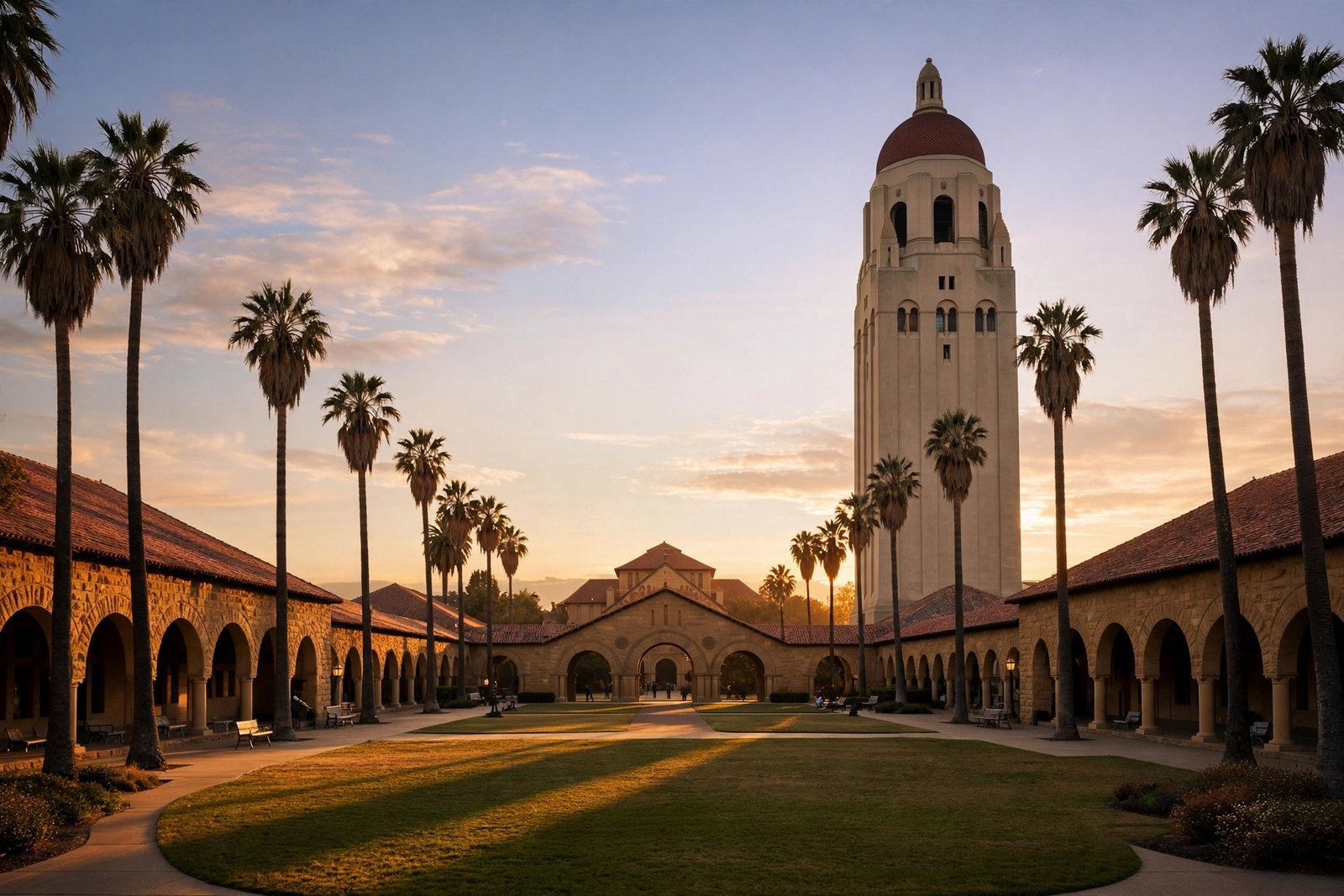
Stanford’s graduate programs — the GSB, School of Engineering, Law, Medicine, and the Knight-Hennessy Scholars program — admit single-digit percentages of applicants. But “impossible” is the wrong frame. Admissions at this level is not a lottery; it is a matching process where exceptional, well-prepared applicants with clear purpose consistently succeed. The acceptance rate is low because the applicant pool is self-selected and extraordinary, not because admission is random.
Getting into Stanford graduate programs is a 12-18 month campaign built on academic excellence, distinctive experience, compelling narrative, and strategic program fit. This guide covers what Stanford actually looks for and how to build an application that earns a second read.
Academic Credentials: Necessary, Not Sufficient
The baseline is high: successful applicants to competitive Stanford programs typically present GPAs of 3.7+ (many 3.9+), and where GRE scores are still considered, quant scores in the 165+ range for engineering and sciences. But perfect numbers alone admit no one — Stanford rejects thousands of 4.0 applicants annually. Academics get you past the first screen; everything else gets you admitted.
Research experience is the differentiator for PhD and research master’s programs: 1-2+ years of substantive work, ideally with a publication, conference presentation, or a letter from a PI who can speak to your research potential specifically. For professional programs (GSB, Law, Medicine), impact in your field substitutes — leadership, entrepreneurship, unusual achievement. Take the hardest relevant coursework and excel; grade trends matter, and a strong junior/senior record can offset a weaker start. Preparation tools help — AI tools for students studying for exams are now standard in serious test prep.
Letters, Essays, and the Narrative Arc
Letters of recommendation are where applications are won. Stanford wants letters from people who know your work deeply and can compare you to peers — “the best undergraduate researcher I have mentored in a decade” beats a generic letter from a famous professor who barely knows you. Cultivate these relationships 12+ months out: do research, take small seminars, ask for feedback, then ask for letters with 6-8 weeks’ notice and a brag sheet.
The statement of purpose must answer three questions: what intellectual problem drives you, why Stanford specifically (name labs, professors, courses — generic praise is fatal), and what you will do with the degree. For the GSB, the famous “what matters most to you, and why” essay demands genuine introspection, not résumé prose. Every claim needs evidence; every paragraph should be cuttable by no one but you. Have 2-3 trusted readers critique for specificity — vague essays are the most common failure mode. Consider the broader credential debate too: whether AI is making college degrees less valuable is reshaping how applicants frame the ROI of elite graduate education.
Program Fit and Strategic Choices
Apply where your profile fits the program’s actual priorities, not just its prestige. Stanford Engineering values research alignment with specific faculty — emailing professors whose work genuinely intersects yours (with a substantive, brief note) is normal and expected for PhD applications. The GSB values leadership trajectory and distinctiveness over pedigree. Knight-Hennessy (the fully-funded graduate scholarship) values multidisciplinary leadership potential across any field.
Timing: most PhD and fellowship deadlines fall November-December for the following fall; professional schools vary (GSB rounds in September/January/April). Apply in the earliest round you can do well — never rush a weak application to hit an early deadline. Funding: Stanford PhDs are typically fully funded (tuition + stipend ~$50K+/year); professional master’s programs often are not — understand the debt math before applying. The Stanford graduate admissions pages publish program-specific requirements, deadlines, and funding details.
Interviews and the Final Mile
Many programs interview finalists — treat it as a collaborative conversation, not an interrogation. Prepare to discuss your research or experience at depth, articulate why Stanford and why now, and ask questions revealing genuine intellectual curiosity about the program. For the GSB and similar, behavioral interviews probe leadership stories — prepare 5-6 detailed narratives using the STAR format.
After admission, visit if you can — fit with advisors and cohort culture predicts PhD completion better than rankings. Negotiate visit weekends actively: meet potential advisors’ current students and ask about mentorship quality, funding stability, and time-to-degree. Rankings from U.S. News graduate school rankings provide context, but advisor fit dominates outcomes. And if you are rejected: it is not a verdict on your worth — reapply with a stronger profile, or thrive elsewhere. Stanford’s loss, genuinely.
Funding the Degree: Costs and Fellowships
PhD programs at Stanford are fully funded — tuition plus stipend — so the financial question is lifestyle, not debt: the stipend (~$50,000+/year) is livable in the Bay Area only with roommates and discipline. Knight-Hennessy Scholars receive full funding plus leadership programming — the most lucrative graduate fellowship in the country, worth pursuing alongside any degree application. External fellowships (NSF GRFP, NDSEG, Hertz) add prestige and flexibility; apply in your senior year or first graduate year.
Professional degrees are the expensive path: the GSB’s MBA costs $250,000+ all-in, Law and Medicine similar. Do not borrow blindly: model post-graduation salaries against debt service — Stanford’s loan repayment assistance programs (LRAP) help public-interest graduates, and many students offset costs through research and teaching assistantships (even in professional schools), employer sponsorship (negotiate before resigning — some firms fund graduate study), and fellowship stacking (departmental awards plus external grants). Cost of living reality: Stanford’s official budgets understate Bay Area housing — talk to current students about actual rents before committing. The degree’s ROI is real but not automatic; the students who thrive financially are those who treated funding as part of the application strategy, not an afterthought.
Conclusion
Stanford graduate admission rewards the prepared: elite academics as table stakes, deep research or impact experience, letters from people who truly know your work, essays with a specific intellectual narrative, and genuine program fit. Start 12-18 months out, build relationships deliberately, and write like someone with something to say. The admit rate is low; the formula is not mysterious.
Frequently Asked Questions
What GPA do I need for Stanford graduate school?
Competitive applicants typically have 3.7+, often 3.9+. But GPA is a threshold, not a ticket — research experience, letters, and statement of purpose decide among qualified applicants.
Does Stanford require the GRE?
Many programs have gone test-optional or dropped the GRE; requirements vary by department and change yearly. Check your specific program’s current policy — where accepted, strong scores still help.
How important are letters of recommendation?
Decisive. Letters from mentors who know your work deeply and can compare you to peers (“best in a decade”) outweigh famous-but-distant recommenders. Cultivate these relationships a year in advance.
What is the Knight-Hennessy Scholars program?
Stanford’s fully-funded graduate scholarship for students across all disciplines, selecting for multidisciplinary leadership potential. It requires a separate application alongside your degree program application.
Are Stanford PhDs fully funded?
Typically yes — tuition plus an annual stipend (currently ~$50K+). Professional master’s programs (including much of the GSB) often carry significant tuition costs; verify funding before applying.
Can I apply to multiple Stanford graduate programs at once?
Yes, but each application is evaluated independently and fees apply per program. Only do it when you have genuine fit with each — admissions committees spot prestige-spraying instantly. Knight-Hennessy requires its own separate application in addition to your degree program application.