
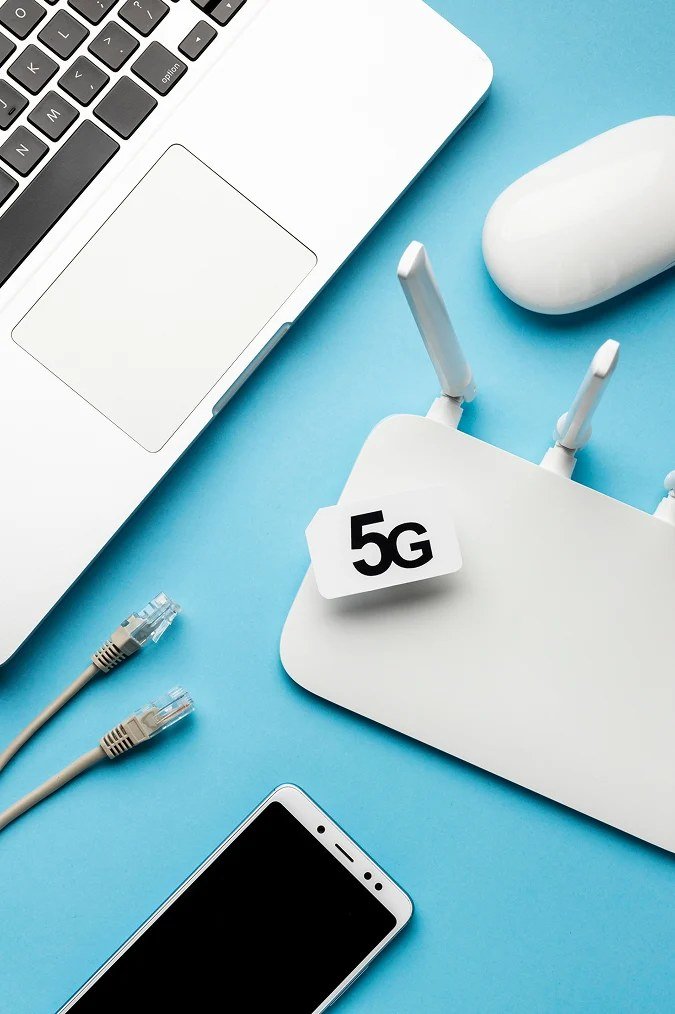
What Does 5G Actually Change for Everyday Phone Users?

What does 5G actually change for everyday phone users? After years of carrier hype that promised everything short of teleportation, here’s the honest 2026 answer: for most people, in most places, surprisingly little — but in specific situations, it’s genuinely great. The trick is knowing which situation you’re in.
I’ve used 5G daily for three years across three cities. Let me separate the marketing from the lived experience.
What Does 5G Actually Change? Speed — Sometimes Dramatically
The headline promise was speed, and in the right spots it delivers: mid-band 5G (T-Mobile’s bread and butter, and now widely deployed by Verizon and AT&T) routinely hits 200–600 Mbps in cities — three to five times typical 4G. You’ll feel it downloading large apps, updating your phone, or hotspotting a laptop (see our How do I use my phone as a WiFi hotspot on a road trip road-trip guide).
But — and it’s a big but — everyday phone use barely needs that speed. Streaming 4K video needs 25 Mbps. Video calls need 5. Social media needs less. Once you’re past about 50 Mbps, more speed is invisible for normal use. So 5G’s speed matters most for big downloads and tethering, not for scrolling Instagram faster. The carriers’ coverage maps at the FCC's consumer help center show where mid-band actually reaches.
Latency, Capacity, and the Invisible Wins
5G’s less-hyped improvements matter more than raw speed. Lower latency (often 20–30ms versus 40–60ms on 4G) makes video calls slightly snappier and mobile gaming noticeably more responsive — competitive mobile gamers feel this immediately. Higher capacity means your connection holds up in crowds: stadiums, concerts, and busy downtown lunch hours where 4G used to collapse.
These are real quality-of-life wins, but they’re subtle — the kind of thing you notice only when you go back to 4G in a congested spot. Nobody’s life changes because latency dropped 20 milliseconds; everybody’s day improves slightly when their phone works in a packed stadium.
The 5G reality check:
- Real win: 200–600 Mbps mid-band speeds for downloads and hotspotting.
- Subtle wins: lower latency for gaming/calls, better performance in crowds.
- Everyday scrolling and streaming? 4G was already fast enough — you won’t feel it.
- Battery: fine where coverage is strong, wasteful where the phone hunts for signal.
- Buying advice: don’t pay extra for 5G; do pick the carrier with the best coverage at your address.
The Battery and Coverage Trade-Offs
Early 5G phones paid a battery penalty hunting for sparse 5G signals — the radio working overtime to hold a weak connection. In 2026 this is much improved: modems are more efficient, coverage is denser, and phones switch intelligently between 4G and 5G. But the physics remains: if your carrier’s 5G is weak where you live, forcing 5G on costs battery for no benefit.
Check your actual experience: if your 5G icon is constantly dropping to 4G, or your battery drains oddly fast (see How do I make my Android phone battery last longer), try locking the phone to 4G/LTE for a week and compare. Many people find zero practical difference — which tells you everything about whether 5G matters in your daily life.
Should You Care When Buying a Phone?
In 2026, don’t pay extra for 5G — but don’t avoid it either. Every current phone includes it by default, and it’s genuinely useful for longevity: over a 3–4 year ownership, networks will only get more 5G-dependent. It’s future-proofing you get for free, not a feature worth a premium.
The real buying advice: carrier matters more than the G. The best 5G phone on a carrier with poor coverage in your area loses to a 4G phone on a carrier with great coverage. Ask neighbors, check coverage maps for your specific address, and prioritize signal quality over generation hype. The G is marketing; the bars are real life.
The Bottom Line
What Does 5G Actually Change for Everyday Phone Users? Before You Decide
Before making any 5G-based decision — phone purchase, plan upgrade, carrier switch — test your actual experience, not the marketing. Run speed tests in the places you actually spend time (home, work, commute), note whether your phone shows 5G or drops to 4G most of the day, and check whether your battery drains oddly. Your personal data beats every carrier coverage map, which are famously optimistic about real-world performance.
And don’t pay the 5G tax: some carriers still charge premiums for 5G access or 5G-capable plans, which made sense in 2020 and is pure margin in 2026 when every phone includes it. If a plan costs more ‘for 5G,’ compare it against MVNOs offering the same network access cheaper — the G in the corner of your screen isn’t worth $20/month. The technology is now standard equipment; anyone charging extra for it is selling you air.
The satellite connectivity creeping into phones (emergency SOS via satellite on iPhones, expanding Android support) is arguably more transformative than 5G for the people it serves — rural users, hikers, travelers outside coverage. It’s slow and limited to emergencies and texts, but it works where no tower reaches. When evaluating ‘connectivity’ as a phone feature, the satellite story matters more than the 5G version number for anyone who leaves cities. The G wars are marketing; the satellite dot is genuine capability expansion. For backcountry travelers, it’s the most meaningful connectivity advance in a decade.
5G changes the most for heavy downloaders, hotspot users, mobile gamers, and anyone in crowded venues — for everyone else, it’s a nice-to-have running quietly in the background. Don’t upgrade for 5G alone, don’t pay a premium for it, but appreciate it when your phone works flawlessly in a packed stadium. The revolution was real; it was just quieter than the ads promised.
5G in 2026 is infrastructure, not a feature — nice to have, rarely worth paying extra for, occasionally genuinely great in the right spots. Test your reality, don’t pay premiums for standard equipment, and pick carriers on coverage where you live. The hype cycle is over; what’s left is quietly useful.