
The Best Family Board Games for Game Night
What Are the Best Family Board Games for Game Night?
Family game night has a PR problem: most people picture Monopoly-induced feuds or Candy Land tedium. But what are the best family board games for game night in the modern era? Board gaming has had a renaissance, and there’s now a golden age of games designed to be genuinely fun for mixed ages — strategic enough for adults, accessible enough for kids, and finished before anyone loses interest. My family plays weekly, with ages ranging from 7 to 70, and these twelve have survived the toughest test there is: being requested again.
What Makes a Great Family Game
The sweet spot: rules you can teach in under 10 minutes, playtime under an hour, meaningful decisions (not just luck), and a mechanism that keeps everyone engaged on others’ turns. Games that eliminate players early are out — nobody wants to watch for 40 minutes. Every game below meets these criteria.
What Are the Best Family Board Games for Game Night? The 12
Easy starters (ages 6+, 20–30 minutes)
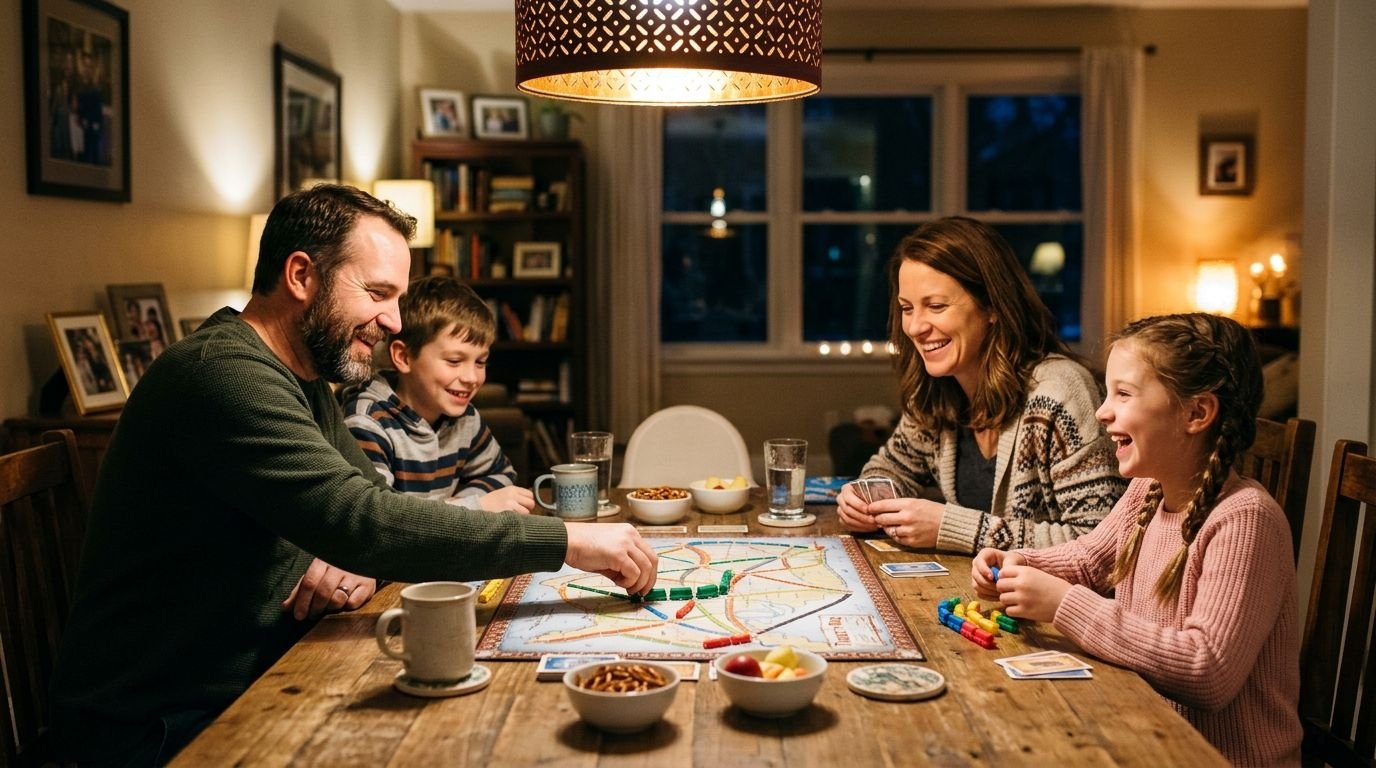
1. Ticket to Ride: collect cards, claim train routes across the country. Simple, satisfying, and the gateway game that hooks non-gamers. The rare game grandparents and grandkids both love.
2. Codenames: the best party-word game ever made. Two teams, one-word clues, hilarious misinterpretations. Works brilliantly with bigger groups and pairs well with trivia night energy.
3. Azul: beautiful tiles, simple drafting, surprising depth. Looks like art on the table and plays in 30 minutes.
4. Splendor: collect gems, buy cards, build an engine. Teaches in 5 minutes, rewards clever play. My kids’ most-requested game for two years running.
Step up (ages 8+, 30–60 minutes)
5. Catan (Junior for younger kids): the classic for a reason — trading and building with just enough luck to keep it friendly. Set a timer; it can run long with negotiators.
6. Carcassonne: draw tiles, build a medieval landscape together. Peaceful, puzzly, and different every game.
7. Pandemic: the cooperative game where everyone wins or loses together. No one gets eliminated, and it teaches teamwork. (The theme hits different now, but the game is superb.)
8. King of Tokyo: giant monsters battling for the city with chunky dice. Kids adore it; adults enjoy the push-your-luck tension.
For families with teens
9. Wingspan: gorgeous, relaxing engine-builder about birds. More complex but deeply satisfying — the game that converted my “I don’t like board games” teenager.
10. The Crew: a cooperative trick-taking game in a tiny box. Brilliant, cheap, and endlessly replayable.
11. Just One: cooperative party word game — give one-word clues, duplicates get cancelled. Simple, hilarious, great for mixed ages.
12. Telestrations: telephone meets Pictionary. The drawings get progressively worse and the results get progressively funnier. Guaranteed laughter.
Game Night Tips That Actually Matter
- Let the youngest pick first sometimes. Buy-in matters more than optimal game choice.
- Learn the rules before game night. Nothing kills momentum like 30 minutes of rulebook reading. Watch a 10-minute how-to video instead.
- Keep it to one game (or two short ones). Marathon sessions exhaust kids and casual players.
- Snacks away from the board. Protect the games — and check our backyard party ideas for outdoor game night inspiration in summer.
For reviews and rankings, BoardGameGeek is the definitive community resource, and the board game article on Wikipedia covers the hobby’s history.
Growing With Games: Age-by-Age Guide
The right game at the wrong age frustrates everyone. Ages 4–6: cooperative and simple — Outfoxed!, My First Orchard, Dragomino. Short (15 minutes), no reading required, everyone wins together. Ages 7–9: the golden window opens — Ticket to Ride: First Journey, Catan Junior, Kingdomino. Real decisions, manageable rules, 30-minute sessions.
Ages 10–12: full family games open up — regular Ticket to Ride, Carcassonne, Splendor, Pandemic. Kids this age can handle genuine strategy and often beat adults (humbling, wonderful). Teens: everything’s on the table — Wingspan, Codenames, social deduction games like The Chameleon. Teens engage hardest with games that respect their intelligence; skip the “kids’ games” and play the real thing.
Mixed ages (the real challenge): cooperative games are the answer — Pandemic, Forbidden Island, The Crew. Nobody’s eliminated, experienced players can guide without dominating, and the shared win feels great across ages. Alternatively, team up: pair younger kids with adults in competitive games. The teams balance naturally and the kids learn by watching.
Building the Collection Smartly
Don’t buy twelve games at once. Start with two: one gateway game (Ticket to Ride or Catan) and one party game (Codenames or Wits & Wagers). Play them monthly for three months. You’ll learn what your family actually enjoys — strategy? wordplay? cooperation? — and buy accordingly. Try before buying: board game cafés, library game collections, and friends’ shelves let you test games free. Buy used: the secondary market is flooded with barely-played games at half price.
Storage tip: vertical shelving (like books) saves space and makes the collection inviting. And cull ruthlessly — games nobody requests for a year get donated. A tight collection of ten loved games beats a shelf of thirty maybes. Game night thrives on familiarity; the best game is the one everyone already knows and loves.
The 10-Minute Teach
The difference between a game night that sings and one that stalls is how rules get taught. Never read the rulebook aloud — instead, learn the game yourself beforehand (a 10-minute how-to video beats 30 minutes with the manual), then teach the goal first (“we’re building train routes across the country”), the core turn (“on your turn, you either draw cards or claim a route”), and one example round. Start playing immediately; teach edge cases when they arise. People learn games by playing, not by listening. The first game is always a learning game — say so upfront, keep it light, and play a second round where everyone actually knows what they’re doing. That’s when the fun starts.
The Takeaway
Start with Ticket to Ride or Codenames, teach rules in under 10 minutes, keep sessions under an hour, and let everyone have a real chance to win. Modern family games are nothing like the Monopoly marathons you remember — give game night one honest try with the right game.