
Is It Safe to Replace My Own Electrical Outlets?
Discolored outlets, loose plugs that fall out, or just ugly almond-colored receptacles from 1987 — there are plenty of reasons to want new outlets. And the question is it safe to replace my own electrical outlets comes up because it looks simple: a few wires, a few screws. The honest answer: yes, it’s safe for a careful beginner — with the same strict safety protocol as any electrical work, and with clear lines you don’t cross.
The Safety Protocol (Non-Negotiable)
- Turn off the breaker for that circuit — then verify with a non-contact voltage tester ($12–$18). Test the tester on a known-live outlet first.
- Test every wire in the box, not just one. Multi-wire circuits can surprise you.
- Never work with wet hands or in damp conditions.
- If you find aluminum wiring (dull silver instead of copper orange), stop — aluminum needs special CO/ALR-rated devices and expertise. Electrician territory.
- Photograph everything before disconnecting. Wire positions are your map.
Follow this protocol and outlet replacement is about as risky as changing a tire — respect the process and it’s routine. Skip steps and it’s genuinely dangerous. The Electrical Safety Foundation International has excellent homeowner electrical safety resources worth reviewing before any electrical DIY.
What You’ll Need
- Replacement outlets ($3–$5 standard duplex; $15–$25 GFCI; $20–$40 AFCI)
- Non-contact voltage tester
- Screwdrivers (flathead + Phillips)
- Wire strippers
- Needle-nose pliers (for shaping wire loops)
Step-by-Step: Standard Outlet Swap
- Breaker off, verified dead with the tester. Plug something into the outlet and confirm it’s off too.
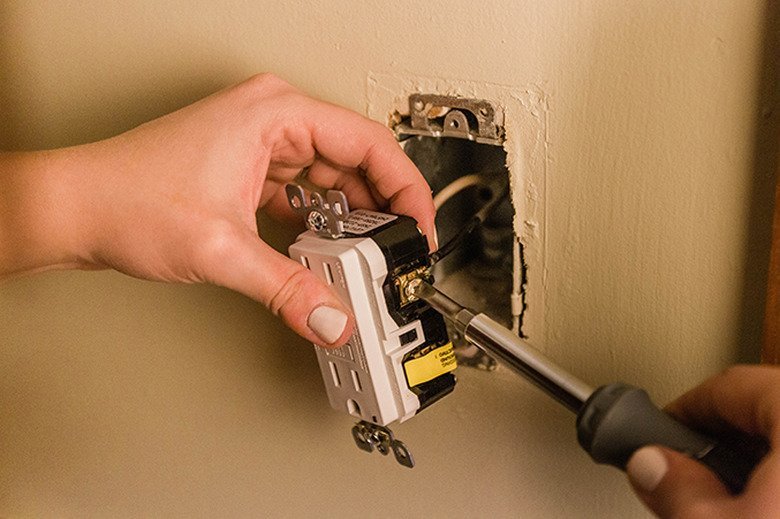
- Remove the cover plate and outlet. Unscrew the mounting screws, gently pull the outlet from the box.
- Note the wiring: black (hot) wires to brass/dark terminals, white (neutral) to silver terminals, bare copper/green to green ground screw. If the outlet was backstabbed (wires pushed into back holes), plan to use screw terminals on the new one — backstabs loosen over time.
- Check for special wiring: if the outlet has a broken tab between terminals (split-wired, often for switched outlets) or more than the standard wires, photograph carefully and replicate exactly. When in doubt, call an electrician.
- Connect the new outlet: shape wire ends into clockwise hooks, loop around terminal screws, tighten firmly. Or use the screw-clamp backwire holes if the device has them (different from cheap backstabs — these clamp with the screw).
- Gently fold wires into the box, mount the outlet, attach cover plate.
- Restore power and test with the tester and a plug-in device. Test both sockets.
When to Upgrade to GFCI (and When It’s Required)
If you’re replacing outlets anyway, consider GFCI protection where code requires it: bathrooms, kitchens (countertop outlets), garages, basements, laundry areas, and outdoor outlets. GFCI outlets ($15–$25) protect against ground faults and electrocution — they’re one of the great life-safety inventions in home electrical. One GFCI can protect downstream outlets on the same circuit when wired correctly (line vs. load terminals matter — read the instructions carefully).
Note: miswiring a GFCI’s line/load terminals is the most common DIY GFCI mistake. If downstream outlets don’t work after installation, the line/load is likely swapped.
When to Call an Electrician
- Aluminum wiring — special handling required, no exceptions
- Burn marks, melted insulation, or burning smells in the box
- No ground wire in the box (common pre-1960s) — an electrician should evaluate options (GFCI protection can be a code-compliant workaround)
- Crowded boxes with many wires where you’re unsure what’s what
- Breaker trips after restoration — don’t keep resetting; investigate
- Any uncertainty. The $150 service call is always cheaper than the alternative.
GFCI vs. AFCI: Know the Difference
These acronyms confuse everyone, so let’s clarify. GFCI (Ground Fault Circuit Interrupter) protects people from shock — it trips when current leaks to ground (like through a person). Required in bathrooms, kitchens, garages, outdoors, basements, and laundry areas. AFCI (Arc Fault Circuit Interrupter) protects property from fire — it detects dangerous arcing in wiring (damaged cords, loose connections) and trips before it ignites. Required in most living areas (bedrooms, living rooms, hallways) in new construction. Dual-function AFCI/GFCI breakers or outlets provide both protections and are increasingly the standard for replacements. When replacing an outlet, match or upgrade the protection: a bathroom outlet must be GFCI (or GFCI-protected upstream); consider dual-function for bedroom replacements. The $10 premium for dual-function is cheap fire insurance.
Is It Safe To Replace My Own Electrical Outlets?
Two upgrades worth considering during replacement: USB/USB-C combo outlets ($20–$35) eliminate wall-wart clutter for phones and tablets — genuinely convenient in bedrooms, kitchens, and offices. Verify the USB ports deliver adequate amperage for your devices (cheap ones charge slowly). Tamper-resistant (TR) outlets are now code-required in new residential work — spring-loaded shutters block foreign objects (the curious-toddler scenario) while accepting normal plugs easily. If you have small children, prioritize TR models throughout. Both upgrades cost only slightly more than basic outlets and modernize every room you touch. While you’re at it, consider decora-style rocker outlets over the old duplex style — a subtle visual upgrade that makes rooms feel newer.
Label Your Breaker Box (Do It Now)
While you’re in the electrical mindset, do the chore everyone postpones: label every breaker accurately. Turn circuits off one at a time, walk the house with a phone charger or lamp, and write down what each breaker actually controls — not what the faded 1987 pencil scribble claims. Use a label maker or neat handwriting on the panel door. This 30-minute job pays off forever: every future electrical project starts with confidently killing the right circuit, and in an emergency (water leak near wiring, burning smell), you won’t be guessing. Future you — and any electrician you ever hire — will be grateful.
The Takeaway
Is it safe to replace your own electrical outlets? Yes — for standard swaps on copper wiring, with the breaker off and tester-verified dead, photographed wiring replicated exactly, and screw terminals (not backstabs). Upgrade to GFCI where code requires it. Call an electrician for aluminum wiring, burn damage, missing grounds, or any confusion.
It’s a 15-minute job per outlet that modernizes your home’s look and safety. Do one, and the rest of the house takes an afternoon. More electrical confidence? Our light switch replacement guide uses the same safety protocol, and the ceiling fan guide covers the next step up.