
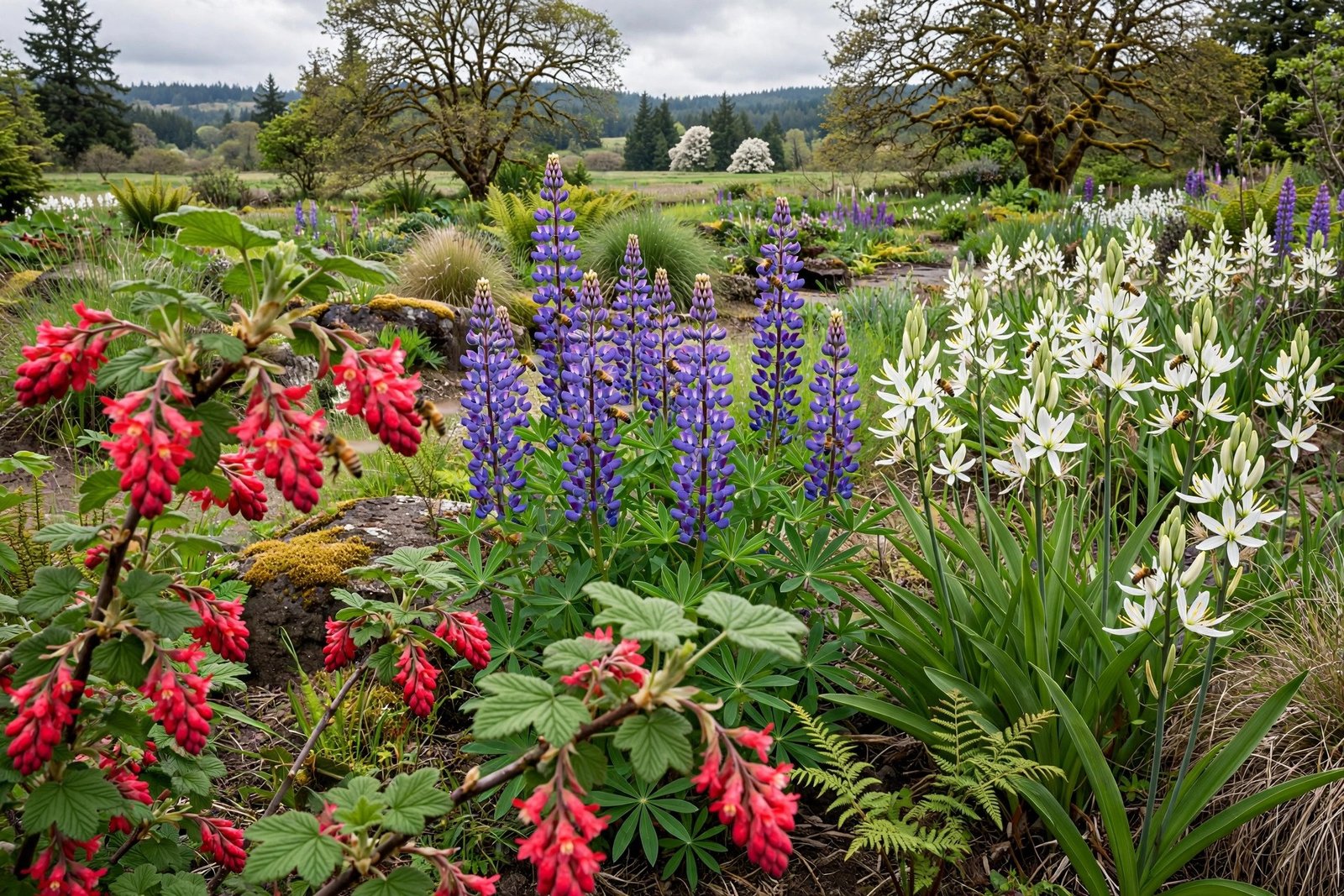
Oregon is native-plant paradise. From the Willamette Valley’s oak savannas to the coast’s Sitka spruce forests to the high desert’s sagebrush steppe, the state holds an extraordinary palette of plants that evolved here over millennia — plants that feed native bees, butterflies, and birds in ways exotic ornamentals never will. A native plant garden in Oregon is not just beautiful and low-maintenance; it is ecological restoration in your yard.
This guide walks you through starting one: understanding your ecoregion, choosing the right species, sourcing real native plants (not imposters), preparing your site, and a year-one timeline.
Know Your Ecoregion First
Oregon has dramatically different native plant communities, and “native to Oregon” is too broad to be useful — a plant native to the Alvord Desert may drown in Portland. The three main gardening regions: the Willamette Valley (wet winters, dry summers; Oregon white oak, camas, red flowering currant), the Coast (cool, wet year-round; shore pine, salal, evergreen huckleberry), and Central/Eastern Oregon (cold winters, arid; sagebrush, bitterbrush, penstemon).
Within each, microclimates matter: a south-facing slope in Bend differs from a shady riparian strip. The most successful native gardens mimic the plant communities that would naturally occur on that exact site. Walk nearby natural areas and note what grows in conditions like yours — nature has already done the plant trials. Audubon’s native plants database lets you search by zip code for species that support local birds, which is an excellent starting filter.
The Essential Oregon Native Plants
Willamette Valley backbone plants: Oregon white oak (the keystone species — plant one if you have room and think in centuries), red flowering currant (hummingbird magnet, gorgeous spring blooms), Oregon grape (evergreen, yellow flowers, blue berries), camas (stunning spring meadows), Douglas fir (where space allows), vine maple (brilliant fall color), and tufted hairgrass.
For pollinators: checkermallow, lupine, yarrow, Douglas aster, and goldenrod provide season-long blooms. Coast additions: salal, evergreen huckleberry (edible berries!), sword fern, and Sitka spruce. East-side stars: sagebrush, rabbitbrush, sulfur buckwheat, and penstemon species. The Xerces Society for Invertebrate Conservation — headquartered in Portland — publishes outstanding Pacific Northwest pollinator plant lists worth studying before you buy anything.
Nativars vs. straight species
You will encounter “nativars” — cultivated varieties of native species selected for showier flowers or compact size. They are better than exotics, but straight species generally support more wildlife (some nativars have altered nectar or inaccessible flowers). For ecological impact, choose straight species when available; use nativars where garden performance truly demands it.
Where to Buy Real Native Plants
sourcing matters enormously. Big-box stores rarely carry true local natives, and when they do, the plants may be grown from seed collected hundreds of miles away — genetically mismatched to your site. Instead, buy from native plant nurseries (Oregon has excellent ones in every region), native plant society sales (the Native Plant Society of Oregon chapters hold legendary spring and fall sales), and conservation district sales.
Ask nurseries about seed provenance — reputable native nurseries know where their stock originated. Buy small (4-inch pots and plugs establish fastest and cheapest), and do not be shocked by seasonal availability: native nurseries sell out of popular species by late spring, so shop early. Fall is actually the best planting season (see below), and shopping the fall sales scores the best selection for the patient.
Site Prep: Killing Lawn the Right Way
Converting lawn or weedy ground to natives requires killing existing vegetation first — planting into live grass is the top cause of native garden failure. The best methods: sheet mulching (layer cardboard, compost, and wood chips; wait 3–6 months) — chemical-free and soil-building; solarization (clear plastic in summer heat) for weedy areas; or careful sod removal for instant results.
Do not rototill — it brings weed seeds to the surface and destroys soil structure natives depend on. Amend sparingly: most Oregon natives prefer lean, unamended soil (rich soil favors weeds over natives). The one amendment worth making is compost for water retention in sandy soils — start composting at home and you will have it free. If you want broader design inspiration alongside the native focus, these low-maintenance landscaping ideas for beginners complement native plantings beautifully.
Dealing with invasive species first
Before planting, honestly assess invasive plants on your site — English ivy, Himalayan blackberry, and Japanese knotweed are Oregon’s notorious trio, and planting natives into an ivy monoculture is futile. Eradicate invasives first, even if it delays planting by a season; every native gardener who skipped this step regrets it. Manual removal works for small patches, while large infestations may need a season of smothering with tarps. Your county’s Soil and Water Conservation District often offers free advice and sometimes cost-share programs for invasive removal on private land.
Your Year-One Timeline
Fall (September–November): the golden planting season. Plant everything — fall rains do the watering, cool temperatures reduce transplant shock, and roots establish all winter. Mulch 3 inches deep with bark or wood chips. Winter: plan, order seeds, attend native plant society meetings. Plant bare-root trees and shrubs while dormant.
Spring: fill gaps, sow wildflower seeds, watch the garden wake up. Water new plantings through their first dry season — even drought-tolerant natives need establishment water. Summer: deep water new plants every 1–2 weeks; resist the urge to overwater established natives (summer water kills some species like manzanita). Year two: the garden largely takes care of itself. That is the native promise: front-loaded effort, decades of low-maintenance beauty.
Conclusion
Starting a native plant garden in Oregon means working with your ecoregion, choosing straight-species natives from reputable local nurseries, preparing the site properly, and planting in fall. The reward is a garden that belongs — one that drinks less, works less, and hums with bees, butterflies, and birds in a way no conventional landscape can match. Oregon’s native plants spent millennia perfecting themselves for exactly your yard. Let them do what they do, and enjoy the front-row seat. Your yard becomes part of Oregon’s living landscape.
Frequently Asked Questions
When is the best time to plant natives in Oregon?
Fall (September–November) is ideal — rains handle watering, cool weather minimizes transplant shock, and roots establish over winter. Spring works too but requires diligent summer watering through the first dry season.
Do native plants need watering?
New plantings need regular water through their first 1–2 dry seasons to establish. Mature natives adapted to your site typically need little to no supplemental water — though even natives appreciate deep watering during extreme heat waves.
Where can I buy native plants in Oregon?
Native plant nurseries, Native Plant Society of Oregon chapter sales, and conservation district plant sales are the best sources. Avoid big-box stores for natives — provenance and species accuracy are unreliable there.
Will a native garden attract pests?
Native gardens attract wildlife — which is the point — including beneficial predators that control pests naturally. A balanced native planting typically has fewer pest outbreaks than conventional landscapes because the ecosystem regulates itself.
How do I kill my lawn without chemicals?
Sheet mulching (cardboard + compost + wood chips, left 3–6 months) is the most reliable chemical-free method. Solarization works in sunny summer spots. Sod cutting gives instant results for small areas. Never rototill — it multiplies weed problems.