
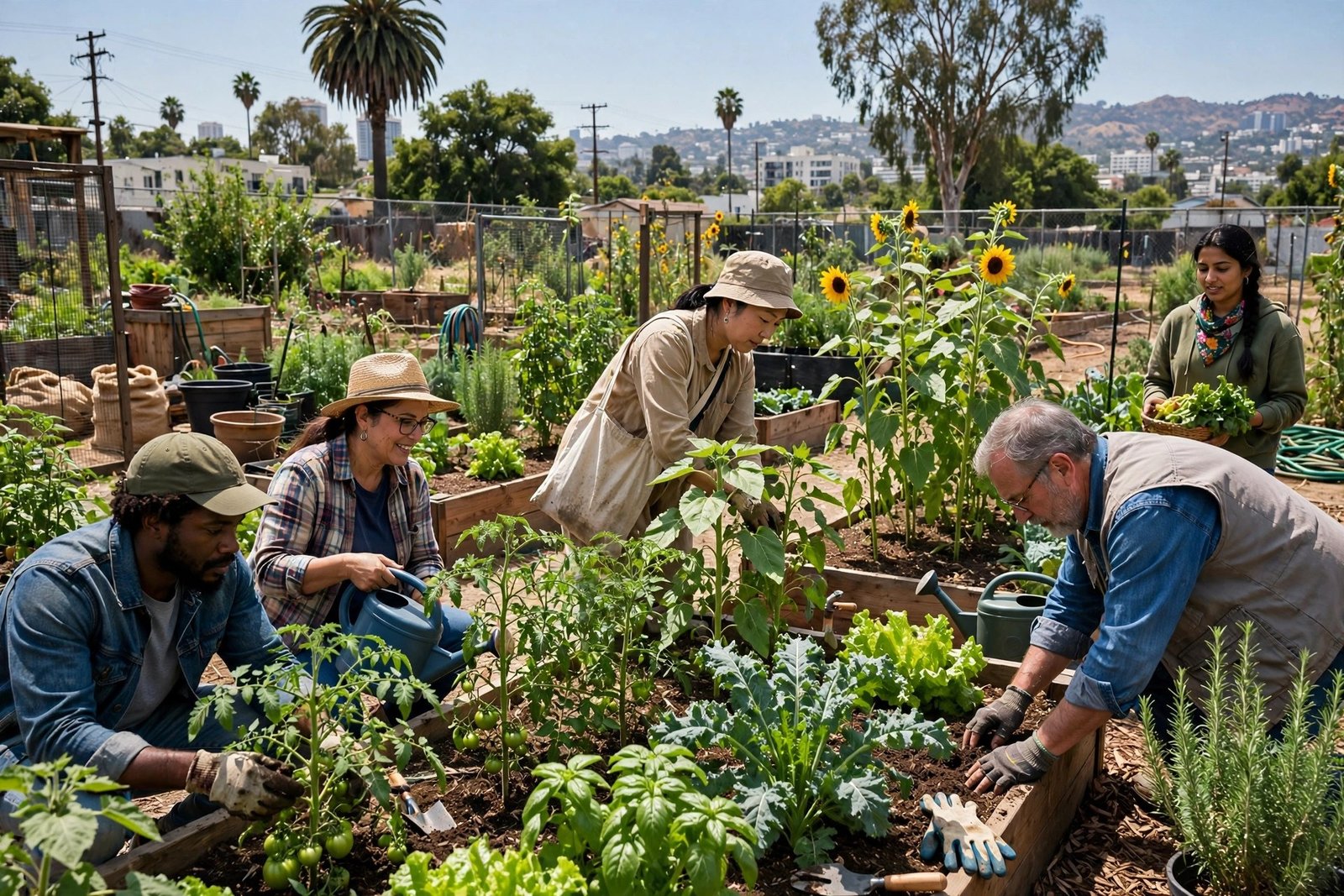
Los Angeles has over a hundred community gardens tucked into neighborhoods from Echo Park to South Central — shared green spaces where anyone can claim a plot, grow food, and join one of the city’s most quietly wonderful communities. In a city of apartments and concrete, a 10×20-foot plot can produce hundreds of pounds of produce a year.
This guide covers how to start a community garden plot in LA: finding gardens with open plots, navigating waitlists, understanding fees and rules, and what to plant first in Los Angeles soil.
Finding a Garden With Open Plots
Start with the directories: the LA Community Garden Council lists member gardens across the city, and the city’s community garden program maps plots on public land. Search by neighborhood — proximity matters enormously, because a garden you visit twice a week thrives while one across town withers. Drive or walk by promising gardens; many post contact info on their gates.
Do not overlook non-obvious options: school gardens with community plots, church and faith-based gardens, parks department plots, and private land-sharing arrangements (some homeowners lend yard space). Each has different rules and cultures. Visit two or three before committing — the social vibe varies as much as the soil. The City of Los Angeles provides information on gardens operating on city land and how to apply.
The waitlist reality
Popular gardens have waitlists — sometimes months, occasionally over a year. Get on multiple lists immediately; they cost nothing and you can decline when a better option opens. While waiting, volunteer at workdays: gardens notice reliable volunteers, and plots often go to known faces before the list is consulted. Showing up is the cheat code.
Fees, Rules, and What You Are Signing Up For
Typical LA community garden plots cost $50–$200 per year — astonishingly cheap for what you get — with some gardens charging quarterly or asking for work-hour commitments instead of (or in addition to) fees. Common rules: organic practices only (no synthetic pesticides or fertilizers), keep your plot cultivated and weed-free, maintain common paths, attend workdays (usually monthly), and no permanent structures without approval.
Read the garden’s bylaws before signing — they vary significantly. Some gardens assign plots; others let you choose. Some require specific watering schedules; others are flexible. Understand the abandonment policy: most gardens reclaim neglected plots after 2–4 weeks of no maintenance, which is fair but unforgiving if life gets busy. Know the commitment: a plot needs 3–5 hours weekly in the growing season. Be honest about whether you can give that.
Garden etiquette that matters
Community gardens run on goodwill. Do not pick from others’ plots (even “just one tomato” — it is theft, and gardeners notice). Keep your weeds from seeding into neighbors’ plots. Share surplus generously — the gardener who gives away zucchini builds the relationships that make gardens joyful. And communicate: tell neighbors when you will be away so someone can water. The social fabric is the real crop.
Preparing Your Plot: LA Soil Realities
LA garden soil is a mixed bag: some plots have decades of amended, glorious loam; others sit on compacted fill, construction debris, or lead-contaminated urban soil. Get a soil test first — LA County offers testing through the UC Cooperative Extension, and it is the best $20 a new plot-holder spends. Test especially for lead if the garden is near old buildings or busy roads; raised beds with imported soil solve contamination cleanly.
Most plots benefit from heavy compost amendment — and starting composting at home gives you a free, continuous supply. Many LA gardens have communal compost systems; learn theirs and contribute. Break up compaction with a broadfork rather than rototilling (which destroys soil structure), mulch paths with wood chips (often free from tree services), and plan your layout before planting: tall crops north, paths wide enough for a wheelbarrow.
What to Plant First in Los Angeles
LA’s year-round growing season is a superpower — but start with winners, not experiments. First-season sure things: tomatoes (cherry types are foolproof), zucchini and summer squash, cucumbers, peppers, bush beans, basil, and cut-and-come-again lettuce. These produce fast, forgive beginners, and build confidence.
LA specialties: the long warm season grows crops most of the country cannot — Armenian cucumbers, chayote, passionfruit on the fence, citrus in the corner, artichokes as perennials. Cool-season garden (plant October–February): garlic, onions, peas, fava beans, broccoli, kale, carrots — LA winters grow food while the Midwest shovels. Succession-plant every 2–3 weeks for continuous harvests rather than one overwhelming glut. And grow what you eat: the perfect garden grows your grocery list, which is also how you reduce food waste in your kitchen each week — harvest-to-table in minutes means nothing spoils.
Water wisely from day one
LA water is expensive and the climate is dry — install drip irrigation immediately (many gardens have shared systems; learn yours), mulch 3–4 inches deep, and water early morning. New plot-holders who hand-water erratically lose seedlings; a simple timer on drip lines makes your plot nearly self-sufficient between visits.
Beyond the Plot: The Community Payoff
The produce is only half the harvest. Community gardens are among LA’s most diverse, intergenerational spaces — you will garden alongside retired Armenian grandmothers, young Oaxacan families, and everyone in between, trading seeds, recipes, and growing wisdom across cultures. Gardeners consistently report the community as the most valuable part.
Get involved beyond your plot: join the garden’s leadership, teach a workshop on something you know, help with grant writing or social media. Gardens that thrive have active members, not just active plots. The USDA’s National Agricultural Library maintains community gardening resources covering everything from organization to food safety — useful when your garden wants to grow its ambitions.
Conclusion
Starting a community garden plot in LA means finding a nearby garden, getting on waitlists while volunteering, understanding the fees and rules, testing your soil, and planting proven winners first. The commitment is real — a few hours weekly — but the returns are extraordinary: fresh food year-round, new skills, and a community rooted in the most literal sense. In a city that can feel isolating, a garden plot is an invitation to belong. Claim yours.
Frequently Asked Questions
How much does a community garden plot cost in LA?
Typically $50–$200 per year, with some gardens charging quarterly or substituting work-hour requirements for fees. This covers water, common-area maintenance, and tools — an extraordinary value for year-round growing space.
How long are waitlists for LA community gardens?
It varies from immediate availability to over a year at popular gardens. Join multiple waitlists and volunteer at workdays in the meantime — active volunteers often get plots before the formal list is consulted.
Do I need experience to join a community garden?
No — gardens welcome beginners, and experienced neighbors are usually generous with advice. Start with easy crops, ask questions freely, and attend garden workshops. Everyone was a beginner once.
Should I test my plot’s soil?
Yes, absolutely — especially for lead in urban LA soils near old buildings or roads. LA County’s UC Cooperative Extension offers affordable testing. If contamination is found, raised beds with imported soil are the standard safe solution.
What can I grow year-round in LA?
Nearly everything, in season: warm-season crops (tomatoes, peppers, squash, beans) March–October; cool-season crops (garlic, peas, broccoli, kale, lettuce) October–March. LA’s climate supports continuous production — plan successions, not single plantings.