
How Do I Plan a Weekly Schedule That Leaves Free Time?
How do I plan a weekly schedule that leaves free time? Most weekly schedules fail for the same reason diets fail: they’re built for an ideal version of you that doesn’t exist. The secret isn’t better time management — it’s honest time management. A schedule that accounts for your actual energy, your actual obligations, and your actual need to do nothing will beat a color-coded fantasy every time.
I’ve tried the hyper-optimized routines and the “just wing it” approach. The system below is what survived: simple, flexible, and — crucially — it protects your free time instead of treating it as leftover scraps.
Start With a Time Audit (One Week, No Judgment)
Before planning anything, track where your hours actually go for one week. Not where you think they go — where they go. Use a notes app, a spreadsheet, or a free time tracker. Most people discover two things: they’re losing 2–3 hours a day to their phone, and their “busy” weeks have more dead time than they realized.
This isn’t about guilt. It’s about data. You can’t plan a schedule that leaves free time if you don’t know where the time is leaking. Common leaks: morning phone scrolling, shapeless evenings, meetings that could’ve been messages, and errands scattered across five days instead of batched into one.
Block the Non-Negotiables First
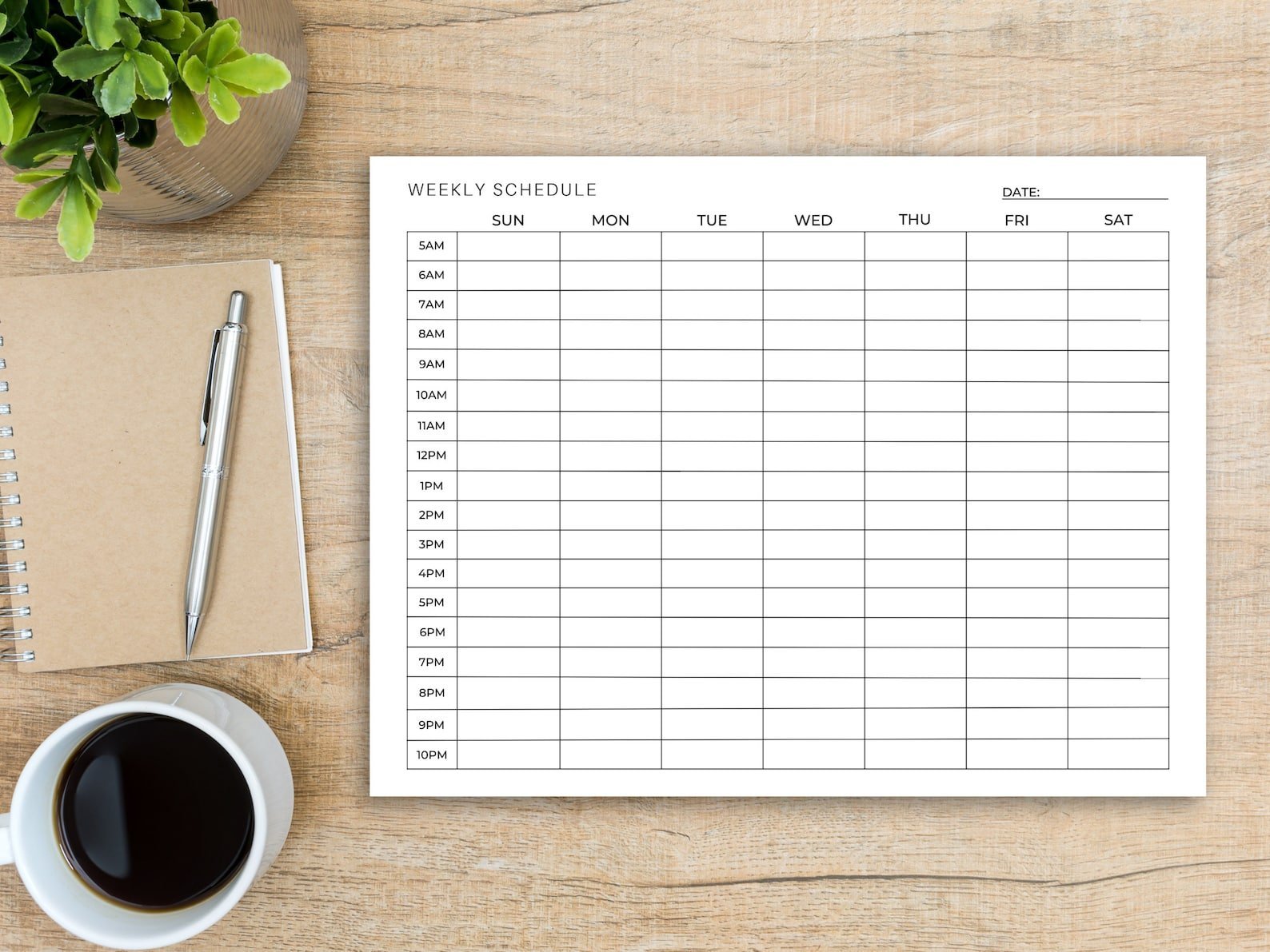
Open a blank week and block these in order:
- Sleep. Block it like an appointment. If you’re also trying to build a bedtime routine for better sleep, this is where it lives.
- Work and fixed commitments. Job hours, classes, recurring appointments.
- Free time — yes, now. Block 1–2 hour chunks labeled “free” before you schedule anything else. This is the move most people skip, and it’s the whole trick. Free time that’s scheduled gets protected; free time that’s “leftover” never exists.
- Everything else. Errands, chores, workouts, social plans — they fit into what’s left, which forces you to be realistic about how much you can actually do.
How to Plan a Weekly Schedule That Leaves Free Time: The Template
Here’s a weekly skeleton that works for most people with a standard job:
- Monday–Friday mornings: Deep work or hardest tasks first. Protect the first 90 minutes from meetings if you can.
- One weeknight: Errands and chores, batched. Laundry, groceries, cleaning — one night, done. Our tips on making laundry day less of a chore help here.
- One weeknight: Social or hobby. Non-negotiable fun.
- Saturday: One big thing (project, outing, deep clean) + free evening.
- Sunday: Planning (30 min) + genuine rest. More on that in what to do on weekends to actually feel rested.
The Rules That Make It Work
Theme Your Days
Instead of scattering similar tasks across the week, batch them. Admin day, errand day, deep-work days. Context-switching is expensive — every switch costs you 15–20 minutes of refocus time. Theming cuts switches dramatically.
Use Time Blocks, Not To-Do Lists
To-do lists don’t account for time; that’s why a 12-item list feels fine at 9 AM and crushing at 4 PM. Assign every task a block on the calendar. If it doesn’t fit, it doesn’t happen this week — and that’s useful information, not failure.
Leave Buffer Space
Schedule 15–30 minutes of buffer between blocks. Things run long. Traffic happens. Buffers keep one overrun from detonating your whole day. A schedule with no slack is a schedule that breaks by Tuesday.
Plan for Your Energy, Not Just Your Hours
You’re not equally sharp all day. Put demanding work in your peak hours (usually morning for most people) and admin, email, and chores in the slump. Fighting your energy curve is a losing battle; riding it is free productivity.
Review and Adjust Weekly (15 Minutes)
Every Sunday, spend 15 minutes reviewing: what got done, what slipped, and what the coming week actually requires. Adjust the template. A schedule is a living document — the weekly review is what keeps it honest. Ask three questions: What worked? What didn’t? What’s one thing I’ll change?
How Do I Plan a Weekly Schedule That Leaves Free Time With an Unpredictable Job?
Shift workers, freelancers, healthcare staff, parents of young kids — for millions of people, no two weeks look alike, and the classic “theme your days” advice falls flat. But an unpredictable schedule doesn’t mean no schedule. It means a different kind of schedule: one built on routines and rules instead of fixed time blocks.
Switch from time-blocking to “if-then” planning. Instead of “gym at 6 PM Tuesday,” use rules: “If I finish work before 7 PM, I work out. If after, I do a 15-minute home routine.” Instead of “grocery shop Saturday morning,” use “when the fridge hits half-empty, that’s the shopping trigger.” If-then rules flex with chaos while still producing consistent behavior. They’re the unpredictable-schedule equivalent of a calendar.
Use weekly templates with movable blocks. Create your ideal week as a template, then each Sunday (or whenever you learn your schedule), drag the blocks into the actual available slots. The template means you’re not planning from scratch — you’re just placing pre-made pieces. A 15-minute weekly placement session replaces hours of daily decision-making.
Protect free time with minimums, not appointments. When you can’t predict free hours, commit to weekly minimums instead: “at least 4 hours of genuine free time this week,” “at least 3 workouts,” “at least one social thing.” Track the minimums on a simple checklist. This preserves what matters — the actual rest and life — without requiring a predictable calendar.
Batch ruthlessly around your chaos. Unpredictable schedules leak time in transitions: the 45 dead minutes between shifts, the canceled plan that leaves a hole. Keep a “gap list” — small tasks and pleasures that fit in 15–45 minutes: the book you’re reading, the call you’ve been meaning to make, the walk around the block, the admin tasks. Gaps stop being wasted when you have a menu ready.
Finally, defend one anchor. Even the most chaotic week usually has one predictable element — Sunday mornings, the commute, lunch breaks. Build your most important habit onto that single anchor. One stable ritual (a Sunday planning session, a daily walk at lunch) provides the psychological sense of structure that makes the rest of the chaos tolerable. You don’t need a perfect week. You need one reliable thread to hold onto.
The Bottom Line
Planning a weekly schedule that leaves free time isn’t about squeezing more in — it’s about deciding what matters, blocking free time first, and batching the rest. Audit your week, block the non-negotiables, theme your days, and review on Sundays. Do that consistently, and you’ll stop ending weeks wondering where all the time went.
For the research behind time-blocking and attention, Wikipedia’s time management overview covers the major techniques, and the APA’s stress resources explain why unstructured overload burns people out.
[…] pairs perfectly with planning a weekly schedule that leaves free time — the brain dump gives you the raw material, and the schedule gives it a […]