
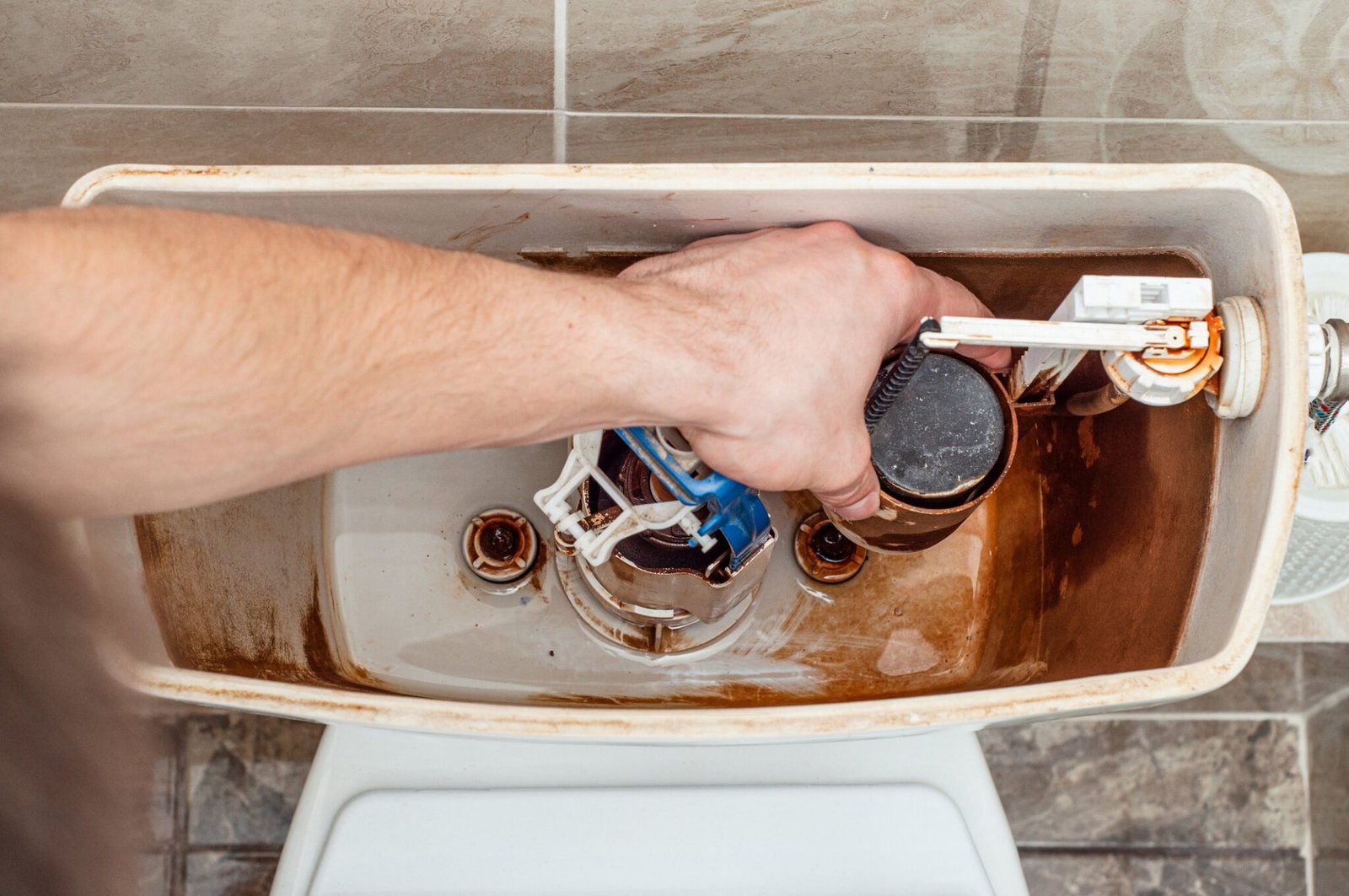
How Do I Fix a Running Toilet That Wastes Water?
That faint hissing from the bathroom at 3 a.m. isn’t ghosts — it’s money. A running toilet can waste 200+ gallons of water per day, adding $50–$150+ to your monthly water bill. If you’re asking how do I fix a running toilet that wastes water, here’s the good news: the cause is almost always one of three cheap parts inside the tank, and the fix takes 15 minutes with no plumbing experience.
Diagnose First: The Food Coloring Test
Before buying parts, confirm where the water’s going:
- Remove the tank lid.
- Add a few drops of food coloring to the tank water.
- Wait 15–20 minutes without flushing.
- Check the bowl: if colored water appears in the bowl, water is leaking from tank to bowl (flapper or flush valve issue). If the tank water level dropped but the bowl is clear, check around the base and supply line for external leaks.
This 20-minute test tells you exactly which part to fix. Most of the time, it’s the flapper.
How Do I Fix A Running Toilet That Wastes Water?
The flapper is the rubber seal at the bottom of the tank that lifts when you flush and seals to let the tank refill. Rubber degrades in chlorinated water over 3–5 years, then it stops sealing — water trickles continuously into the bowl, and the fill valve runs forever trying to keep up.
The fix ($5–$10, 10 minutes):
- Turn off the water supply valve behind the toilet.
- Flush to drain the tank (sponge out remaining water).
- Unhook the old flapper from the flush valve pegs and disconnect the chain.
- Bring it to the store to match size and style (2″ vs. 3″ is the key measurement).
- Install the new flapper, reconnect the chain with ~1/2″ of slack (too tight = won’t seal; too loose = weak flush).
- Turn water on, test flush twice.
Cause #2: Faulty Fill Valve
If the water runs continuously into the overflow tube (the tall open pipe in the tank center), the fill valve isn’t shutting off. Causes: the float is set too high, the float is stuck, or the valve is worn out.
The fix:
- First, try adjusting the float — bend the float arm down slightly (ball float) or squeeze the adjustment clip and slide the float down (cup float). The water level should sit 1″ below the top of the overflow tube.
- If adjusting doesn’t work, replace the fill valve ($10–$20, 20 minutes). Turn off water, drain tank, unscrew the old valve from below, install the new one per instructions, set the height, reconnect the supply line. Modern universal fill valves fit nearly every toilet.
Cause #3: Chain and Flush Handle Issues
Sometimes the mechanics are just tangled: a chain caught under the flapper, a corroded flush handle that doesn’t let the flapper seat, or a chain so short the flapper can’t close. Check that the chain moves freely, the handle returns fully, and nothing’s snagging. These are free fixes — just observation and adjustment.
How Much Water (and Money) You’re Wasting
The numbers are startling: a moderately running toilet wastes about 6,000 gallons per month. At average US water rates, that’s $50–$150/month — $600–$1,800/year — literally flushed away. A $10 flapper pays for itself in days. The EPA WaterSense program identifies toilet leaks as one of the largest sources of household water waste, and most are fixable in minutes.
When It’s Not a DIY Fix
- Cracked tank or bowl — replace the toilet; cracks don’t repair reliably. See our toilet installation cost guide.
- Water leaking from the base — likely a failed wax ring; the toilet needs to be pulled and reset.
- Multiple issues plus an old toilet — if the toilet is 20+ years old and needs flapper + fill valve + handle, consider replacing the whole unit with a modern WaterSense model instead of rebuilding a dinosaur.
Dual-Flush Conversion Kits: Worth It?
If your toilet runs fine but guzzles 1.6+ gallons per flush, a dual-flush conversion kit ($25–$40) retrofits your existing toilet with two flush options (light/liquid waste vs. solid). Installation takes 20–30 minutes — replace the flapper assembly with the dual-flush mechanism, install the push-button on the tank lid. Savings: roughly 15,000+ gallons per year for a family of four. The catch: they work best on newer toilets designed for efficient flushing; on very old toilets, the reduced water volume can cause incomplete flushes and double-flushing (erasing the savings). If your toilet is pre-1994 (3.5+ gallons per flush), skip the kit and replace the whole toilet with a modern WaterSense model — the economics favor replacement.
Find Silent Leaks With Your Water Meter
Some toilet leaks are silent — no hissing, no visible trickling, just a slowly climbing water bill. The meter test: turn off all water in the house (ice maker too), note the meter reading, wait 2 hours without using any water, and read again. Any movement means a leak somewhere. To isolate toilets specifically, shut off each toilet’s supply valve one at a time and repeat — when the meter stops moving, you’ve found the culprit. Do this test twice a year; silent leaks waste thousands of gallons before anyone notices. A $0 test that catches $600/year problems is the best ROI in home maintenance.
The $3 Fix Everyone Forgets: The Chain
Before buying any parts, look at the chain. A chain that’s too long gets caught under the flapper (constant leak); too short prevents the flapper from seating (constant leak); corroded or kinked binds the mechanism. Adjust to about 1/2 inch of slack when the flapper is closed, and replace rusty chains ($3) on sight. I’ve seen $200 plumber visits for what was a tangled $3 chain. Five seconds of observation before any parts purchase — always.
The Takeaway
How do you fix a running toilet that wastes water? Do the food coloring test, then replace the flapper ($5–$10, fixes 80% of cases), adjust or replace the fill valve ($10–$20), or untangle the chain. Fifteen minutes, under $20, and the hissing stops tonight.
This is the highest-ROI repair in home plumbing — pennies in parts, hundreds in annual water savings. If the toilet’s truly done, our new toilet cost guide covers replacement, and the leaky faucet fix tackles the other great water waster.