
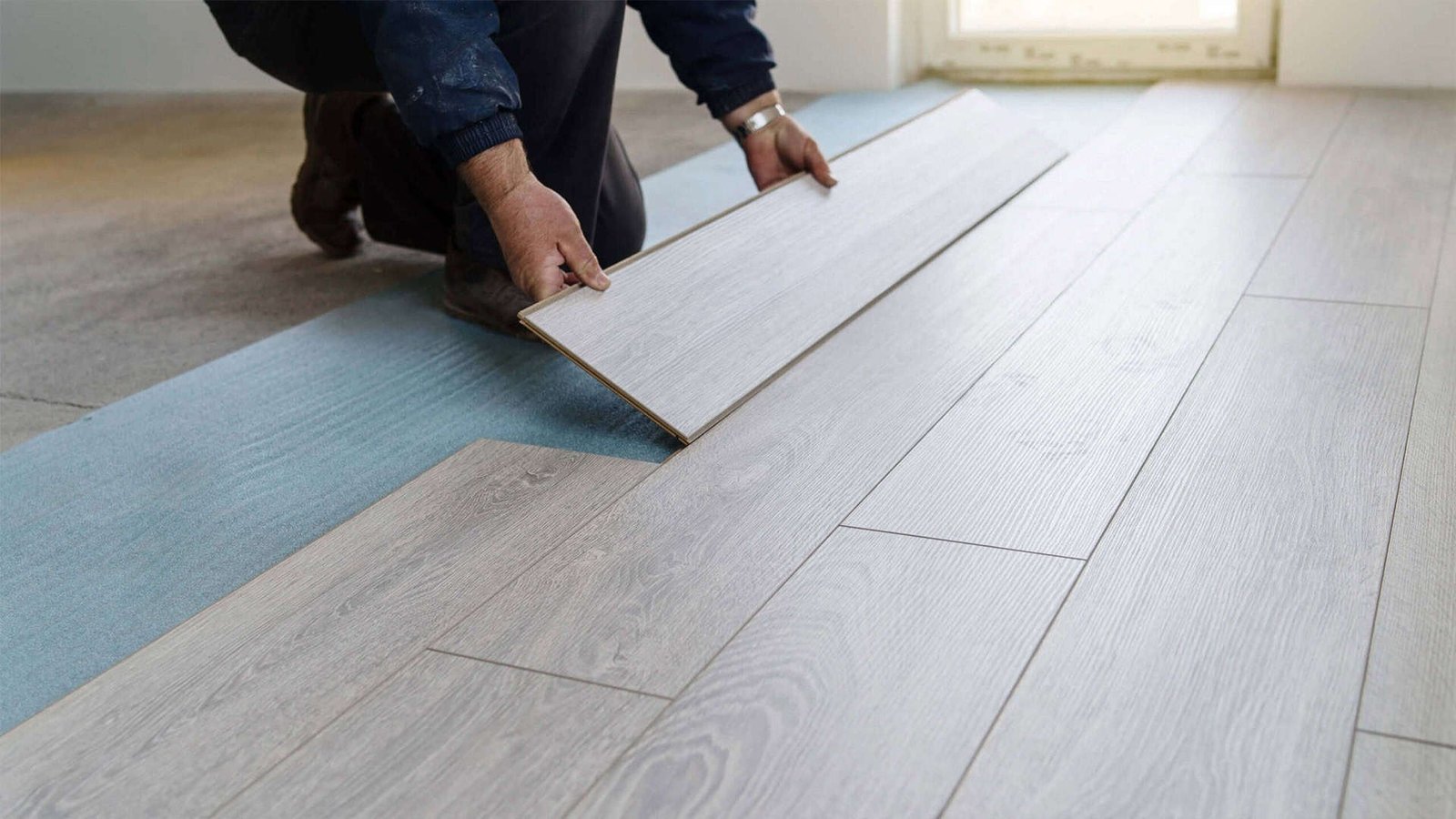
Can I Install Laminate Flooring Over Existing Tile?
Ripping out old tile is miserable — dust, debris, dumpster runs, and the risk of damaging the subfloor underneath. So when people ask can I install laminate flooring over existing tile, they’re hoping for permission to skip the demolition. Good news: yes, in most cases you absolutely can. But “can” comes with conditions, and ignoring them causes the exact problems you’re trying to avoid.
The Short Answer
Yes, if the tile is in good condition: firmly adhered, level (within 3/16″ over 10 feet), clean, and dry. Laminate is a floating floor — it doesn’t need to bond to what’s underneath, just to lie flat and stable over it. Well-installed tile is actually an excellent substrate: hard, stable, and flat.
No, if: tiles are loose, cracked, or hollow-sounding over large areas; the floor has significant lippage or unevenness; there’s moisture coming through; or the added height creates problems at doors and transitions.
Pre-Installation Checklist
- Test tile adhesion. Walk the floor listening for hollow sounds; tap suspicious tiles. A few hollow tiles can be re-adhered or removed and patched — widespread hollowness means the tile needs to come up.
- Check for level. Lay a long straightedge or level across the floor in multiple directions. High spots get ground down; low spots get filled with floor-leveling compound. Laminate telegraphs unevenness — you’ll feel every dip.
- Address grout lines. Wide or deep grout lines (over ~1/4″ wide) can cause laminate to flex and the locking joints to fail over time. Fill them with floor-leveling compound or embossing leveler and let cure fully. This step is the most commonly skipped — and the most commonly regretted.
- Clean obsessively. Degrease the tile completely. Any wax, polish, or residue compromises nothing structurally (it’s a floating floor), but cleanliness ensures the underlayment lies flat.
- Moisture test. Tape a 2×2 ft square of plastic sheeting to the tile for 48 hours. Condensation underneath means moisture migration — address the source before covering it, or you’ll trap moisture and grow problems.
- Measure the height change. Laminate + underlayment adds roughly 1/2″–5/8″. Check: will doors still swing? (You may need to trim door bottoms.) Do transitions to adjoining rooms work? Is the dishwasher still removable under the counter? Height surprises are the #1 “wish I’d thought of that” in overlay installs.
Underlayment: Don’t Skip It
Over tile, underlayment does triple duty: moisture barrier (tile can transmit ground moisture), sound dampening (laminate over hard tile is loud without it), and minor imperfection smoothing. Use a quality underlayment with built-in vapor barrier ($0.40–$0.80/sq ft), or separate 6-mil poly sheeting plus standard underlayment. This isn’t optional over tile — it’s essential.
Can I Install Laminate Flooring Over Existing Tile?
- Acclimate the laminate 48–72 hours in the room, as always.
- Stagger joints 8–12″ minimum between rows; avoid H-patterns.
- Expansion gaps of 1/4″–3/8″ at all walls and fixed objects — cover with baseboard/quarter-round.
- Undercut door jambs so laminate slides underneath for a clean finish.
- Large rooms: respect the manufacturer’s maximum run length (often 30–40 feet) — beyond that, you need transition moldings for expansion.
Our laminate cost guide covers material selection and the DIY-vs-pro decision in detail.
Tile vs. Other Overlay Substrates
How tile compares as a laminate substrate:
- vs. existing hardwood: similar — both fine if flat and sound. Hardwood’s slight give is actually gentler on laminate joints.
- vs. concrete: concrete needs more moisture caution but is usually flatter.
- vs. existing laminate/vinyl: generally fine, same flatness rules apply.
- vs. carpet: never. Carpet must come up — it’s too soft and uneven for any hard flooring.
The laminate flooring technical overview covers construction and installation requirements if you want the engineering background.
When Removal Is Actually Better
- Tile is failing across large areas (removal + new substrate is cleaner long-term)
- Height constraints make overlay impossible (low door clearances, fixed appliances)
- You want radiant floor heating (needs direct substrate contact)
- The tile contains asbestos (9×9 tiles in older homes — test first; disturbing them requires abatement, but covering them with floating floor is often the safest legal option — encapsulation)
That last point surprises people: floating a new floor over intact asbestos tile is EPA-recognized encapsulation — often safer and cheaper than abatement. Don’t sand, scrape, or disturb the old tile; just cover it.
Transition Strips: The Finishing Detail
Where your new laminate meets other flooring, transition strips (T-moldings, reducers, thresholds) bridge the height difference and allow expansion. T-molding: for same-height transitions (laminate to laminate, or laminate to similar-height hard flooring). Reducer: for laminate-to-lower-floor transitions (like vinyl) — slopes down gracefully. Threshold/end cap: for laminate-to-carpet or at exterior doors. Stair nosing: if continuing onto stairs (though stairs are usually better left carpeted or done in matching stair treads). Buy transitions in matching laminate colors from the same manufacturer for a seamless look — generic wood-tone strips clash subtly and cheapen the result. Install transitions with adhesive or track systems (never nail through the laminate itself — it needs to float). This $50–$100 detail is what separates “new floor” from “finished project.”
The Asbestos Tile Special Case
Homes built before the 1980s may have 9×9″ vinyl tiles containing asbestos. Do not sand, scrape, or disturb them — but here’s the key insight: floating laminate directly over intact asbestos tile is EPA-recognized encapsulation, and it’s often the safest, cheapest legal option. The asbestos fibers are only hazardous when airborne; undisturbed tiles under a floating floor release nothing. Rules: don’t break, cut, or sand the old tiles; if a few are loose, leave them (or have them professionally removed — small-scale pro removal runs $500–$1,500); disclose at sale. Test first if unsure ($25–$50 lab test) — knowledge beats guessing. Covering rather than removing turns a potential $3,000 abatement into a non-issue. Sometimes the best renovation decision is the one you don’t make.
The Takeaway
Can you install laminate flooring over existing tile? Yes — if the tile is solid, level, and dry. Fill wide grout lines, use quality underlayment with a vapor barrier, account for the height gain at doors and transitions, and follow standard floating-floor practices. You skip the demolition mess and get a new floor in a weekend.
It’s one of the smartest shortcuts in flooring — when the existing tile earns it. Verify the conditions, don’t skip the prep, and the result is indistinguishable from a full tear-out. Flooring decisions ahead? See refinish vs. replace hardwood for the wood-floor question.
[…] floors than any product upgrade. Flooring project planned? See refinish vs. replace hardwood and installing laminate over tile for the next […]