
How Do I Unclog a Drain Without Harsh Chemicals?
Before you reach for that bottle of drain cleaner, know this: caustic chemical cleaners can damage pipes, kill septic systems, and burn your skin — and they often don’t even work on serious clogs. If you’re asking how do I unclog a drain without harsh chemicals, the methods below clear most clogs just as well, cost almost nothing, and won’t eat your plumbing from the inside out.
Start With the Simplest Fix: The Plunger
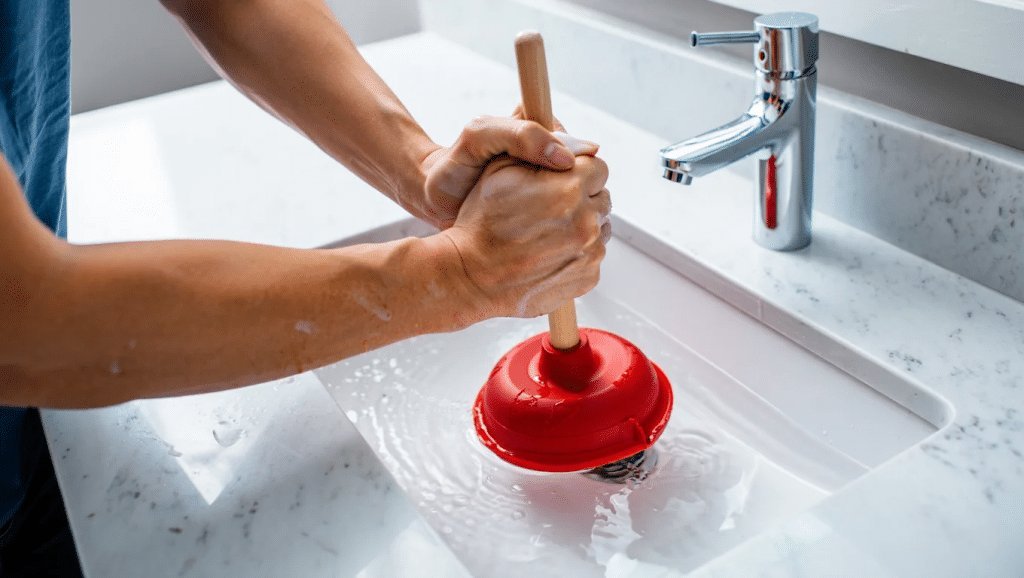
Most people plunge wrong, which is why they think plungers don’t work. For sinks and tubs, you need a cup plunger (the simple suction-cup kind), not a flange plunger (that’s for toilets).
- Fill the sink or tub with enough water to cover the plunger’s cup — water creates the seal and the pressure.
- If it’s a bathroom sink or tub, plug the overflow drain with a wet rag. Otherwise your plunging pressure escapes out the overflow.
- Seat the plunger firmly over the drain and pump vigorously up and down 15–20 times. You’re trying to agitate and dislodge, not just push.
- Pull the plunger off sharply on the last stroke — the suction pop is what often clears it.
This alone fixes a huge percentage of slow drains. Hair and soap scum clogs in bathroom sinks respond especially well. If the water starts draining, run hot water for a minute to flush everything through.
The Baking Soda + Vinegar Method (Done Right)
You’ve seen this one everywhere. Here’s the version that actually works when you want to unclog a drain without harsh chemicals:
- Pour a kettle of boiling water down the drain first (skip this step for PVC pipes — use very hot tap water instead, as boiling water can soften PVC joints).
- Pour 1/2 cup baking soda directly into the drain.
- Follow with 1/2 cup white vinegar. It’ll fizz — that’s the point.
- Cover the drain with a stopper or rag to keep the reaction directed downward.
- Wait 15–30 minutes.
- Flush with another kettle of hot water.
Honest assessment: this works great for grease buildup and mild organic clogs in kitchen sinks. It’s less effective on solid hair masses or foreign objects. Think of it as maintenance and mild-clog treatment, not a miracle cure.
How Do I Unclog A Drain Without Harsh Chemicals?
For bathroom drains, the culprit is almost always hair — and no chemical dissolves a hairball as reliably as physically pulling it out. A plastic hair snake costs $3–$5, and it’s disgusting and wonderful in equal measure:
- Remove the drain stopper if you can (most pop-up stoppers unscrew or lift out).
- Feed the barbed plastic strip down the drain, wiggle it around, and pull it back up slowly.
- Prepare yourself. What’s attached will be horrifying. That’s how you know it worked.
- Repeat until the strip comes up clean, then flush with hot water.
For deeper clogs, a 25-foot hand auger ($25–$35) reaches what the plastic strip can’t. Feed it in, crank when you feel resistance, and retract slowly. This tool clears the vast majority of clogs that plungers can’t.
Enzyme Cleaners: The Chemical-Free Nuclear Option
If mechanical methods aren’t cutting it, enzyme-based drain cleaners are the safe alternative to caustic chemicals. They use bacteria and enzymes to eat through organic matter — hair, grease, soap scum, food. They’re:
- Safe for all pipes, including old metal and PVC
- Safe for septic systems (actually beneficial for them)
- Non-toxic and non-corrosive
The trade-off: they’re slow. Pour them in before bed and let them work overnight. They won’t clear a fully blocked drain (nothing can flow past a complete blockage to reach it), but for slow drains and maintenance, they’re excellent. The EPA’s Safer Choice program certifies cleaning products that meet strict safety standards — look for the label.
What About Boiling Water Alone?
For kitchen sinks, plain boiling water (or the hottest tap water for PVC) dissolves grease clogs surprisingly well — grease is the #1 kitchen drain enemy, and heat melts it. Pour slowly, in stages, giving each kettle time to work. If your sink has been slow for weeks from grease buildup, several rounds of boiling water can fix it with zero products at all. Just never use boiling water in toilets (porcelain can crack from thermal shock).
Prevention: Never Deal With This Again
- Drain strainers everywhere. A $2 mesh strainer in every drain catches hair and food before they become clogs. This single habit prevents most drain problems.
- Never pour grease down the drain. Pour it into a can, let it solidify, trash it. This is the #1 rule of drain health.
- Run hot water after each use in kitchen sinks to keep grease moving.
- Monthly baking soda + hot water flush as maintenance, not emergency treatment.
- Brush hair before showering to reduce what goes down the tub drain.
When to Call a Plumber
Call a pro if: multiple drains are backing up simultaneously (main line issue), sewage is coming up anywhere (stop using water immediately), the clog returns within days of clearing (deeper problem), or you’ve tried mechanical methods and the drain is still fully blocked. Main-line clogs need professional augers or hydro-jetting — this is beyond DIY territory.
The 5-Minute Monthly Maintenance Routine
The best clog is the one that never forms. Once a month: pour a kettle of hot water down each drain (very hot tap water for PVC — not boiling), follow with 1/2 cup baking soda and 1/2 cup vinegar, wait 15 minutes, flush with more hot water. Clean drain stoppers and strainers of hair and gunk while you’re at it. Five minutes per drain, once a month, and you’ll rarely need the plunger — let alone the chemical aisle. Prevention is the only drain cleaner with zero side effects.
The Takeaway
How do you unclog a drain without harsh chemicals? Plunge correctly (cup plunger, overflow plugged), try baking soda + vinegar + hot water for grease, pull hair clogs out with a $3 plastic snake, and use enzyme cleaners overnight for stubborn organic buildup. Prevent future clogs with strainers and a strict no-grease rule.
Your pipes will last longer, your septic system will thank you, and you’ll never have to wonder what that chemical cleaner is doing to your plumbing. Dealing with more water issues? Our leaky faucet fix and running toilet repair cover the other common culprits.