
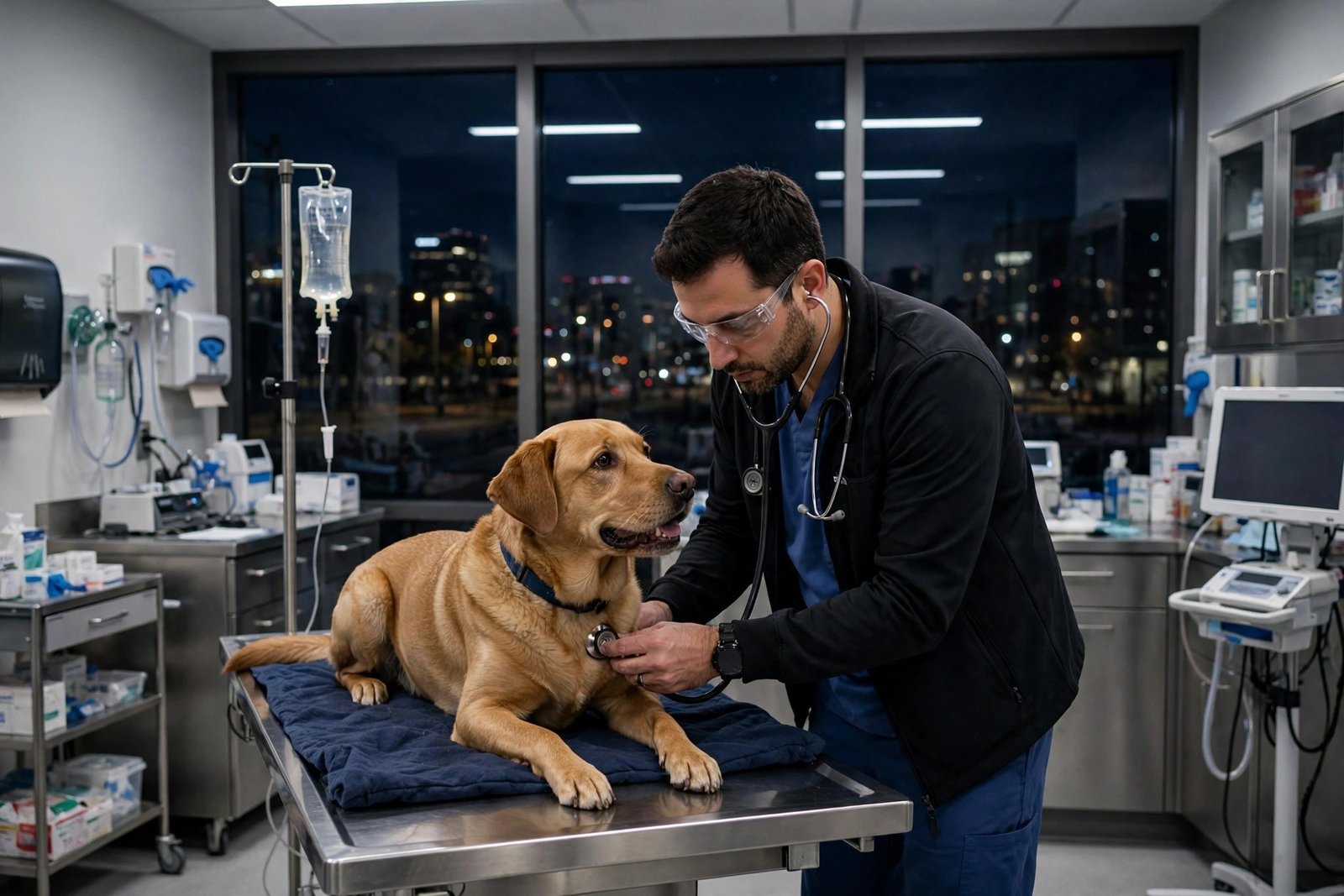
It is 11 p.m. on a Saturday. Your dog is vomiting repeatedly, your cat is breathing with its mouth open, or your rabbit has stopped eating — and your vet’s office is dark until Monday. After-hours pet emergencies are among the most stressful moments of pet ownership: the stakes are high, information is scarce, and every decision feels urgent. Having a plan before the crisis is the difference between panic and action.
This guide covers handling veterinary emergencies after hours: recognizing true emergencies, what to do in the first minutes, where to get help at night and on weekends, how to manage costs, and how to prepare so you are never scrambling.
Recognize a True Emergency
Not every scary symptom is an emergency — but these always are: difficulty breathing (especially open-mouth breathing in cats), uncontrolled bleeding, repeated vomiting/diarrhea with lethargy, bloating with retching in large dogs (possible gastric torsion — minutes matter), seizures lasting over 5 minutes or clustering, collapse or inability to stand, suspected poisoning (check the ASPCA toxic-plant and food lists), eye injuries, heatstroke signs (excessive panting, drooling, disorientation), straining to urinate (especially male cats — urinary blockage is fatal within 24-48 hours), and not eating for 12+ hours in small animals (rabbits, guinea pigs — GI stasis kills fast).
When in doubt, call. Veterinary triage nurses would rather talk you down from a false alarm than hear about a waited-too-long tragedy. The AVMA’s emergency care resources help owners distinguish urgent from routine, but the phone call is always the right move when you are unsure.
First Minutes: Stabilize and Call
Stay calm and assess: breathing? bleeding? conscious? Control bleeding with firm direct pressure (clean cloth, hold — do not keep lifting to check). Do not induce vomiting unless poison control specifically instructs it — many substances cause more damage coming up. Keep the animal warm, dark, and quiet — shock management is mostly about minimizing stress. Do not give human medications without veterinary direction (ibuprofen and acetaminophen are toxic to dogs and cats at common doses).
Call before driving: phone the emergency clinic while en route (or have a passenger call) — they will prepare and may give critical instructions. Know your poison resources: the ASPCA Animal Poison Control (888-426-4435, consultation fee applies) and Pet Poison Helpline are staffed 24/7 by veterinary toxicologists — call them while heading to the clinic for ingestion cases. Transport safely: carriers for cats and small dogs (a loose panicked animal in a moving car endangers everyone), blankets as stretchers for large immobile dogs. The transport readiness overlaps with general preparedness — what to keep in an emergency kit for your car should include pet supplies if you drive with animals.
Where to Go After Hours
Know your options before you need them. Right now — not during the crisis — identify: 1) your vet’s after-hours protocol (many partner with a specific ER clinic; the number is often on their voicemail), 2) the nearest 24-hour emergency/specialty hospital (save the address in your phone, drive the route once), and 3) a backup option farther out (ER clinics can be at capacity with wait times).
Televet services (Dutch, Airvet, and similar platforms) offer 24/7 video triage for $30-80 — excellent for “is this an emergency?” decisions at 2 a.m., though they cannot replace hands-on care. Your state’s veterinary school hospital (UC Davis, Cornell, etc.) often runs 24-hour ERs with specialty depth. On arrival, triage applies — the most critical cases go first, so a stable pet may wait; bring patience, records, and a list of medications and the timeline of symptoms. The American Animal Hospital Association’s hospital locator finds accredited ER facilities.
Manage the Cost Without Delaying Care
Emergency vet care is expensive — $1,500-5,000+ for surgery or hospitalization is common — and ER clinics typically require deposits upfront. Decide your financial framework now: pet insurance (enroll when young and healthy; pre-existing conditions are excluded — compare accident/illness plans on coverage, not just premium), a dedicated emergency fund ($2,000-5,000), CareCredit (veterinary financing — apply before you need it), and Scratchpay payment plans.
At the clinic: ask for estimates in writing and prioritized options — vets can often stage care (stabilize now, definitive treatment later) or offer good/better/best treatment tiers. Discuss quality of life honestly for severe cases; financial limits are a legitimate factor and vets navigate them daily without judgment. Nonprofits (RedRover Relief, local humane societies) offer emergency grants for qualifying owners. And for routine pet budgeting that keeps the emergency fund intact, the ownership-cost thinking in low-maintenance pets for apartment living applies — lower-maintenance pets mean lower lifetime vet exposure.
Prepare Before the Next Emergency
Build the pet emergency kit today: carrier, leash, 3 days of food and medications, vaccination records, your vet’s and ER clinic’s numbers, a pet first-aid booklet, gauze and bandage material, digital thermometer, saline eye wash, and hydrogen peroxide 3% (only for vet-directed use). Pet-proof continuously: secure medications, xylitol products, lilies (cats), grapes/raisins, and rodenticides — the top poisoning causes are all preventable.
Learn pet first aid and CPR — the Red Cross offers pet first-aid courses, and the 4 hours pay off for the life of your pet. Keep medical records portable (photos of vaccination certificates in your phone). And establish the vet relationship before crisis: ER clinics treat established patients’ histories better, and your regular vet’s triage advice is only a call away if they know your animal.
Build the Pet First-Aid Kit
Assemble this before the emergency: a sturdy carrier or crate, slip leash and harness, 3 days of food and any medications (rotated for freshness), collapsible bowls, vaccination records and a recent photo (phone photos suffice), your vet’s and nearest ER clinic’s numbers saved in your phone, gauze rolls and non-stick bandages, adhesive tape, blunt-tipped scissors, saline eye wash, digital rectal thermometer with lubricant, hydrogen peroxide 3% (for vet-directed vomiting induction only), styptic powder for nail bleeds, a muzzle (even gentle dogs bite when in pain — size it in advance), and a pet first-aid booklet.
Learn the skills: take a pet first-aid/CPR course (Red Cross and many vet schools offer them, ~4 hours) — restraint technique, bleeding control, choking response, and rescue breathing are perishable skills worth practicing. Store the kit where you can grab it in 60 seconds (near the leashes, not in the attic), and audit it twice yearly: check medication expirations, replace peroxide yearly, update records. A $75 kit and an afternoon of training will not replace an ER — but they buy the critical minutes that determine whether the ER visit succeeds.
Conclusion
After-hours vet emergencies reward preparation: know the true-emergency signs, stabilize without improvising dangerous treatments, have your ER clinic mapped and saved, carry a financial plan, and keep the emergency kit packed. The 2 a.m. crisis will still be frightening — but it will not find you helpless.
Frequently Asked Questions
What counts as a pet emergency after hours?
Difficulty breathing, uncontrolled bleeding, repeated vomiting with lethargy, bloat with retching (dogs), prolonged/cluster seizures, collapse, suspected poisoning, eye injuries, heatstroke, urinary blockage (male cats), and appetite loss over 12 hours in small animals.
Should I induce vomiting if my pet ate something toxic?
Only if poison control or a vet specifically instructs it — many substances cause worse damage coming back up. Call ASPCA Poison Control (888-426-4435) or Pet Poison Helpline immediately instead.
How much does emergency vet care cost?
Commonly $1,500-5,000+ for surgery or hospitalization, with deposits required upfront. Pet insurance (enrolled young), a dedicated emergency fund, CareCredit, and staged treatment plans manage the cost.
Can I give my pet human pain medication?
No — ibuprofen, acetaminophen, and many other human drugs are toxic to dogs and cats at normal doses. Never medicate without direct veterinary instruction.
Are televet services useful in emergencies?
Yes for triage — 24/7 video services ($30-80) help decide whether a 2 a.m. symptom needs the ER now or can wait for morning. They cannot replace hands-on emergency care for true emergencies.