
What Should I Keep in an Emergency Kit for My Car?
What should I keep in an emergency kit for my car? Most drivers learn the answer at the worst possible moment — stranded on a dark highway, phone dying, no water, no blanket. A car emergency kit isn’t paranoia; it’s the cheapest insurance you’ll ever buy. For under $75 and an hour of assembly, you can handle the vast majority of roadside situations. Here’s exactly what to pack, and why each item earns its space.
The Non-Negotiable Core
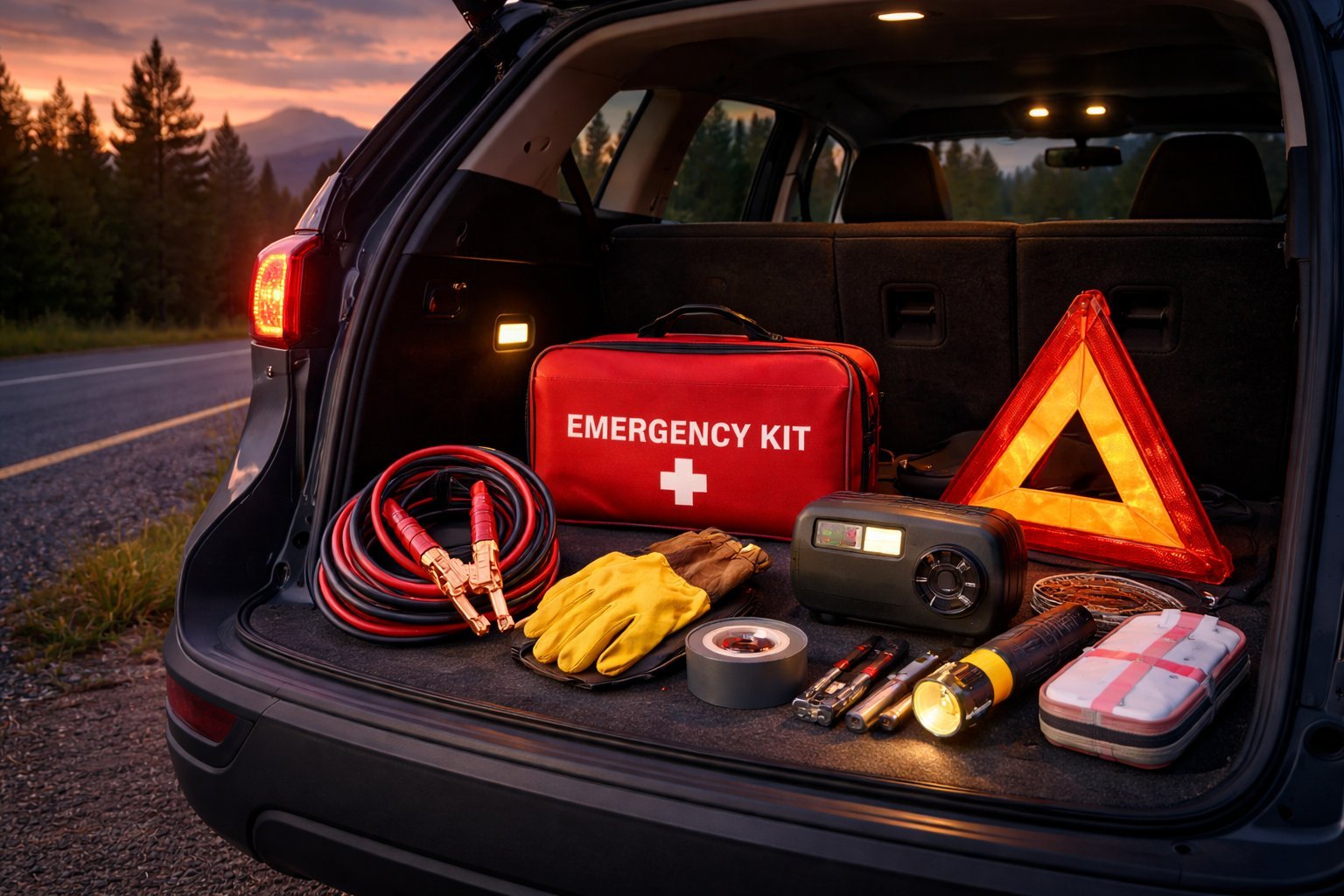
These handle the most common emergencies — breakdowns, flat tires, dead batteries, and being stuck:
- Jumper cables or a portable jump starter. The portable lithium jump starters ($40–$60) are the modern answer — no second car needed, and they double as phone chargers. If you go with cables, learn how to use them before you need to.
- Spare tire, jack, and lug wrench — and the knowledge to use them. Check your spare’s pressure twice a year; a flat spare is a cruel surprise. Practice changing a tire once in your driveway. Twenty minutes of practice beats an hour of panic.
- Tire inflator/sealant. A $25 portable inflator handles slow leaks well enough to get you to a shop.
- Flashlight + extra batteries. Or a hand-crank flashlight that never dies. Your phone flashlight drains the battery you might need for calls.
- Reflective warning triangles or flares. Being visible on a dark roadside is a safety issue, not a nicety.
- Basic tool kit. Screwdrivers, pliers, adjustable wrench, duct tape, zip ties. Duct tape has temporarily fixed everything from hoses to bumpers.
What Should I Keep in an Emergency Kit for My Car? The Survival Layer
If you’re stuck for hours — winter storm, remote highway, dead phone — these matter more than tools:
- Water. A gallon per person, rotated every six months. Dehydration impairs judgment fast.
- Blanket or emergency sleeping bag. A $10 mylar emergency blanket plus a real wool or fleece blanket. In winter, this is life-or-death gear.
- Non-perishable snacks. Granola bars, nuts, dried fruit. Rotate them yearly so they’re actually edible.
- First aid kit. Bandages, antiseptic, pain relievers, any personal medications, and an emergency info card with allergies and contacts.
- Phone charger. A car charger plus a charged power bank. Your phone is your lifeline — protect its battery.
- Warm clothes. An old jacket, hat, and gloves live in the trunk year-round. Weather changes; trunks don’t care about forecasts.
Seasonal and Situational Add-Ons
- Winter: ice scraper, small shovel, sand or kitty litter for traction, extra blanket. If you drive in snow country, these aren’t optional.
- Summer/desert: extra water (double it), sunshade, coolant. Overheating kills cars and people.
- Long road trips: paper maps (yes, really — dead zones exist), extra snacks, a full-size spare if you have room. See our tips on making long car rides more enjoyable for the comfort side of trip prep.
- With kids or pets: diapers, wipes, extra water, pet food, a leash. Their needs multiply your kit.
Assemble It This Weekend
You don’t need a fancy pre-made kit (though $50 kits are fine starters). A sturdy duffel bag or plastic tote in the trunk works. Total cost buying individually: $50–$75. Put it together in one shopping trip, then set a phone reminder for every six months to check batteries, rotate water and snacks, and verify the spare.
One more thing: keep your car’s maintenance current. The best emergency kit is a car that doesn’t break down — check out our road trip prep guide for the pre-trip inspection checklist.
What Should I Keep in an Emergency Kit for My Car in Winter?
Winter transforms a breakdown from an inconvenience into a potential survival situation. Cold kills faster than hunger or thirst, and winter roadside emergencies have specific demands. If you drive anywhere that freezes, your kit needs a winter upgrade — ideally installed in late fall, before you need it.
The winter-specific additions: a sturdy ice scraper and snow brush (not the flimsy gas-station kind — get one with a long handle), a small folding shovel for digging out of snowbanks, a bag of sand or non-clumping kitty litter for traction under spinning tires, and extra warm layers — a heavy blanket (wool is best; it insulates even when damp), an old winter coat, hat, gloves, and warm socks that live in the trunk all season. Chemical hand warmers are cheap, tiny, and genuinely effective; toss in a half-dozen.
Winter changes the survival math. If you’re stranded in sub-freezing temperatures, the rules are: stay with the car (it’s shelter and it’s findable), run the engine 10–15 minutes per hour for heat (crack a downwind window slightly to prevent carbon monoxide buildup, and clear snow from the exhaust pipe first — this is critical), and make yourself visible (hazard lights, reflective triangles, a bright cloth tied to the antenna). Conserve phone battery aggressively — it’s your lifeline.
Keep the gas tank above half all winter. This isn’t folk wisdom; it’s practical on multiple levels. A fuller tank means more idling heat if stranded, less condensation in the fuel system, and no risk of running dry in a storm-delayed traffic jam. The “half tank” rule is the cheapest winter insurance there is.
Winterize the car itself, not just the kit. Check antifreeze levels, switch to winter-grade washer fluid (regular fluid freezes on contact in deep cold, blinding you mid-drive), test the battery (cold kills weak batteries — most auto parts stores test free), check tire tread and consider winter tires if you’re in serious snow country, and keep wiper blades fresh. The best winter emergency kit is a car that doesn’t break down in the first place.
Finally, tell someone your route in bad weather. Before driving in a storm, text someone your route and expected arrival. If you don’t arrive, they know where to look. It takes ten seconds and it’s the single most effective winter safety measure — more than any gear. Gear helps you survive; someone knowing where you are gets you rescued.
The Bottom Line
A car emergency kit is 15 items, $75, and one hour — and it turns a potential crisis into an inconvenience. Jumper or jump starter, spare tire knowledge, flashlight, triangles, water, blanket, snacks, first aid, charger. Build it this weekend, check it twice a year, and drive with the quiet confidence of someone who’s ready.
For official roadside safety guidance, the National Highway Traffic Safety Administration publishes vehicle safety resources, and Ready.gov’s car emergency kit list is the federal reference for what to pack.