
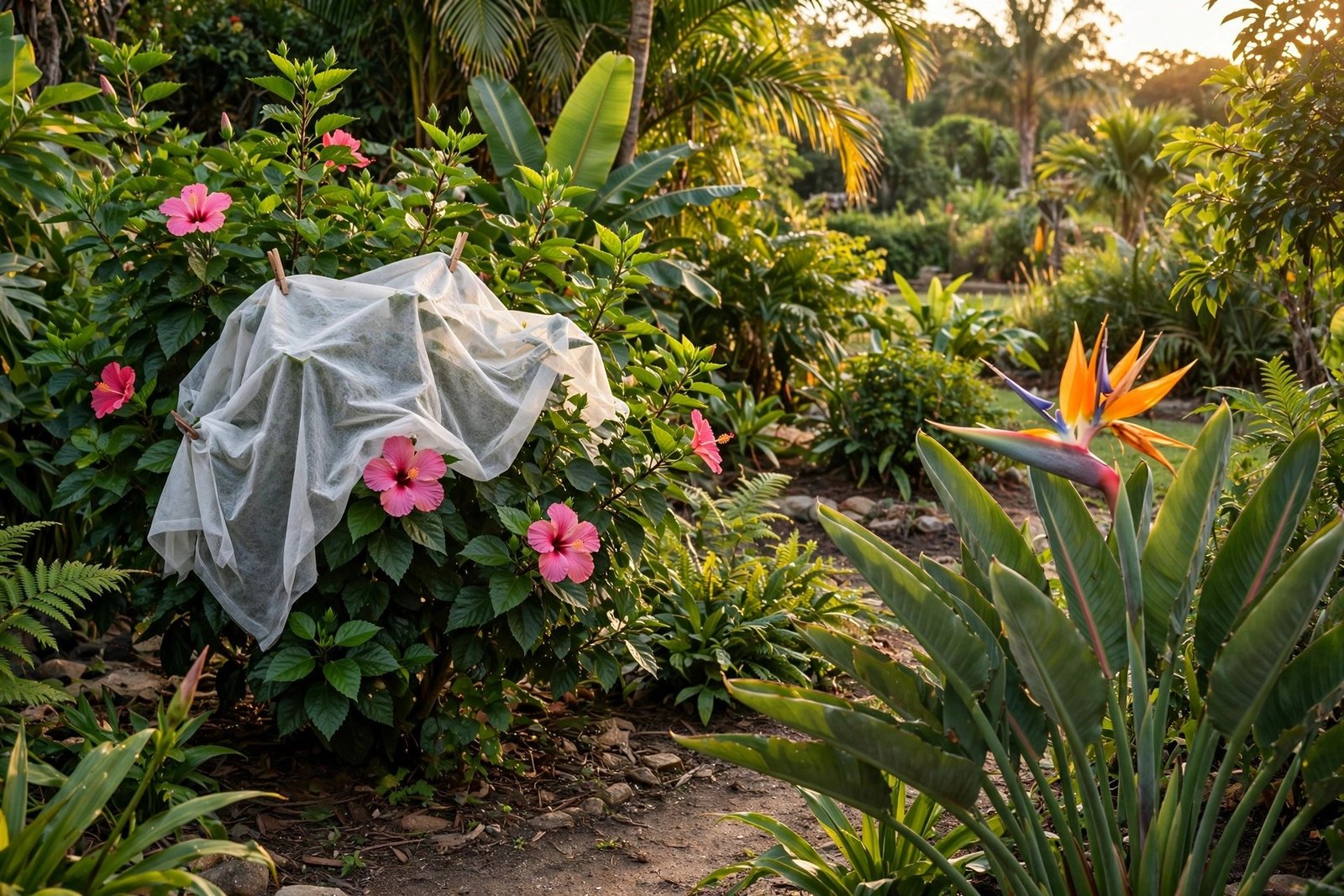
USDA Zone 9 — covering much of Florida, the Gulf Coast, Southern California, and parts of Texas and Arizona — is the gardener’s tease: warm enough to grow mangoes and hibiscus, but with just enough winter cold to threaten them. Average minimums of 20–30°F mean tropical plants survive most winters but die in the bad ones.
This guide covers how to overwinter tropical plants in Zone 9: knowing your real frost risk, protection methods that work, bringing plants indoors, and which tropicals can tough it out unprotected.
Know Your Zone 9 Reality
Zone 9 spans 9a (20–25°F minimums) and 9b (25–30°F), and that 5-degree difference matters enormously — many tropicals survive 9b winters unprotected but need help in 9a. More importantly, “Zone 9” describes averages, not your yard: urban heat islands, south-facing walls, and overhead canopy each buy degrees of protection, while low spots and open exposures lose them.
Look up your exact zone on the USDA Plant Hardiness Zone Map, then track your yard’s actual winter lows for a season — a $15 min-max thermometer reveals your microclimate’s truth. Also note your first and last frost dates (The Old Farmer’s Almanac lists them by zip code): Zone 9 frost seasons are short (often just December–February), which means protection is a weeks-long sprint, not a months-long siege.
The plants at risk
True tropicals (bougainvillea, hibiscus, plumeria, bird of paradise, most gingers, tender citrus) take damage below 32°F and die in the mid-20s. Marginal subtropicals (loquat, pineapple guava, hardy bananas) shrug off Zone 9 winters. Know which category each plant falls in — protection effort should match actual vulnerability, not anxiety.
Protection Methods That Actually Work
Frost cloth (not plastic): floating row cover or frost fabric draped over plants buys 4–8°F of protection while breathing — plastic conducts cold to leaves and traps moisture. Anchor edges to the ground to trap earth warmth. Christmas lights: old-style incandescent (not LED) strings generate real heat — wrapped through a citrus canopy under frost cloth, they protect into the mid-20s.
Mulch deeply: 4–6 inches of mulch insulates roots, which is what actually kills most plants — tops can regrow, dead roots cannot. Water before freezes: moist soil holds more heat than dry soil; a deep watering the afternoon before a freeze is free protection. Microclimate placement: the single best protection is planting tender things against south-facing walls, under evergreen canopy, or near water features — all radiate stored heat on cold nights. Combine methods on forecast nights below 28°F; a wall + mulch + frost cloth protects what any single method cannot.
Bringing Plants Indoors: The Transition
Container tropicals should move inside when nights consistently drop below 50°F — not at the first frost warning, which is too late for a graceful transition. Debug first: spray foliage with water, check soil for ants, and consider a systemic insecticide two weeks before the move — bringing spider mites indoors infests your houseplants too.
Acclimate gradually: move plants to shade for a week before bringing them in; the light drop from full sun to indoor is shocking. Indoors, provide the brightest window available (south-facing), reduce watering by half (growth slows dramatically), stop fertilizing entirely, and expect some leaf drop — it is adjustment, not death. The routine mirrors caring for permanent houseplants — the same attentiveness that helps you keep houseplants alive if you travel a lot keeps overwintering tropicals alive through winter.
The garage option
For large plants that cannot come inside, an unheated garage works for dormant-tolerant tropicals (plumeria, brugmansia, bananas cut back): they need darkness-tolerable dormancy, temperatures above freezing, and monthly sips of water. It is not pretty, but it works — these plants evolved to survive dry seasons and handle a dark garage better than a drafty living room.
Which Tropicals Can Tough It Out
Some tropicals earn their Zone 9 keep unprotected. Hardy bananas (Musa basjoo) die to the ground and return reliably. Bird of paradise (Strelitzia) handles 9b with only cosmetic damage. Bougainvillea survives 9b against warm walls, dying back and resprouting in 9a. Hibiscus (tropical types) need protection below 30°F but rebound from roots.
Gingers (shell ginger, butterfly ginger) are surprisingly hardy with mulch. Crape myrtles and vitex are not true tropicals but deliver the lush look with zero fuss. Design strategy: plant the tough ones in exposed spots and reserve protected microclimates (and containers) for the divas. A Zone 9 garden designed this way looks tropical year-round with minimal winter anxiety — and the overall design benefits from the same thinking behind low-maintenance landscaping ideas for beginners: right plant, right place, less work.
The Winter Watering Trap
The most common Zone 9 winter killer is not cold but water — gardeners keep summer watering schedules through winter, rotting roots of semi-dormant tropicals in cold wet soil. Cut watering by 50–75% from November through February; let the top inches dry between waterings; never fertilize dormant plants (it pushes tender growth that freezes).
Container plants need even more restraint — pots stay wet longer in cool weather. And after a freeze, resist the urge to prune damaged foliage immediately: dead leaves insulate living tissue beneath from subsequent freezes. Wait until spring growth resumes, then cut back to live wood. Patience after freeze damage saves plants that hasty pruning kills.
Conclusion
Overwintering tropical plants in Zone 9 is a manageable annual ritual: know your microclimate’s real lows, protect with frost cloth + mulch + microclimate placement on cold nights, transition containers indoors before the chill, and let tough plants be tough. Zone 9 gives you 10 months of tropical paradise for 2 months of vigilance — a trade any northern gardener would take in a heartbeat, and one that gets easier every year as you learn your yard.
Frequently Asked Questions
What temperature kills tropical plants in Zone 9?
Most true tropicals take leaf damage at 32°F and die in the mid-20s°F. Duration matters as much as temperature — a brief dip to 28°F is survivable; six hours at 25°F is not. Roots are the critical tissue; mulched roots survive colder air than exposed ones.
Should I cover tropical plants with plastic or fabric?
Fabric (frost cloth/row cover) — always. Plastic conducts cold directly to leaves it touches and traps moisture that worsens freeze damage. If plastic is all you have, build a frame so it never touches foliage, and remove it at sunrise.
When should I bring tropical plants inside in Zone 9?
When nighttime temperatures consistently drop below 50°F — typically November in most Zone 9 areas. Waiting for frost warnings risks cold damage and gives pests a free ride indoors. Transition gradually over a week.
Can plumeria survive Zone 9 winters outside?
In 9b against a warm wall with protection on the coldest nights, sometimes — but it is risky. Most Zone 9 growers overwinter plumeria dormant in a garage (no water, no light needed) or as container plants brought inside. The garage method is nearly foolproof.
Should I prune freeze-damaged tropicals right away?
No — wait until spring. Dead foliage insulates living tissue from subsequent freezes, and pruning stimulates new growth that the next cold snap kills. Once spring growth resumes and you can see what is truly dead, cut back to live wood.