
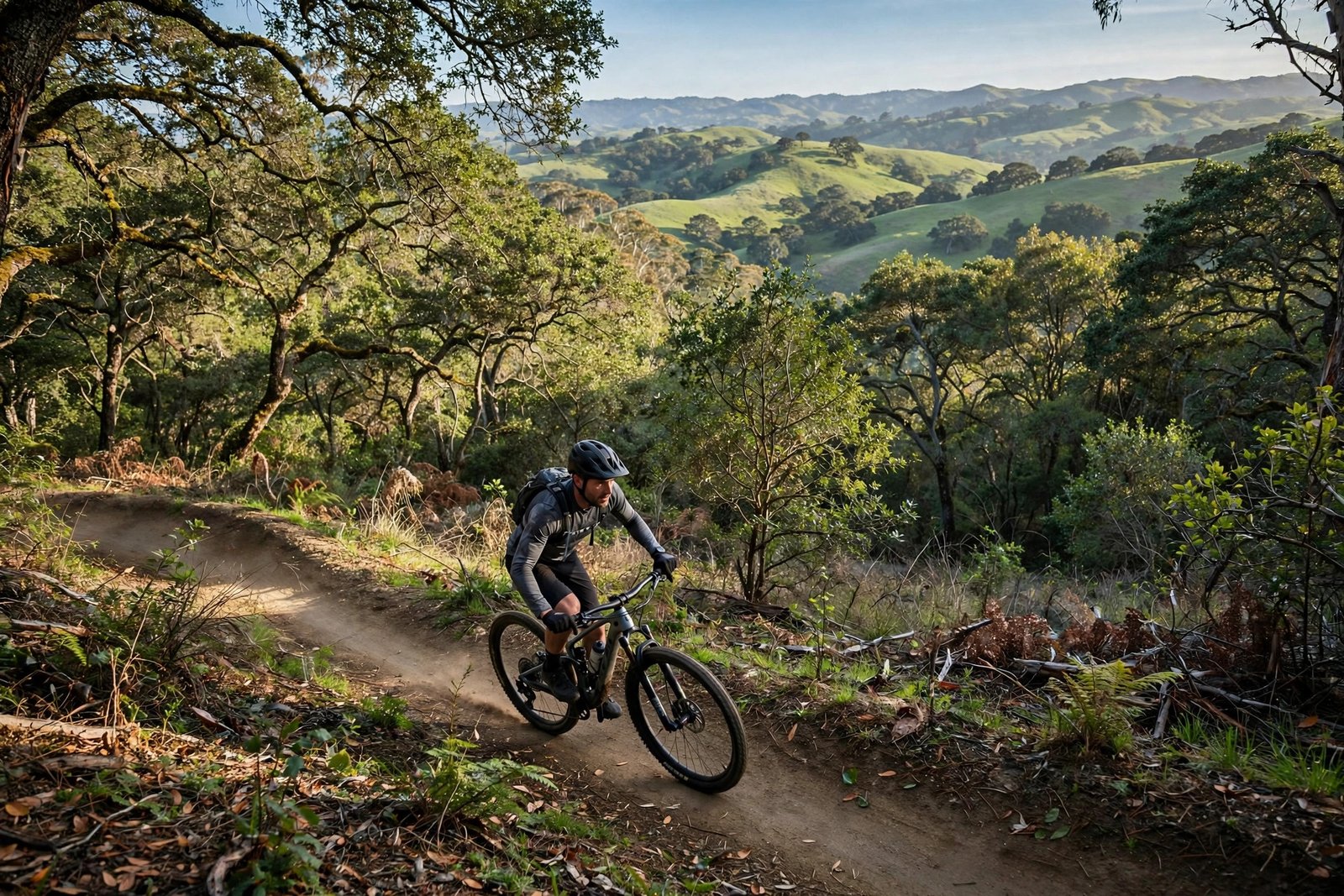
The Bay Area might be America's best place to start mountain biking: hundreds of miles of trails within an hour of downtown, year-round riding weather, and a beginner-friendly trail network that lets you progress from fire roads to singletrack without ever feeling in over your head.
But the gear questions are real — what bike, how much to spend, where to go first — and bad early choices (wrong bike, too-hard trail) end more mountain biking careers than crashes do. Here's how to start right.
What Bike to Buy (and How Much to Spend)
For Bay Area beginners, a hardtail (front suspension only) in the $800–$1,500 range is the sweet spot: efficient on climbs, capable on beginner and intermediate trails, and cheap enough that you won't cry over scratches. Full-suspension bikes ($2,500+) are wonderful but unnecessary until you're riding technical trails regularly — and many coaches argue hardtails build better skills because they punish sloppy line choices.
Buy from a local shop (The Bike Connection, Cognition Cyclery, Sports Basement's bike departments) rather than online for your first bike — proper sizing and a free first tune-up are worth the small premium. Consider used: Bay Area Craigslist and Facebook Marketplace are flooded with lightly-used bikes from tech workers who rode twice, and $800 buys a used bike that cost $1,800 new. Whatever you buy, budget $150–$250 for the essentials: helmet (non-negotiable), gloves, flat pedals and shoes or clipless setup, a mini-pump, spare tube, and multitool.
The Beginner Trail Progression
Start on fire roads and easy doubletrack to learn bike handling without consequences: the Bay Trail segments, Wilder Ranch's meadow loops, and the lower trails at China Camp are perfect first rides. Graduate to beginner singletrack at places like Joaquin Miller Park in Oakland (the Big Trees and Sinawik loops), Arastradero Preserve near Palo Alto, or the Tamarancho demos — flowy, forgiving, and close to help if something goes wrong.
The classic Bay Area progression then runs: Demo Forest's beginner-friendly flow trails (Sawpit is the beloved starter), Wilder Ranch's Enchanted Loop, and eventually the legendary Downieville-style descents once skills warrant. Key rule: ride trails rated for your level for your first 20 rides. Trailforks and MTB Project apps show difficulty ratings and recent condition reports — check both before driving out. And learn trail etiquette early: yield to hikers and horses, announce yourself, and never ride muddy trails (it destroys them and the local community will — rightly — never forgive you).
Learn more from International Mountain Bicycling Association.
Skills to Learn Before Speed
Speed is a byproduct of skill, not a skill itself. The five fundamentals: neutral/ready body position (level pedals, bent knees and elbows, eyes up), braking with both brakes (front does most stopping — learn to trust it), cornering (look through the turn, lean the bike not your body), climbing (seated, steady cadence, weight balanced), and descending (heels down, butt back, let the bike move under you).
A single skills clinic ($100–$200, offered by outfits like Cog Wild or local shops) advances most beginners more than two months of solo riding — an instructor spots the bad habits you can't feel. YouTube channels from certified coaches are the free alternative. Practice deliberately: session one corner repeatedly, ride one technical section until it's smooth. And always ride with someone slightly better than you when possible — following a skilled rider's lines teaches faster than any video.
Costs, Maintenance, and the Real Budget
Year-one realistic budget: $1,000–$1,800 for bike and gear, $200–$400 for maintenance (tires, brake pads, chain, tune-ups), plus gas and the occasional shuttle day. That's genuinely it — no lift tickets, no greens fees. Mountain biking is one of the cheapest outdoor sports per hour once you're equipped.
Learn basic maintenance early: cleaning and lubing the chain (5 minutes after dusty rides), fixing flats trailside, and checking bolt torque. A floor pump and chain lube at home handle 80% of upkeep. Budget for a professional suspension service annually if you ride weekly. And join the local trail stewardship — Bay Area trails exist because volunteers maintain them; trail work days are also the fastest way to meet riding partners.
For the authoritative take, visit California State Parks trail info.
Bay Area Bike Shops and Communities Worth Knowing
The right shop relationship transforms the beginner experience. Beyond the big names, look for shops with active group rides — buying where you ride builds the community that keeps you riding. Many Bay Area shops run free beginner clinics, demo days (try full-suspension before you buy), and women's/trans/femme rides that are genuinely welcoming rather than performative. Ask about service plans: some shops include a year of free adjustments, worth hundreds.
For community, join the local MTB organizations: they maintain the trails you'll ride, and trail-work days are the fastest path from newcomer to insider. Group ride apps and Meetup lists dozens of Bay Area no-drop beginner rides — 'no-drop' means nobody gets left behind, the magic phrase for new riders. Racing can wait, but the community can't: riders with friends ride 3x more than riders without, by every measure. The bike gets you to the trailhead; the people keep you coming back.
A final note on progression mindset: every experienced Bay Area mountain biker remembers being terrible, and the community genuinely welcomes beginners who show respect for the trails and other users. Don't compare your month two to someone's year five — compare it to your week one. Film yourself occasionally; the improvement visible over months is motivating in a way daily perception isn't. And when you're ready, pay it forward: the beginner you encourage on your 50th ride might become your favorite riding partner by your 100th.
Safety deserves the last word: always tell someone your ride plan, carry the ten essentials in miniature (tube, pump, multitool, water, snack, phone, light), and ride within your limits when solo. The Bay Area's trails are close to help, but 'close' still means an hour if you're immobile in a ravine. A $30 satellite messenger for solo backcountry rides is cheap insurance. The goal is decades of riding, not one heroic descent — protect the long game.
Related reading you might enjoy: planning a national park trip with kids and whether walking 30 minutes a day improves health.
Starting mountain biking in the Bay Area is simple: get a sensibly-priced hardtail from a local shop, progress through beginner trails deliberately, take one skills clinic, and learn basic maintenance. The trails will do the rest — few sports deliver this much adventure this close to a major city. See you at Demo.
Frequently Asked Questions
How much does it cost to start mountain biking?
Budget $1,000–$1,800 for a beginner hardtail plus essential gear (helmet, gloves, repair kit), and $200–$400/year for maintenance. Buying used can cut the bike cost nearly in half.
What are the best beginner mountain bike trails in the Bay Area?
Joaquin Miller Park (Oakland), Arastradero Preserve (Palo Alto), China Camp (San Rafael), and Wilder Ranch (Santa Cruz) all offer beginner-friendly singletrack close to the city.
Hardtail or full suspension for a beginner?
Hardtail — cheaper, lighter, more efficient climbing, and better for developing skills. Upgrade to full suspension once you're regularly riding technical trails.
Can you mountain bike in the Bay Area year-round?
Yes, but avoid riding muddy trails after rain — it damages trails badly. Winter riding is fine on well-draining trails; check Trailforks condition reports first.