
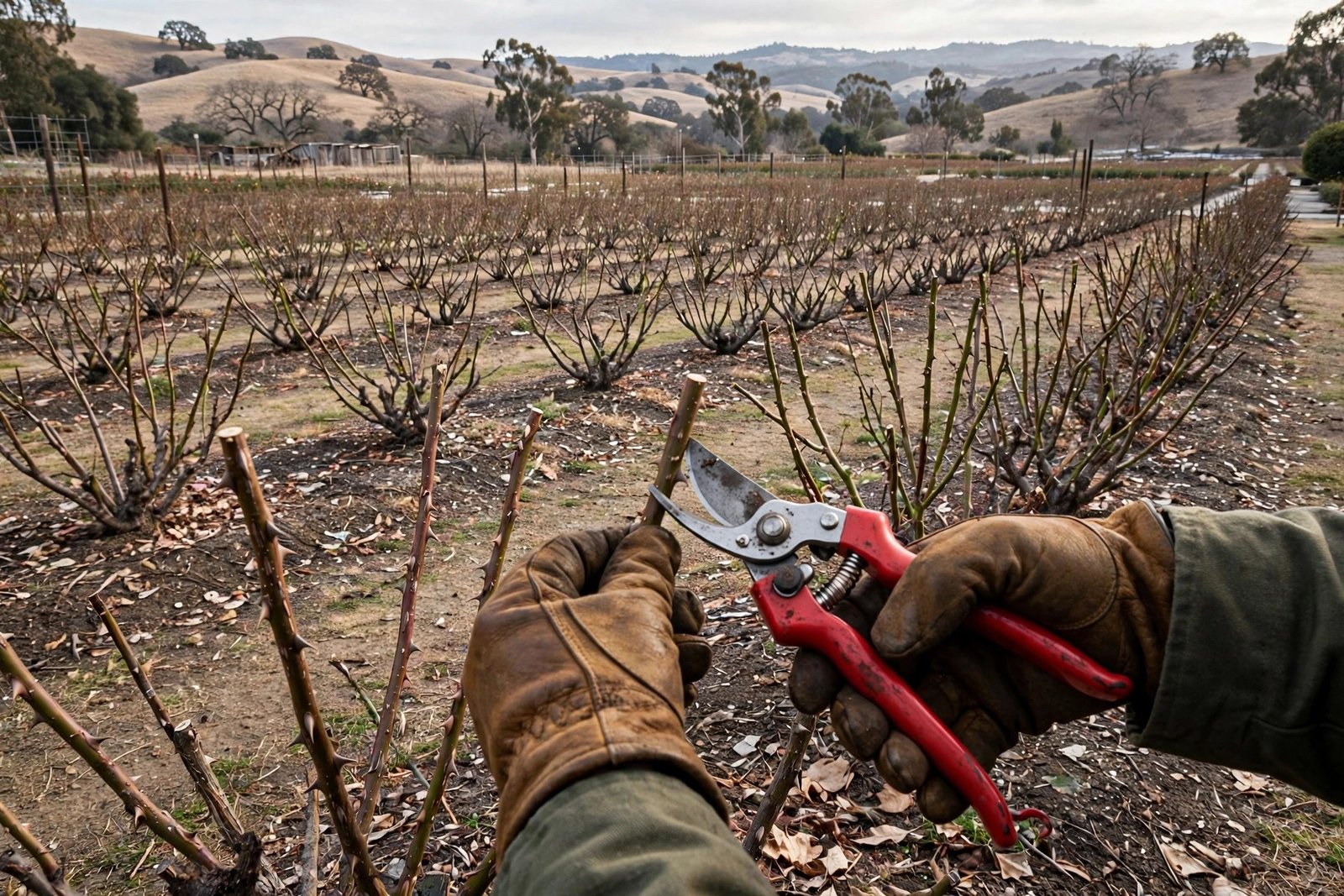
Roses are California’s signature flower — they bloom nearly year-round in the mild climate, which is exactly why pruning them correctly matters so much. Prune at the wrong time and you sacrifice the spring flush; prune correctly and you trigger the explosive growth that makes California rose gardens legendary.
This guide covers when to prune roses across California’s regions, the cutting technique professionals use, tool care, and the aftercare that turns pruning into bigger, healthier blooms.
When to Prune: The California Calendar
The main pruning happens in mid-January to mid-February, during the brief dormant window when roses slow down. The traditional rule: prune when the buds begin to swell but before they leaf out — in most of California, that falls in the last two weeks of January. Coastal areas (San Francisco, San Diego) run slightly later into February; inland valleys (Sacramento, San Joaquin) can start in early January; desert regions (Palm Springs) prune in December.
Why this window? Pruning stimulates growth, and you want that growth timed for warming spring weather — prune too early in a warm December and tender new shoots get zapped by January frost; prune too late and you cut off developing buds, delaying the spring flush by weeks. Watch your roses, not the calendar: swelling buds are nature’s signal. The American Rose Society publishes region-specific pruning calendars that refine these windows by rose type.
The second pruning: summer deadheading
California’s long season earns a lighter second pruning in late August to early September: cut back spent blooms and leggy growth by about a third to trigger a strong fall flush. Stop deadheading by mid-October — the resulting rose hips signal the plant to harden off for winter, and late pruning stimulates frost-vulnerable growth.
The Cutting Technique: How the Pros Do It
Every cut follows the same rules. Cut at a 45-degree angle, about ¼ inch above an outward-facing bud — the angle sheds water away from the bud, and outward-facing buds grow away from the plant’s center, keeping the bush open. Remove the 3 D’s first: dead, damaged, and diseased wood, cutting back to healthy green-white pith (brown pith means keep cutting lower).
Open the center: remove crossing canes that rub each other — rubbing wounds invite disease. Cut back remaining canes by one-third to one-half for hybrid teas and grandifloras (harder pruning = fewer but larger blooms), less for shrub and landscape roses. Seal nothing: the old practice of sealing cuts is unnecessary in California’s dry climate and can trap moisture. The University of California’s agriculture extension offers photo guides showing exactly where to cut for each rose class.
Different roses, different rules
Climbing roses: prune minimally — just train new canes horizontally (horizontal canes bloom far more than vertical ones) and remove old unproductive wood. Once-blooming old garden roses: prune right after flowering, never in January — they bloom on old wood, and winter pruning removes the year’s flowers. Miniatures: a light shearing is enough. When in doubt about your variety, prune lightly; you can always cut more, but you cannot glue it back.
Tools: Sharp, Clean, Right-Sized
Dull tools crush stems instead of cutting them, creating ragged wounds that invite disease. Use bypass pruners (not anvil pruners, which crush) for canes up to ¾ inch, loppers for thicker wood, and a folding pruning saw for old woody bases. Leather gauntlet gloves save your forearms — rose thorns are no joke.
Clean tools between plants, especially if you have seen any disease: a quick wipe with rubbing alcohol or a 10% bleach solution prevents spreading fungal infections from bush to bush. Sharpen pruners annually (a diamond file takes five minutes), oil the pivot, and store dry. Good tools last decades; cheap dull ones make every cut a gamble. This is also the season to step back and assess the whole bed — pruning day pairs naturally with reviewing low-maintenance landscaping ideas for beginners if the rose bed needs companion plants to fill gaps.
Aftercare: Turning Pruning Into Blooms
Pruning is the trigger; aftercare is the fuel. Clean up thoroughly: remove all pruned canes and fallen leaves — overwintering fungal spores live in debris, and California’s mild winters do not kill them. Mulch 3 inches deep with composted bark or wood chips, keeping mulch away from the crown.
Feed: apply a balanced rose fertilizer (or a generous top-dressing of compost — start composting at home and your roses get the good stuff free) as new growth emerges in March, then feed lightly after each bloom flush through September. Water deeply at the base, not overhead — wet foliage breeds black spot and rust. Watch for pests: aphids on new spring growth (blast with water), spider mites in hot dry spells, and rust on leaves (remove affected foliage promptly).
Common Pruning Mistakes in California
Pruning in fall: stimulates tender growth that winter damages — except the light September shaping described above, keep shears away after October. Being timid: roses are vigorous; the hesitant “haircut” produces weak, twiggy growth. Commit to real cuts. Ignoring suckers: growth from below the graft union is rootstock, not your rose — tear (do not cut) suckers off at the base.
Pruning wet plants: spreads disease; prune on dry days. Leaving stubs: stubs die back and invite canker — always cut to a bud or branch collar. And the most California mistake of all: never pruning because roses bloom year-round — unpruned roses become tangled, disease-prone thickets with small flowers. The January prune is what keeps them magnificent.
Conclusion
Prune California roses in mid-January to mid-February when buds swell: cut at 45 degrees above outward-facing buds, remove the 3 D’s, open the center, and follow with cleanup, mulch, and feeding. Add a light September shaping for fall blooms, keep tools sharp and clean, and respect the differences between rose classes. Do this every year and your roses will repay you with the kind of spring flush that stops neighbors mid-walk.
Frequently Asked Questions
What month do you prune roses in California?
Mid-January to mid-February for the main dormant pruning, timed to swelling buds. Desert regions prune in December; cool coastal areas may run into late February. Add a lighter shaping prune in late August for fall blooms.
Can you prune roses in December in California?
In desert regions (Palm Springs, Coachella Valley), December is correct. Elsewhere, December pruning risks stimulating growth that January frost damages. Wait for bud swell — usually mid-January — in most of the state.
How far back should I cut my roses?
Hybrid teas and grandifloras: cut back by one-third to one-half. Shrub and landscape roses: lighter, about one-quarter. Climbing roses: minimal pruning, focus on training canes horizontally. Never remove more than half the plant in one season.
Should I seal rose pruning cuts?
No — in California’s dry climate, sealing is unnecessary and can trap moisture that promotes rot. Clean 45-degree cuts heal naturally. (In very humid climates the advice differs, but California growers should skip sealants.)
Why are my roses all leaves and no flowers after pruning?
Usually excess nitrogen fertilizer (promotes leaves over blooms), insufficient sun (roses need 6+ hours), or pruning too late (cut off developing buds). Switch to a bloom-boosting fertilizer, check sun exposure, and prune on schedule next January.