
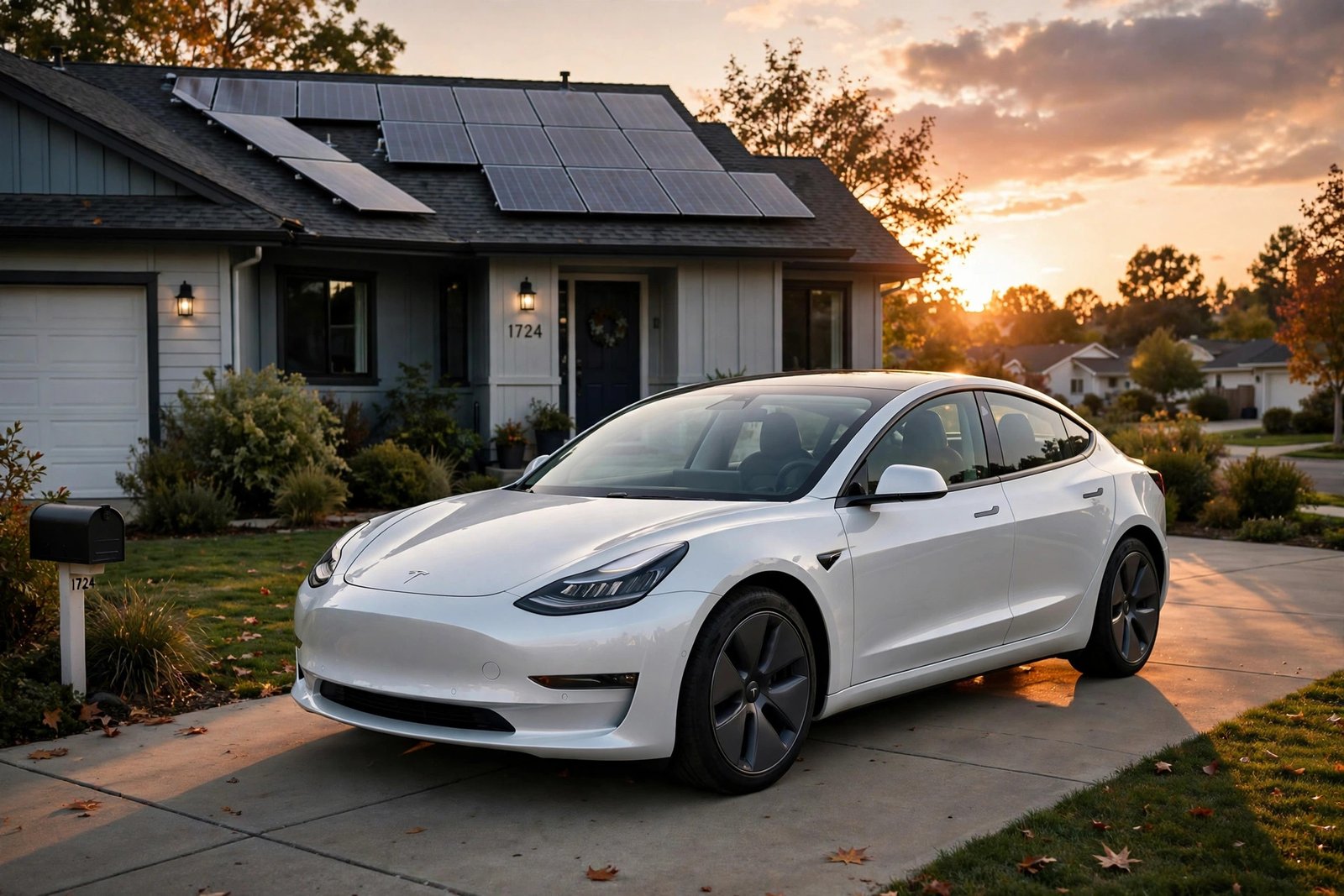
A Tesla sits in an odd place in personal finance: it's simultaneously a tech gadget, a status symbol, and — its fans insist — a rational money-saving machine. The fuel savings are real, but so is the depreciation curve, the insurance bill, and the opportunity cost of tying up $40,000+ in a depreciating asset.
So let's strip out the brand tribalism and run the actual numbers. This is the total-cost-of-ownership math for buying a Tesla in 2026 versus the alternatives.
The Purchase Price Problem
Start with the uncomfortable truth: no new car is a good financial decision in the strict sense — vehicles depreciate, and Teslas have depreciated faster than most in recent years as Tesla repeatedly cut new-car prices, dragging used values down with them. A Model 3 that cost $47,000 in 2022 was worth dramatically less two years later, punishing early buyers with some of the steepest depreciation in the industry.
The federal EV tax credit (up to $7,500 for qualifying models and buyers, applied at point of sale since 2024) softens the blow considerably — but only if the specific configuration qualifies and your tax situation supports it. State incentives stack in places like California and Colorado. The financially rational Tesla buyer prices the car net of every available credit, buys the base configuration they'd actually be happy with, and treats the sticker price as the starting point of negotiation with reality, not the cost.
Fuel and Maintenance: Where Tesla Actually Wins
This is the strongest part of the case. Electricity costs roughly the equivalent of $1–2 per gallon of gas in most states, so a driver covering 12,000 miles a year saves $1,500–$2,500 annually on fuel versus a comparable gas sedan. Home charging on off-peak rates pushes savings higher; California's time-of-use plans can cut overnight charging costs dramatically. Over five years, fuel savings alone can offset $8,000–$12,000 of the purchase premium.
Maintenance compounds the advantage: no oil changes, no transmission servicing, regenerative braking that extends brake life dramatically. Tesla owners routinely report maintenance costs roughly half those of gas cars over five years. Tires are the exception — EVs are heavy and torquey, so budget for faster tire wear. Net-net, the operating savings are real and substantial; they're the legitimate core of the financial argument.
For official guidance, see FuelEconomy.gov official cost calculators.
Insurance and Repairs: The Hidden Costs
Here's where the math gets uglier. Teslas are among the most expensive mainstream vehicles to insure — often 20–40% more than comparable gas sedans — because of costly aluminum bodywork, expensive sensors, limited certified repair networks, and high total-loss rates on damaged vehicles. Get insurance quotes before you buy, not after; the premium shock has killed many a budget.
Repair costs follow the same pattern. A minor fender-bender involving sensors or the battery pack area can run into five figures, and parts availability has historically been a Tesla weak point. Extended warranties and Tesla's own insurance product (available in several states) can mitigate this, but factor $300–$600/month in total insurance-plus-expected-repair reserves into your ownership math. For some buyers, these costs erase half the fuel savings.
Tesla vs. Other EVs vs. Good Gas Cars
The honest comparison isn't Tesla vs. gas — it's Tesla vs. the full field. Hyundai, Kia, and GM now sell compelling EVs with similar operating savings, often with lower insurance costs and dealer networks for service. A Bolt or Equinox EV at a lower purchase price can beat a Model 3 on total cost even with slightly less range. And a reliable used gas car (Camry, Civic) at half the purchase price remains unbeatable on pure dollars for low-mileage drivers.
Where Tesla wins the comparison: the Supercharger network (still the most reliable fast-charging in the US), strong resale in the base Model 3/Y trims, and software updates that genuinely improve the car over time. Where it loses: build consistency, service experience, and price volatility. The financially optimal EV is usually the cheapest one that meets your range needs — brand loyalty is a luxury good.
When Buying a Tesla IS a Good Financial Decision
The math works when several stars align: you drive high mileage (15,000+/year, where fuel savings compound), you can charge at home on cheap overnight rates, you qualify for the full tax credit, you get reasonable insurance quotes, and you'd be buying a new car in this price range anyway. High-mileage commuters and rideshare drivers are the clearest winners — some save $300+/month net versus a gas equivalent.
It fails when: you're stretching your budget to afford it (a car payment over 15% of take-home pay is dangerous regardless of fuel type), you can't home-charge (public charging erodes the savings), or you're buying for the image while telling yourself it's about savings. The most financially sound Tesla purchase is a 2–3-year-old used Model 3 — someone else ate the steepest depreciation, and you get most of the operating savings.
Learn more from NerdWallet on Tesla financing.
The Used Tesla Market: Sweet Spots and Traps
The used Tesla market is where the financial case gets genuinely compelling. Two-to-three-year-old Model 3s often sell for 40–50% below original sticker — the steep depreciation that punished new buyers becomes your discount. You still get the Supercharger network, the software updates, most of the battery warranty (8 years/100k–120k miles depending on model), and nearly all the fuel savings.
Shop carefully, though. Check battery health via the car's energy screen or a third-party diagnostic — degradation beyond 10–12% at low mileage suggests a hard life. Verify remaining warranty, confirm the car has a clean title (flood and salvage Teslas are a minefield of battery risk), and check that Full Self-Driving (if advertised) is actually the paid capability, not the subscription. Private-party prices often beat dealers by thousands, and Tesla's own used inventory sometimes includes warranty extensions. The financially optimal Tesla remains a gently used one — let someone else fund the depreciation curve.
If this was helpful, keep reading: our guide to saving money on groceries without couponing and whether a smart thermostat saves money.
Is buying a Tesla a good financial decision? It can be — for high-mileage drivers who charge at home, capture the tax credit, and buy at the right price point. For everyone else, it's a lifestyle purchase wearing a savings costume. Run your own total-cost math with real insurance quotes and your actual electricity rate before deciding. The car is genuinely cheaper to run; whether it's cheaper to own depends entirely on your numbers.
Frequently Asked Questions
Do Teslas really save money on gas?
Yes — typically $1,500–$2,500 per year for average drivers versus a comparable gas sedan, more for high-mileage drivers with cheap home electricity. Public fast-charging costs much more than home charging, though.
Why is Tesla insurance so expensive?
Costly repairs (aluminum bodies, sensors), limited certified shops, and higher total-loss frequency. Quotes run 20–40% above comparable gas sedans — always price insurance before buying.
Is a used Tesla a better financial decision than new?
Usually yes. Steep depreciation on new Teslas means 2–3-year-old models offer most of the operating savings at a much lower purchase price. Check battery health and warranty remaining before buying used.
Does the $7,500 EV tax credit apply to Tesla in 2026?
It depends on the specific model, its price, battery sourcing rules, and your income — and rules change. Verify current eligibility at FuelEconomy.gov before counting on it in your budget.