
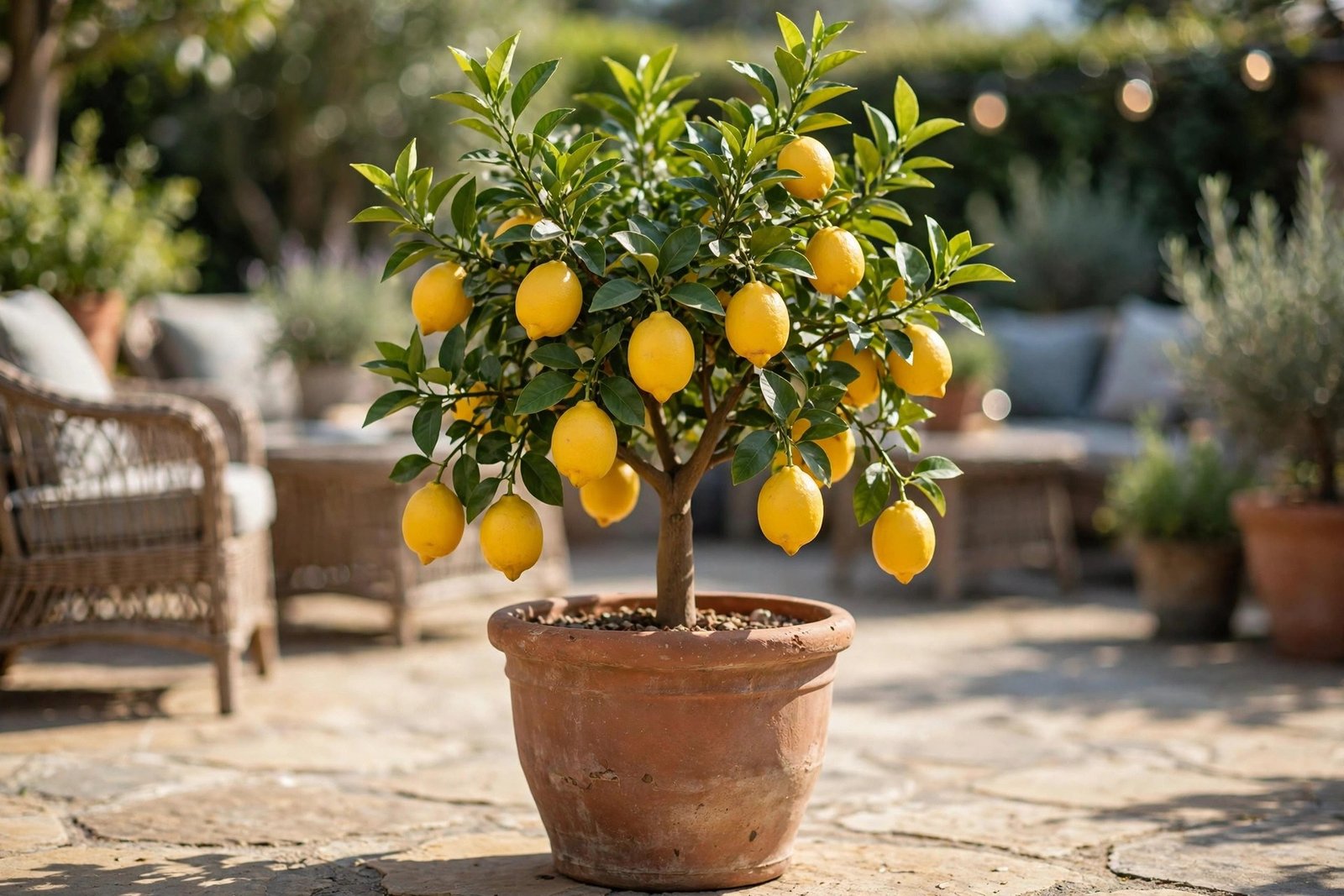
A lemon tree on the patio is the ultimate small-space flex: fragrant blossoms in spring, glossy green fruit through winter, and fresh lemons steps from your kitchen — all from a pot. Container lemons are not a compromise; with the right variety and care, a potted tree can out-produce a neglected in-ground one.
This guide covers everything: choosing dwarf varieties, the right pot and soil, watering and feeding rhythms, and winter care that keeps your tree thriving for decades.
Choose the Right Variety
Not all lemons suit containers. The stars: Meyer lemon — the container classic, naturally compact, thin-skinned, sweeter fruit, and remarkably productive in pots. Ponderosa lemon — huge fruit, dramatic, but the tree stays manageable. Lisbon and Eureka — the classic commercial lemons; more vigorous, so they need regular pruning in containers but reward with heavy crops of tart fruit.
Buy grafted trees on dwarfing rootstock (Flying Dragon is the most dwarfing) from a reputable nursery — grafted trees fruit years earlier than seedlings and stay compact. A 2–3-year-old tree in a 5-gallon nursery pot is the ideal starting purchase: established enough to fruit soon, young enough to adapt to your patio. Inspect before buying: deep green leaves, no scale insects on stems, and a straight graft union. The University of California’s agriculture extension publishes variety recommendations specifically for container citrus growers.
Pot, Soil, and Placement
Pot: start with a 15–20 gallon container (roughly 18–24 inches wide) — big enough for several years of growth, small enough to move. Terracotta breathes well but dries fast and gets heavy; lightweight resin or fabric pots are easier to move for winter. Whatever you choose, drainage holes are non-negotiable — citrus roots rot in standing water. Put the pot on pot feet or a rolling plant caddy from day one; a wet 20-gallon pot weighs over 150 pounds.
Soil: use a fast-draining citrus or cactus mix, or make your own (roughly equal parts quality potting soil, perlite or pumice, and composted bark). Never use garden soil — it compacts in containers and suffocates roots. Placement: full sun, minimum 6–8 hours daily, in the warmest, most sheltered spot on the patio — against a south-facing wall is ideal. Citrus loves heat radiating off walls and hates wind, which shreds leaves and dries pots fast. The discipline of container watering builds skills that transfer — gardeners who master patio citrus find it easy to keep houseplants alive if you travel a lot, since both reward consistent routines.
Watering: The Make-or-Break Skill
Container lemons die from watering mistakes more than anything else. The rule: water deeply when the top 2 inches of soil are dry, then let it drain completely — never let the pot sit in a saucer of water. In summer heat, that may mean daily watering; in winter, every 10–14 days. There is no schedule, only the finger test.
Signs you are overwatering: yellowing leaves that drop while still yellow, soggy soil days after watering. Signs of underwatering: leaves curling inward, dry crispy leaf edges, fruit dropping early. Self-watering pots or a simple drip line on a timer remove the guesswork for busy growers. Mulch the soil surface with bark to slow evaporation, and in heat waves, move the pot to afternoon shade temporarily — containers overheat far faster than ground soil. The Old Farmer’s Almanac offers seasonal container-watering guidance tuned to your climate zone.
Feeding for Heavy Harvests
Container citrus are heavy feeders — the confined soil depletes fast. Use a citrus-specific fertilizer (look for a 2-1-1 NPK ratio plus micronutrients, especially iron, zinc, and manganese) from March through October, following package rates for container size. Slow-release granular fertilizer every 2–3 months is the low-effort option; liquid feed every 2 weeks during active growth pushes maximum production.
Watch for deficiencies: yellow leaves with green veins means iron chlorosis (common in alkaline water areas — treat with chelated iron); overall pale growth means nitrogen hunger. Flush the pot with plain water every few months to prevent fertilizer salt buildup, which shows as brown leaf tips. And start composting at home — a top-dressing of finished compost each spring feeds the tree gently and improves the potting mix’s biology.
Pruning for shape and production
Prune lightly in late winter: remove crossing branches, suckers below the graft union (these are rootstock, not lemon — cut them ruthlessly), and thin the canopy for airflow. Container trees rarely need heavy pruning; the goal is an open vase shape with light reaching the interior. Never remove more than a quarter of the canopy at once.
Winter Care and Longevity
Lemons tolerate brief dips to about 28°F, but container roots are far more exposed than in-ground ones — a pot can freeze solid while the ground stays workable. When frost threatens: move the tree against the house wall, under an overhang, or indoors to a bright spot; wrap the pot in burlap or bubble wrap for insulation; cover the canopy with frost cloth (not plastic, which conducts cold).
Reduce watering sharply in winter and stop fertilizing — the tree is semi-dormant. Indoors, provide the brightest window available and watch for spider mites in dry heated air (mist occasionally or run a humidifier nearby). A well-cared container lemon lives 25–50 years; repot every 3–4 years into a slightly larger pot, root-pruning if you want to maintain size. Patience pays: year-three harvests dwarf year-one’s, and a mature patio lemon is a neighborhood legend.
Conclusion
Growing lemons in containers on a patio comes down to five things: a dwarf grafted variety (Meyer if in doubt), a big well-draining pot in full sun, disciplined watering by feel not schedule, regular citrus feeding, and winter frost protection. Master those and your patio produces fragrant blossoms, glossy fruit, and the quiet satisfaction of picking a lemon you grew yourself — in January, in a pot, steps from your door.
Frequently Asked Questions
What is the best lemon variety for containers?
Meyer lemon, by a wide margin — naturally compact, productive in pots, cold-tolerant for a lemon, and the fruit is exceptional. Ponderosa suits those wanting novelty; Eureka and Lisbon work but need more pruning to stay container-sized.
How big a pot does a lemon tree need?
Start with 15–20 gallons (18–24 inches wide) for a young tree, moving up every 3–4 years to a maximum around 25–30 gallons. Bigger is generally better for stability and moisture buffering, but the pot must remain movable for winter protection.
Why are my lemon tree’s leaves turning yellow?
The most common causes: overwatering (yellow leaves dropping while yellow), nutrient deficiency (uniform paleness = nitrogen; yellow with green veins = iron), or natural winter slowdown. Check soil moisture first — watering issues cause the majority of yellow-leaf complaints.
Can lemon trees stay outside in winter?
In zones 9–10, usually yes with frost protection on cold nights. In colder zones, move containers indoors or into a greenhouse when nights drop below freezing. Container roots freeze far faster than ground soil, so potted trees need protection earlier than in-ground ones.
How long until a container lemon produces fruit?
Grafted nursery trees often fruit lightly in year one and produce meaningful harvests by years 2–3. Remove most first-year fruit to direct energy into root establishment — the tree you build early pays dividends for decades.