
Is It Safe to Eat Leftovers That Are Four Days Old?
Is It Safe to Eat Leftovers That Are Four Days Old?
It’s Thursday. The chicken from Sunday is still in the fridge, and you’re staring at it doing mental math. Is it safe to eat leftovers that are four days old? I’ve played this game more times than I’ll admit, and I finally got tired of guessing — so I dug into actual food safety guidance instead of relying on the sniff test and hope. The answer is: usually yes, but it depends on what the food is and how you stored it. Here’s the full breakdown so you never have to gamble again.
The 3-to-4-Day Rule
The USDA is clear: cooked leftovers are safe for 3 to 4 days in the refrigerator (at or below 40°F). Day four is the edge of the safe window, not past it — if the food was refrigerated promptly and stored properly. That “if” does a lot of work, so let’s unpack it. The rule exists because bacteria like listeria can grow even at fridge temperatures, slowly. Days 1–3, levels stay safe. By day 4, you’re at the limit. Day 5 and beyond, you’re rolling dice.
Which Leftovers Are Fine at Day Four (and Which Aren’t)
Not all leftovers age equally:
- Generally fine at day 4: cooked meats, poultry, casseroles, soups, stews, cooked grains and pasta, roasted vegetables. These are sturdy and reheat well.
- Use extra caution: seafood and fish leftovers (best within 2–3 days), deli meats opened from the package, soft leftovers with dairy-heavy sauces.
- Don’t push it: anything left at room temperature more than 2 hours (1 hour if it’s above 90°F outside), leftovers that were already reheated once, baby food, or anything for pregnant people, young kids, or immunocompromised folks — stick to 2–3 days max for vulnerable groups.
Storage: Where Safety Is Actually Decided
Here’s what most people get wrong: the clock doesn’t start when you put food in the fridge — it starts when the food finishes cooking. That container that sat on the counter for three hours before being refrigerated? Its day-four safety is already compromised. The rules that matter:
- Refrigerate within 2 hours of cooking. Divide big batches into shallow containers so they cool fast — a giant pot of soup cools dangerously slowly.
- Keep the fridge at 40°F or below. Many home fridges run warmer than people think. A $5 fridge thermometer is cheap insurance.
- Use airtight containers. They prevent cross-contamination and moisture loss. The cardboard takeout box doesn’t count.
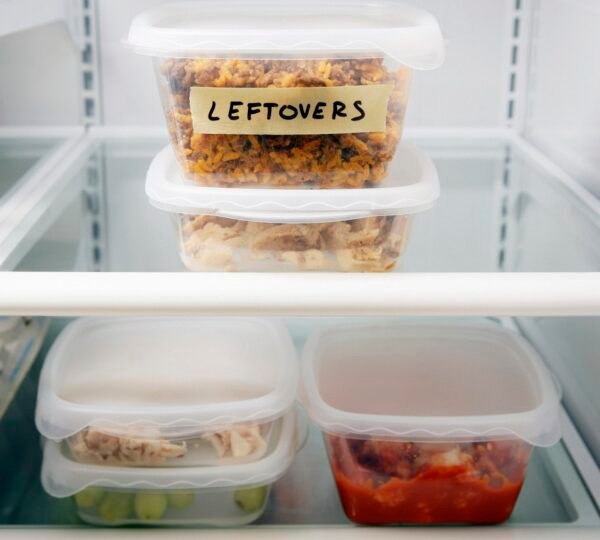
- Label with the date. “When did I make this?” is how day-four chicken becomes day-six chicken. A piece of tape and a marker ends the mystery.
Good storage habits also reduce food waste — properly stored food actually gets eaten instead of becoming a science experiment.
Reheating: The Second Safety Net
Reheat leftovers to 165°F throughout — steaming hot, not just warm. Microwaves heat unevenly, so stir halfway and let food stand a minute after. Sauces and soups should come to a full boil. And reheat only once: every cool-reheat cycle is another trip through the bacterial danger zone (40–140°F). If you won’t finish it, portion out what you’ll eat and reheat just that.
When in Doubt, Throw It Out
I know it hurts to waste food. But food poisoning hurts more — and “it smelled fine” is not a safety test, because the bacteria that cause illness often don’t change a food’s smell or taste. Spoilage bacteria (the ones that make food smell off) and pathogenic bacteria (the ones that make you sick) are different organisms. Trust the timeline, not your nose. If you’re unsure how long it’s been, or the storage was sketchy, let it go.
The Freezer: Your Time Machine
Can’t eat it by day four? Freeze it by day two. Frozen leftovers keep 2–3 months at top quality and stay safe indefinitely (quality degrades, safety doesn’t, at 0°F). Freeze in portion-sized containers, label with contents and date, and thaw in the fridge — never on the counter. This is the single best habit for anyone who cooks in batches.
For authoritative guidance, FoodSafety.gov has clear leftover charts, and the USDA’s Food Safety and Inspection Service publishes the detailed rules.
Leftovers Most People Mishandle
Some leftovers have specific quirks worth knowing. Rice is the big one: cooked rice can harbor Bacillus cereus, whose spores survive cooking and germinate at room temperature. Cool rice quickly (spread on a tray), refrigerate within an hour, and eat within 2–3 days. Fried rice from day-old refrigerated rice is actually the safe version — the tradition exists for food-safety reasons, not just texture.
Chicken and poultry: follow the 3–4 day rule strictly, and reheat to steaming throughout — poultry is the most common source of leftover-related illness. Our guide to telling when chicken is done covers the cooking side. Soups and stews: bring to a full rolling boil when reheating, not just a simmer — the higher temperature is what ensures safety. Pizza and takeout: refrigerate within 2 hours (the car ride home counts), and eat within 3–4 days.
The sniff test, revisited: trust it for spoilage (sour milk, slimy deli meat — throw out), but never for safety. Pathogens are invisible and odorless. When the timeline is unclear, the rule stands: when in doubt, throw it out. A $4 container of leftovers is never worth a ruined week.
Is It Safe to Eat Leftovers That Are Four Days Old? Quick Answer
Usually yes — day four is the edge of the USDA’s 3-to-4-day safe window, provided the food was refrigerated within 2 hours of cooking, stored airtight at 40°F or below, and reheated to 165°F. Be stricter with seafood (2–3 days) and for pregnant people, young kids, or anyone immunocompromised. When in doubt, freeze by day two or throw it out.
The Takeaway
Day-four leftovers are generally safe if they were refrigerated within two hours, stored airtight at 40°F or below, and reheated to 165°F. When in doubt, freeze by day two or throw it out. Your stomach will thank you for not gambling.