
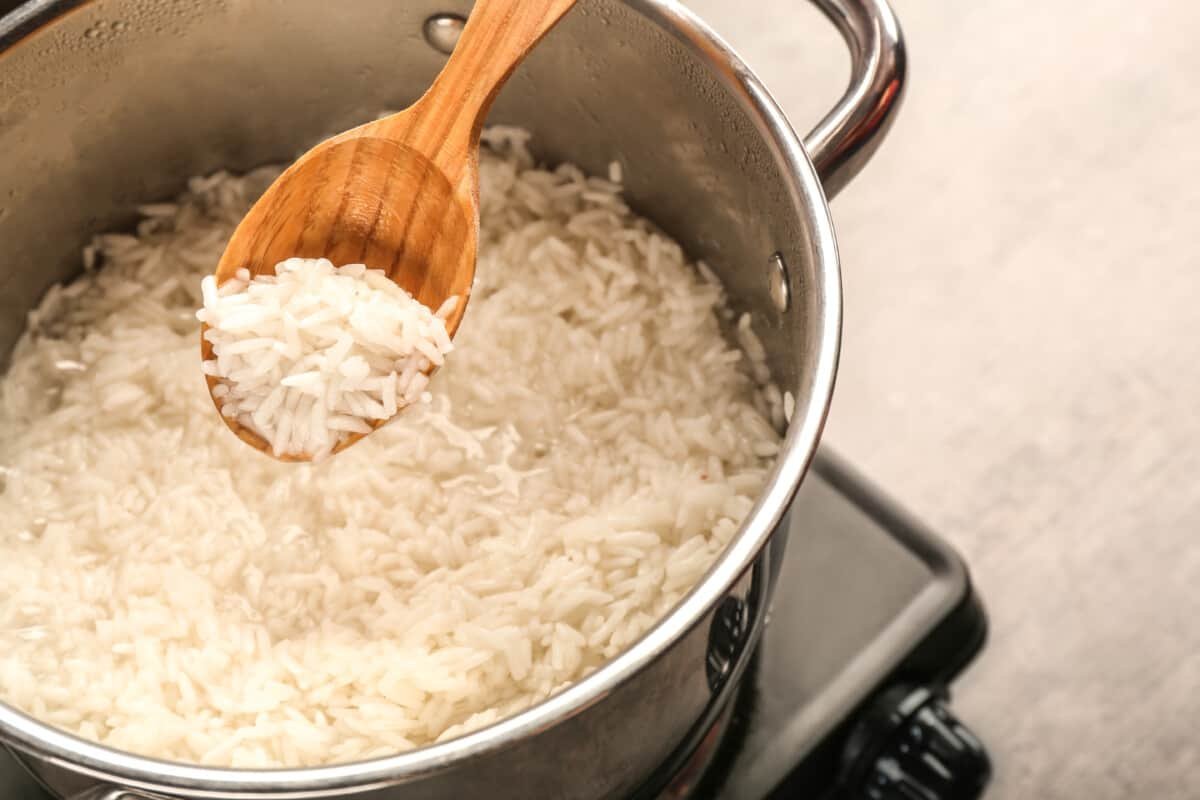
How Do I Cook Perfect Rice on the Stove Every Time?
Mushy. Crunchy. Burnt on the bottom, raw on top. Stovetop rice defeats more home cooks than almost any other “simple” food — because the simplicity is deceptive. If you’re asking how do I cook perfect rice on the stove every time, the method below works for standard long-grain white rice with boring reliability. Master this, then adapt for other varieties.
How Do I Cook Perfect Rice On The Stove Every Time?
- Rinse the rice. Rinse 1 cup rice under cold water, swishing with your hand, until the water runs mostly clear (3–4 rinses). This removes excess surface starch — the #1 cause of gummy rice. Drain well.
- Use the right ratio: 1 cup rice to 1.5 cups water for long-grain white. (Not 2:1 — that’s the most common recipe error; it makes mush.) Add 1/2 tsp salt and 1 tsp butter or oil (optional, but it improves texture and prevents sticking).
- Bring to a boil over medium-high heat, uncovered. Watch it — this takes 3–5 minutes.
- The moment it boils, stir once (just once — stirring later releases starch and makes gumminess), cover with a tight-fitting lid, and drop heat to the lowest setting.
- Do not touch it for 15 minutes. No peeking, no stirring, no “checking.” Lifting the lid releases the steam doing the cooking. Set a timer and walk away.
- Rest off heat, still covered, for 10 minutes. This step is as important as the cooking — it lets moisture redistribute evenly. Skipping the rest is why rice is wet on the bottom and dry on top.
- Fluff with a fork (not a spoon — a fork separates grains without mashing). Serve.
That’s it. Rinse, 1:1.5, boil, cover, lowest heat 15 minutes, rest 10 minutes covered, fluff. When you cook perfect rice on the stove every time, this sequence becomes muscle memory.
Ratios and Times for Other Rice Types
- Jasmine rice: 1:1.5, 15 min + 10 min rest. Slightly sticky, fragrant — the Thai restaurant rice.
- Basmati rice: 1:1.5, 15 min + 10 min rest. Soak 30 minutes first for extra-long grains. The basmati tradition includes aging the rice, which is why good basmati cooks up so distinct.
- Medium/short-grain (sushi, arborio-style): 1:1.25, 15 min. Stickier by design.
- Brown rice (long-grain): 1:2, 40–45 min + 10 min rest. The bran layer needs more water and time. No way around it.
- Wild rice: 1:3, 45–55 min. It’s a grass seed, not true rice — hence the different math.
The Equipment Matters More Than You Think
- Heavy-bottomed pot with a tight lid. Thin pots scorch; loose lids leak steam. A Dutch oven is ideal. If your lid doesn’t seal well, lay a clean kitchen towel between pot and lid (tucked away from the flame) to trap steam.
- Right size pot: rice roughly triples in volume. 1 cup uncooked needs a 2-quart pot minimum; don’t crowd.
- Lowest heat setting: if your burner runs hot even on low, use a diffuser or the smallest burner. Scorched bottoms come from too much heat, not too little time.
Troubleshooting: What Went Wrong
- Mushy/gummy: too much water, or you stirred during cooking, or skipped rinsing. Reduce water slightly next time.
- Crunchy/undercooked: not enough water, heat too high (water boiled off before rice cooked), or lid didn’t seal. Add 2 tbsp water, re-cover, low heat 5 more minutes.
- Burnt bottom: heat too high or pot too thin. Lowest setting, heavy pot.
- Wet/sticky top, dry bottom: skipped the 10-minute rest. The rest fixes this.
- Bland: salt the water. Also try cooking in broth, adding a bay leaf, or toasting the rice in butter for 2 minutes before adding water (pilaf method — adds wonderful nuttiness).
Level Up: Beyond Plain Rice
Once the basic method is automatic:
- Pilaf method: sauté rice in butter/oil with diced onion until translucent and nutty, then add hot broth at the standard ratio. Deeper flavor, same technique.
- Coconut rice: replace half the water with coconut milk + pinch of sugar. Life-changing with curries.
- Seasoned: turmeric + cumin, or lime zest + cilantro stirred in after fluffing, or a knob of butter and cracked pepper.
Rice Cooker vs. Stovetop: The Honest Take
Rice cooker owners swear by them; stovetop purists scoff. Here’s the truth: a good rice cooker ($30–$150) produces more consistent rice than most home stovetops, with zero attention — set it, walk away, perfect rice every time, held warm for hours. It’s genuinely superior for brown rice and large batches. Stovetop wins on: no single-purpose appliance, slightly better texture control for connoisseurs, and the pilaf/toasting techniques that need direct heat. My take: if you eat rice 3+ times a week, buy the cooker — the consistency and convenience justify the counter space. If rice is occasional, master the stovetop method in this article and skip the gadget. Either way, the fundamentals (rinse, ratio, rest, fluff) are identical — the cooker just automates the heat management.
Day-Old Rice and Fried Rice Science
The best fried rice starts with day-old refrigerated rice — and there’s real science behind the tradition. Fresh rice is moist and soft; the grains clump and steam rather than fry. Refrigerated overnight, the starches retrograde (recrystallize), firming the grains and drying the surface — so they stir-fry into distinct, chewy, slightly crispy grains instead of mush. The shortcut: spread fresh rice on a sheet pan and refrigerate uncovered for 1–2 hours (or freeze 30 minutes) — not as good as overnight, but vastly better than fresh. Fried rice technique: screaming-hot wok or skillet, oil with high smoke point, rice in a single layer (don’t crowd), let it sit undisturbed 1–2 minutes for crispy bits, then toss. Day-old rice isn’t leftover — it’s an ingredient with a job.
The Takeaway
How do you cook perfect rice on the stove every time? Rinse well, use 1:1.5 rice-to-water for white rice, boil then cover on the lowest heat for 15 minutes without peeking, rest covered 10 minutes off heat, fluff with a fork. Heavy pot, tight lid, no stirring, no skipping the rest.
It’s a technique, not a talent — follow the sequence and it works every single time. Rice mastered? Our homemade pizza dough is the next staple to conquer, and freezing cooked pasta covers the other great carb.