
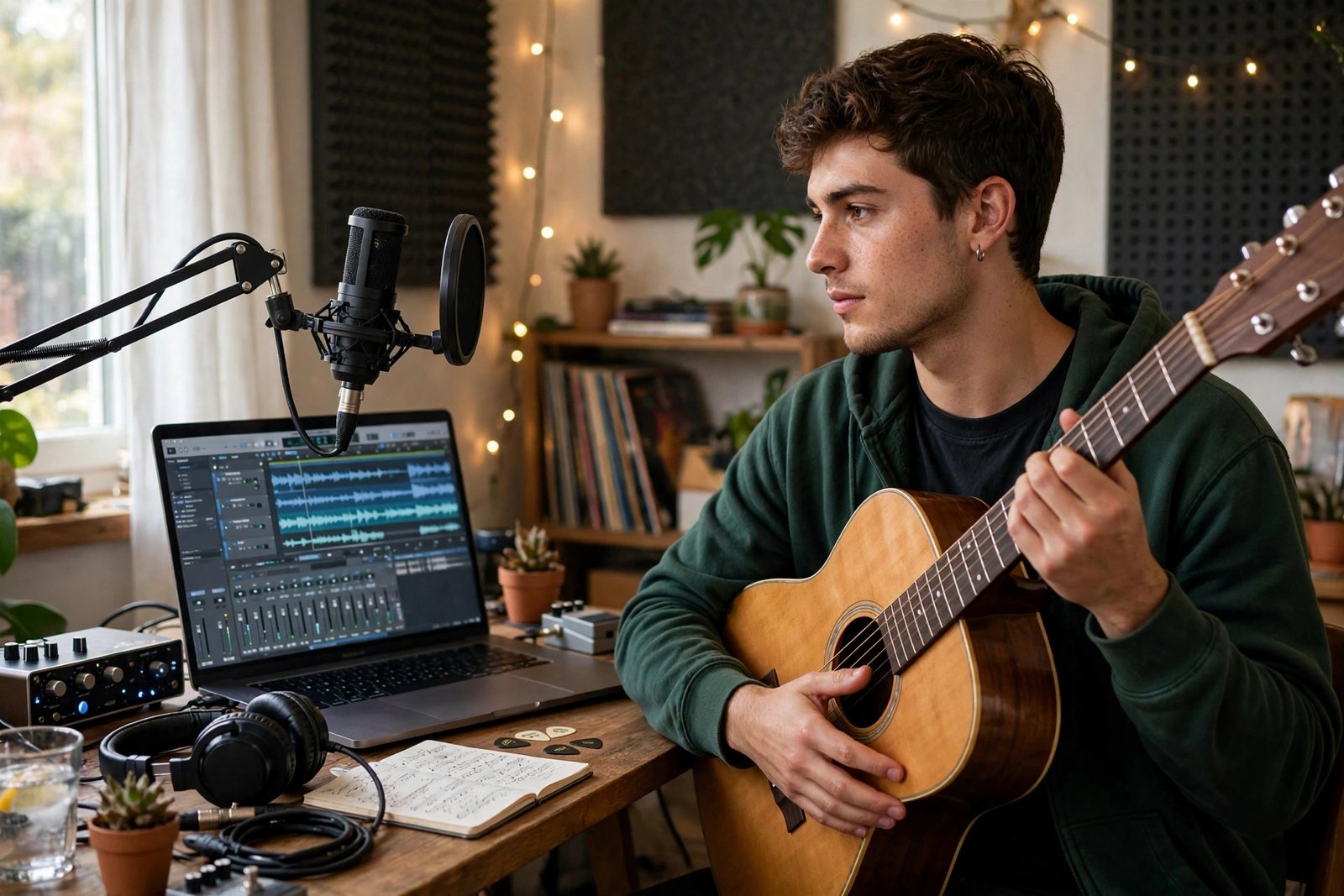
You have four songs you love, a fifth you are unsure about, and a growing itch to put something out into the world. Every musician reaches this moment: the songs exist, the dream is vivid, and the question becomes when. Release too early and your debut lands with a whimper, burning the “first impression” you only get once. Wait too long and perfectionism quietly kills momentum. Timing a first EP is one of the highest-leverage decisions an emerging artist makes.
When should you release your first EP? When the songs are undeniable, the strategy is real, and the calendar cooperates — a convergence you can engineer rather than hope for. Here is the checklist that separates debuts that launch careers from debuts that vanish.
The Songs Come First — Ruthlessly
The unglamorous truth: most first EPs are released too early because artists fall in love with being “an artist with an EP” rather than with the songs. Before planning anything, apply the brutal filter: would you bet your reputation on every track? An EP is typically 4–6 songs and 15–25 minutes — short enough that there is nowhere to hide filler. One weak track does not just sit there; it actively drags down the strong ones by association.
Get outside ears before you commit. Play the songs for honest listeners — not friends who love everything you do, but fellow musicians, producers, or brutally candid fans. If the consensus is “three great songs and two fine ones,” you have a three-song single run, not an EP. Write the fourth great song. The Spotify for Artists data is unambiguous: debut projects with higher skip rates get algorithmically buried, while tight projects get pushed. Quality is the entire strategy.
Define What “Success” Means Before Release Day
An EP without a goal is just files on the internet. Decide in advance what this release must achieve: 10,000 streams to prove concept? Opening slots from local bookers? Press quotes for your bio? A fanbase of 500 true listeners? The goal dictates the strategy — a playlist-targeted release looks different from a press-targeted one, which looks different from a live-scene-targeted one.
Work backward from the goal into a timeline. Serious playlist pitching needs 4–6 weeks of lead time through Spotify for Artists’ editorial submission. Press and blogs need 6–8 weeks; music journalists plan coverage in advance and ignore last-minute blasts. Music videos, artwork, and merch each add weeks. A realistic first-EP timeline runs 3–4 months from “songs done” to release day — anyone promising faster is selling you a rushed launch. Artists who understand this planning discipline also tend to navigate the business side better, including knowing how ticketing economics work when they start playing live.
Singles First: The Modern EP Strategy
The dominant indie strategy in the streaming era: release 2–3 singles before the EP, then include them on the EP at launch. Each single is its own moment — its own pitch, playlist opportunity, and content cycle — building an audience the EP then consolidates. Artists who drop an EP cold, with zero prior releases, forfeit multiple discovery chances.
Space singles 6–8 weeks apart, and make each release an event: lyric videos, behind-the-scenes content, live sessions. By EP day, you arrive with momentum, existing streams, and an audience primed for the full project. The EP then serves its true purpose — not discovery, but depth: converting casual single-listeners into fans who stay for the whole story.
Choosing the Release Date
Avoid mid-December, when major artists flood the calendar and editorial attention vanishes into holidays. Avoid dropping the same week as a genre giant’s album if you can help it. Friday remains the industry standard (chart weeks and playlist updates align), but for indie artists the specific Friday matters less than the runway: pick a date that gives your singles, press, and playlist pitches room to breathe. Then protect that date fiercely — moving it signals disorganization to everyone watching, from curators to fans.
Distribution, Artwork, and the Business Basics
Choose a distributor (DistroKid, TuneCore, Amuse, and similar) based on your needs: flat annual fees versus per-release cuts, speed of distribution, and royalty splits. Upload early — distribution to all platforms takes days to weeks, and you need the private links for pitching before release day. Register your songs with a performing rights organization and consider publishing administration; unclaimed royalties are the indie world’s quietest tragedy.
Artwork is not decoration; it is the thumbnail of your career. In streaming interfaces, your cover is often a one-inch square competing for attention — design for that reality: bold, legible, emotionally immediate, unmistakable at a glance. Hire a designer if you can; barter with art students if you cannot. The same care applies to press photos and bios — bookers and journalists decide in seconds whether you look like a serious artist, and presentation is part of the music business whether purists like it or not.
The Release Week Battle Plan
Release week is execution, not planning. Line up: premiere or exclusive with a blog or playlist curator, a release show (even a small one — debuts deserve a room), coordinated social content across the week, email to your list (start one now if you have not), and personal outreach to everyone who supported the singles. The goal is concentrated energy — algorithms and humans both respond to velocity.
Then, critically: have the next thing ready. The post-release dip destroys artists who treat the EP as a finish line. Announce the next single, the next show, the next video within weeks — momentum is perishable. Careers are built on cadence, not moments. Your first EP is not the destination; it is the first proof that you can ship — and shipping repeatedly is the actual job.
Conclusion
Release your first EP when every song earns its place, when you have defined what success looks like, when 2–3 singles have built real momentum, and when the calendar gives press and playlists room to work — typically 3–4 months after the music is done. Rush it and you waste your debut; over-polish it and you never ship. The right time is when preparation meets courage, and that time is closer than perfectionism tells you.
Further reading: For more on this topic, see discovering new music beyond algorithm playlists and Billboard’s chart methodology explainers.
Frequently Asked Questions
How many songs should a first EP have?
Four to six songs, roughly 15–25 minutes. Fewer feels insubstantial; more dilutes the impact and starts competing with album expectations. Every track must earn its place — no filler on a debut.
Should I release singles before my EP?
Yes. Releasing 2–3 singles in the months before the EP gives you multiple discovery moments, playlist pitches, and content cycles. The EP then consolidates the audience the singles built.
Should my first EP be on all streaming platforms?
Yes — distribute everywhere through your chosen distributor, but focus your promotional energy where your audience actually lives. Being on all platforms costs nothing extra and captures every potential listener, while concentrated marketing on one or two channels drives the momentum that matters.
How far in advance should I plan an EP release?
Plan 3–4 months from finished songs to release day. Playlist editorial pitching needs 4–6 weeks, press needs 6–8 weeks, and videos, artwork, and distribution all add lead time.
When is the worst time to release music?
Mid-December, when major releases dominate attention and editorial staff are on holiday. Also avoid launching the same week as a massive album in your genre if you can help it.