
That “lab mix” from the shelter might be 40% chow, 30% pit bull, and 30% mystery — or something completely different. Pet DNA testing has exploded from novelty to a genuinely useful health tool: modern tests screen for 200+ genetic health conditions alongside breed analysis, and the results can change how you and your vet care for your animal. But the tests have real limitations, and “should I DNA test my pet” depends on what you’re hoping to learn.
This guide explains when you should get pet DNA testing done: what the tests actually reveal, when the health screening justifies the cost, accuracy limits, privacy considerations, and how to choose between the major providers.
What Pet DNA Tests Actually Tell You
Two categories of results. Breed/mix analysis: the test compares your pet’s DNA against reference panels of purebreds, estimating breed percentages and often identifying relatives in the database (Embark’s relative-finder has reunited littermates). For mixed-breed dogs, this satisfies curiosity and occasionally explains behavior (herding instincts, prey drive) — useful for training expectations.
Health screening: the more valuable half. Embark tests for 250+ genetic health conditions (Wisdom Panel covers 200+), including MDR1 drug sensitivity (critical — affected dogs can have fatal reactions to common medications like ivermectin), degenerative myelopathy risk, von Willebrand’s disease, and breed-specific conditions. These are risk markers, not diagnoses — a “carrier” or “at risk” result means discuss with your vet, not panic. For purebreds, health screening can confirm or rule out the conditions their breed is prone to; for mixes, it surfaces risks you’d never have suspected. Health screening as prevention is a familiar concept — see the signs of vitamin D deficiency for the human parallel of catching issues early.
When Testing Is Worth It
Get tested when: you have a rescue with unknown history (breed-specific health risks are invisible without it — a staffy mix carrying degenerative myelopathy risk changes exercise and monitoring plans), your vet recommends it (unexplained symptoms, pre-anesthesia screening for MDR1, breeding decisions), you’re considering breeding (responsible breeders screen for heritable conditions — non-negotiable), or you’re simply curious and the $100–$200 fits your budget (curiosity is a valid reason; the health data is a bonus).
For cats, the value proposition is narrower: cat breed testing is less precise (most cats are “random-bred” with shallow breed structure), but health screening for conditions like polycystic kidney disease (Persians and related breeds) and hypertrophic cardiomyopathy markers has real value for at-risk breeds. If your cat is a domestic shorthair with no breed indicators, the health panel matters more than the breed pie chart.
Accuracy and Limitations: The Honest Version
Breed identification is good but not perfect: accurate for recent ancestry (parents/grandparents), fuzzier beyond three generations — “12.5% supermutt” means the algorithm found trace markers it can’t confidently assign. Littermates can get meaningfully different results (they inherit different halves of each parent’s DNA). Treat percentages as estimates, not gospel.
Health results need interpretation: “at risk” doesn’t mean “will develop” (many conditions need environmental triggers or are incompletely penetrant), “carrier” usually means unaffected but relevant for breeding, and “clear” doesn’t mean immune to all disease — only to the tested markers. False positives happen; confirm significant health findings with your vet, who may recommend follow-up testing. And behavioral predictions (“your dog’s breed mix suggests high energy”) are entertainment, not science — raise the dog in front of you. The tests are screening tools, not crystal balls.
Embark vs. Wisdom Panel: Choosing
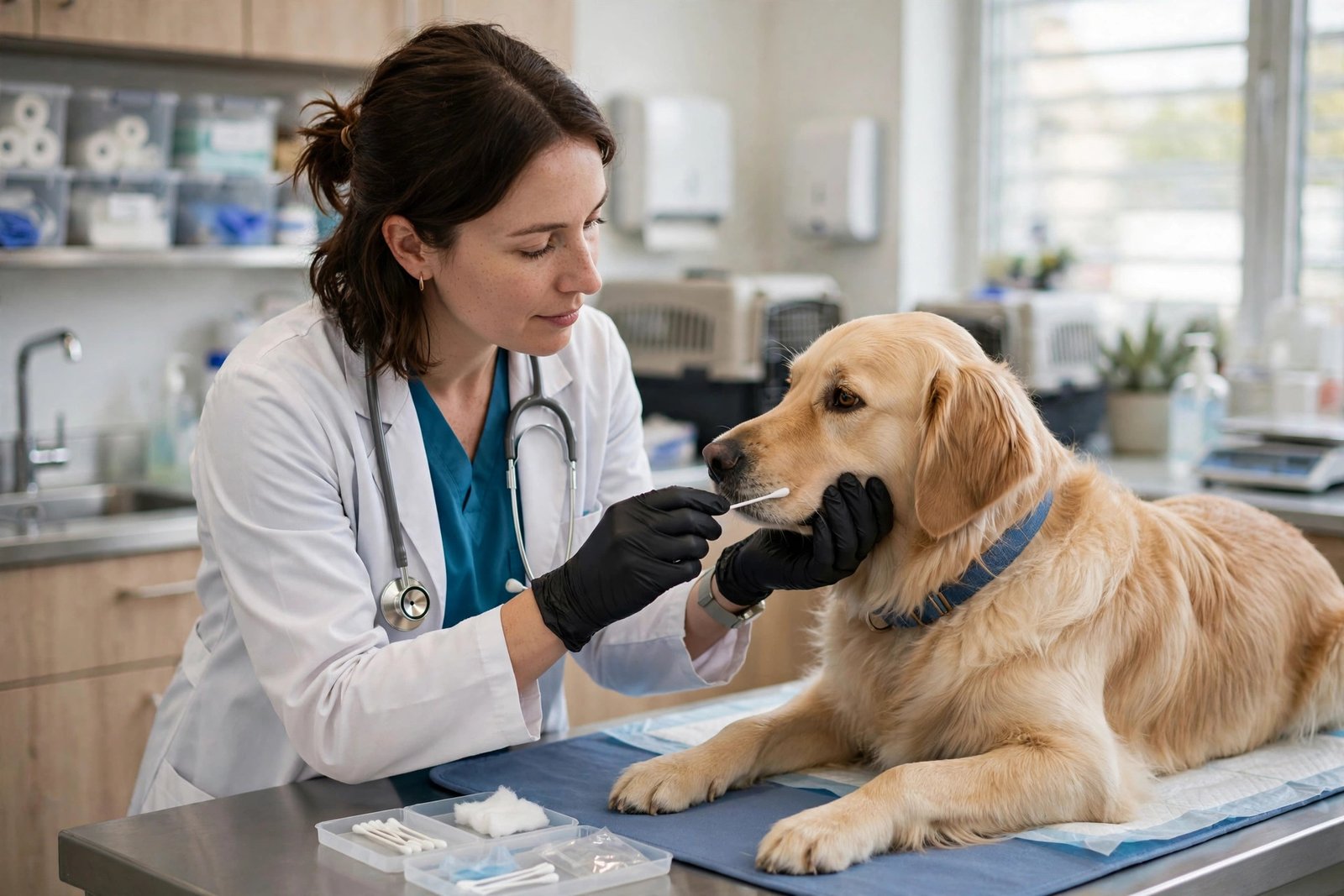
The two leaders: Embark (the research-grade option — 250+ health conditions, breed database of 350+, Cornell University partnership, relative finder; $130–$200) and Wisdom Panel (200+ health conditions, 350+ breeds, strong vet-channel presence; $100–$160). Both use cheek swabs, both take 2–4 weeks for results.
Choose Embark if: health screening depth matters most, you want the relative finder, or your vet specifically recommends it. Choose Wisdom Panel if: budget matters, your vet clinic partners with them, or you mainly want breed mix with solid health coverage. Avoid bargain no-name kits — small reference panels produce vague results (“mixed breed”) that waste your money. For purebreds, also consider breed-club-recommended targeted panels, which can be cheaper for single-condition screening. Either way, discuss results with your vet — the raw report without professional interpretation causes more anxiety than it resolves.
Privacy: Your Pet’s DNA Is Data
Read the privacy policy before swabbing. Pet DNA companies aggregate genetic data for research (often with pharmaceutical partners) — typically de-identified, but “de-identified genetic data” is a concept privacy experts debate. Embark and Wisdom Panel both offer research opt-outs; use them if you’re uncomfortable. Data breach risk is real for any database — the same caution you’d apply to your own genetic data applies here. For the broader data-sharing mindset, see checking whether your data was breached — the vigilance transfers.
What to Do With the Results: The Action Plan
Results arrive — now what? Step one: read the health section first, breed second. Flag any “at risk” or “carrier” results and book a vet appointment to discuss them — bring the full report (most vets appreciate the PDF, not your summary). For MDR1-positive dogs, this is urgent: your vet needs to flag the chart before prescribing common antiparasitics or anesthetics. Step two: adjust care based on breed mix — a herding-breed mix benefits from mental-work outlets, a brachycephalic mix needs heat caution, a large-breed mix needs joint monitoring.
Step three: share relevant results with your pet sitter, walker, and boarding facility (medication sensitivities especially). Step four: if you found relatives through the database, reaching out can yield gold — littermates’ owners often share health and behavior notes. And step five: retest never — DNA doesn’t change. File the report with your pet’s medical records and move on to enjoying the dog, now with a user manual.
Practical note: results can affect insurance and housing in edge cases — a breed-mix result showing “pit bull type” has, in rare cases, complicated rentals with breed restrictions. Consider whether you want that information formalized before testing, especially in restrictive housing markets.
The Bottom Line
When should you get pet DNA testing done? When you have a rescue with unknown history and want the health screening, when your vet recommends it, before breeding, or when curiosity plus $150 feels right. Choose Embark or Wisdom Panel, interpret health results with your vet (risk markers, not diagnoses), opt out of research sharing if you prefer, and enjoy finally knowing what’s behind those mysterious ears.
The ASPCA and the American Veterinary Medical Association both publish detailed, vet-reviewed pet care guides.
Frequently Asked Questions
When should I get pet DNA testing done?
For rescue pets with unknown history (health screening value), when your vet recommends it, before any breeding decision, or for curiosity. The health panel (200–250+ conditions including MDR1 drug sensitivity) is the most actionable part.
How accurate are dog DNA tests?
Good for recent ancestry (parents/grandparents), fuzzier beyond that. Health markers are risk indicators requiring vet interpretation — “at risk” doesn’t mean “will develop.” Confirm significant findings with your vet.
Embark vs. Wisdom Panel: which is better?
Embark offers deeper health screening (250+ conditions) and a relative finder; Wisdom Panel is cheaper with solid coverage (200+). Both are reputable — avoid no-name kits with small reference panels.
How much does pet DNA testing cost?
$100–$200 for the major providers (cheek swab kits, 2–4 weeks for results). Targeted single-condition panels through breed clubs can be cheaper for specific needs.
Is pet DNA testing worth it for cats?
For breed identification, less so (most cats are random-bred). For health screening in at-risk breeds (PKD in Persians, HCM markers), yes — the health panel carries the value for cats.