
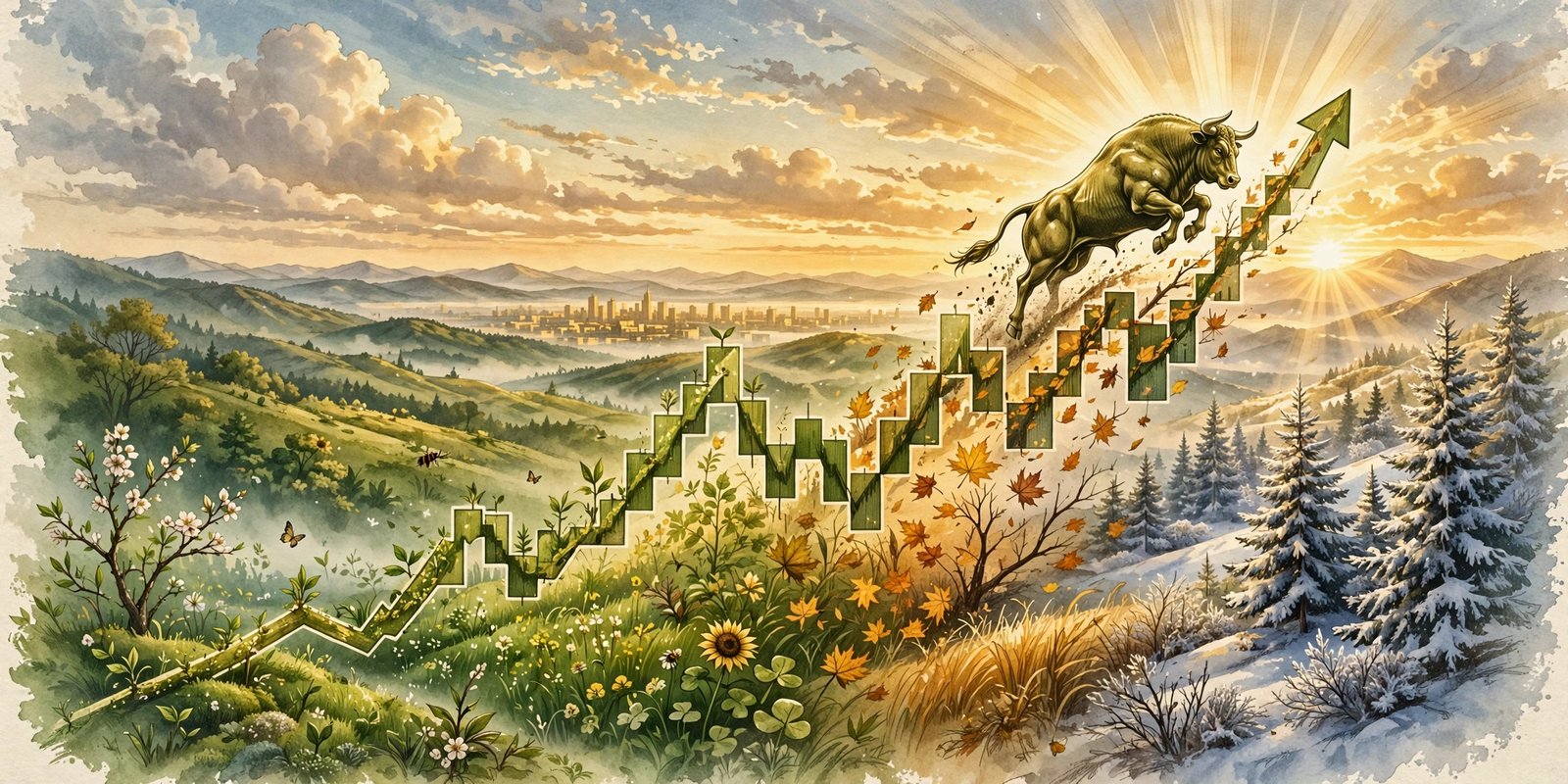
Crypto bull markets feel like they come out of nowhere — one day the headlines declare crypto dead, the next your portfolio is up 300% and your group chat is back. But bull markets are not random. Across three full cycles, they have followed a remarkably consistent rhythm driven by bitcoin’s halving, liquidity conditions, and human psychology. Understanding when crypto bull markets usually start will not let you time the top, but it will keep you positioned instead of paralyzed — buying when others despair and taking profits when others euphorically pile in. Here is the pattern, the mechanics behind it, and how to use it.
The Halving Cycle: Crypto’s Four-Year Heartbeat
Bitcoin’s code cuts the new-supply issuance in half roughly every four years — the halving. History: the 2012 halving preceded the 2013 bull run; 2016 preceded 2017’s mania; 2020 preceded the 2020–2021 mega-cycle; and the April 2024 halving set the clock for the current cycle. The typical sequence: halving occurs → 6–12 months of grinding accumulation while the supply shock slowly bites → 12–18 months post-halving, the explosive phase as reduced new supply meets rising demand → blow-off top → 70–80% bear market → repeat.
The mechanism is supply and demand, not magic: halvings steadily reduce the new bitcoin hitting the market (from 900 to 450 BTC per day after 2024), while demand grows in waves. When a fixed-supply asset meets expanding demand, price is the release valve. This does not guarantee timing — each cycle’s magnitude and duration varies — but the rhythm has held for 12+ years. Our crypto tax guide pairs with this cycle analysis for planning your sales.
The Three Phases of Every Bull Market
Phase 1: Stealth accumulation (the “crypto is dead” phase)
After the bear market bottom — typically 12–18 months of sideways despair — smart money quietly accumulates while headlines mock the industry. On-chain data shows long-term holders stacking; sentiment surveys show maximum pessimism. This phase feels terrible and is historically the best buying zone. Nobody rings a bell, but the signs are there: volatility compressing, weak hands exhausted, builders still building.
Phase 2: The grind up (disbelief rally)
Prices rise 2–3x from the bottom and everyone calls it a dead-cat bounce. Each rally gets sold; each selloff gets bought a little higher. Media coverage is grudging. Your skeptical friends say “told you it was a bubble” at every local top. This phase rewards the patient accumulators from Phase 1 and punishes traders trying to short “overbought” conditions. Duration: often 6–12 months of climbing the wall of worry.
Phase 3: Euphoria (the blow-off top)
The final 3–6 months: parabolic moves, mainstream mania, taxi-driver tips, Super Bowl ads, “this time it’s different” narratives. Altcoins go vertical as bitcoin dominance falls — the classic late-cycle rotation. This is when disciplined investors scale out — and plan for the taxes on those sales with our How do i start journaling when i hate writing — because euphoria phases end the same way every time: violently, wiping 70–90% off altcoins within months.
Macro Factors That Modulate the Cycle
The halving sets the rhythm, but macro liquidity sets the volume. Bull markets thrive when central banks cut rates and expand balance sheets (cheap money seeks risk assets) and struggle when policy tightens — the 2022 bear market was as much about rate hikes as crypto-specific failures. Also watch: regulatory clarity (spot ETF approvals unlocked massive institutional demand), stablecoin supply growth (dry powder entering the ecosystem), and real adoption milestones (each cycle’s top coincides with genuine usage growth, not just speculation). The 2024 halving plus ETF inflows plus eventual rate cuts created an unusually strong fundamental backdrop for the current cycle.
Where Are We Now? Reading the Current Cycle
As of 2026, the framework suggests: the April 2024 halving’s 12–18 month window pointed to peak euphoria sometime in late 2025 — the classic blow-off zone. Key things to monitor rather than predict: bitcoin dominance (falling dominance = late-cycle altcoin rotation), funding rates and leverage (extremes = crowded longs), mainstream sentiment indicators (magazine covers, celebrity coins, “everyone’s a genius” dinner conversations), and on-chain profit-taking by long-term holders. If euphoria signals are flashing while you are fully invested with no exit plan, the cycle history is shouting at you. If instead the market has already corrected hard and sentiment is fearful, history says that is accumulation territory — not financial advice, just pattern recognition.
How to Position for Bull Markets (Without Timing Them)
- Accumulate in fear: the best risk-adjusted entries come when headlines declare crypto dead. Dollar-cost average through bear markets.
- Define exits in advance: pre-commit to scaling out at price targets or euphoria signals — decide sober, execute mechanically.
- Respect altcoin timing: altcoins typically lag bitcoin, then outperform violently late-cycle, then collapse hardest. Our budgeting and saving guide helps you size this exposure sanely.
- Keep dry powder: holding some stablecoins through euphoria lets you buy the inevitable 30–50% corrections within bull markets.
- Take profits into strength: selling 10–20% tranches as euphoria builds beats the all-or-nothing gamble.
- Remember the tax calendar: long-term holding periods and year-end harvesting per our How do i start meditating when my mind will not quiet down — bull-market gains create bull-market tax bills.
Frequently Asked Questions
When does the next crypto bull market start?
Bull markets have historically begun 6–12 months after each bitcoin halving, with explosive phases 12–18 months post-halving. The April 2024 halving suggested the current cycle’s peak euphoria around late 2025. Each cycle varies — use the framework, not the calendar, and never invest on timing predictions alone.
How long do crypto bull markets last?
Typically 12–18 months from the post-halving liftoff to the blow-off top, within a ~4-year full cycle. The euphoric final phase is usually just 3–6 months — short, violent, and where most gains (and subsequent losses) concentrate.
Do altcoins always pump in bull markets?
Usually, but later and harder than bitcoin — then they crash harder too. “Altseason” (altcoins outperforming BTC) typically arrives in the cycle’s final phase. Many altcoins from previous cycles never reclaim old highs; rotation favors new narratives each cycle.
Can the four-year cycle break?
Possibly — growing institutional participation, ETF flows, and macro dominance could dampen or reshape the pattern. But three full cycles of rhyme is strong evidence; assume the rhythm holds until it clearly does not, while watching macro conditions that modulate it.
Is it too late to buy once the bull market starts?
Early-to-mid bull market entries have historically performed well; buying during peak euphoria has historically been devastating. The question is not whether a bull market started but which phase it is in — accumulation and disbelief phases reward buyers; euphoria phases punish them.
Conclusion
Crypto bull markets usually start quietly — 6–12 months after halvings, in the ashes of despair — then grind through disbelief before ending in euphoria 12–18 months post-halving. The pattern has survived three full cycles because it rests on real mechanics, not superstition. The pattern has survived three cycles because it is rooted in real mechanics: programmatic supply shocks meeting cyclical human psychology, amplified by macro liquidity. You cannot time it perfectly, but you can position intelligently: accumulate in fear, scale out in euphoria, keep dry powder, and let the cycle’s rhythm work for you instead of against you. For the mechanics behind the rhythm, Investopedia’s halving explainer is the clearest primer, the SEC’s investor alerts warn against cycle-euphoria traps, and our Can ai help me start a side business with no experience turns cycle awareness into tax-smart sell decisions.