
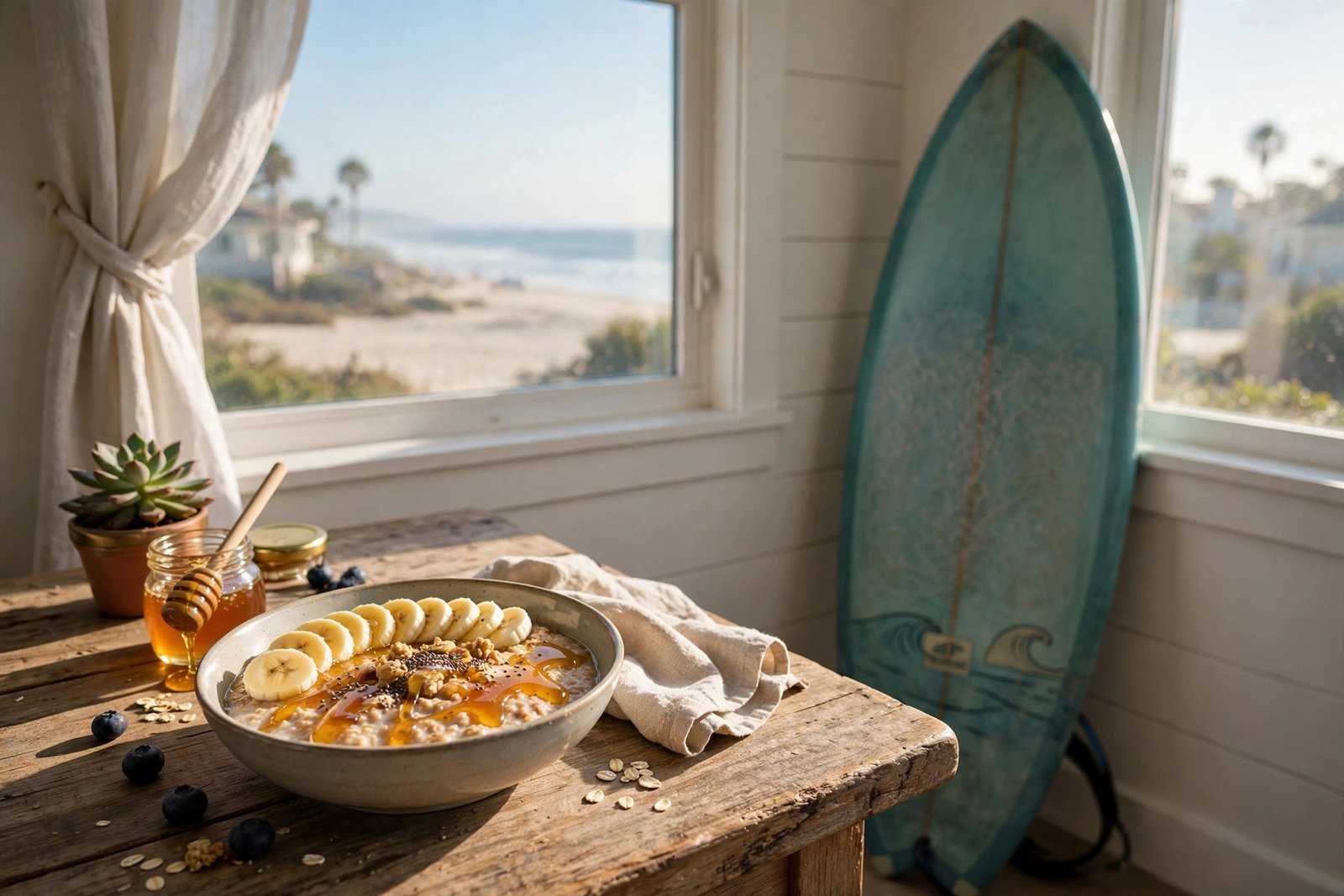
Dawn patrol is surfing's sacred hour — empty lineups, glassy water, offshore winds. It's also a physiological ambush: you wake up glycogen-depleted after an overnight fast, then demand two hours of explosive paddling from your body in cold water. What you eat (and when) directly determines whether you surf strong or fade by 8 AM.
Here's the fueling science for morning surf sessions, from the ideal pre-dawn meal to what to stash in the car for the paddle back in.
The Timing Rule: 60–90 Minutes Before
Digestion and hard paddling compete for blood flow — eat too close to your session and you'll feel it sloshing around; eat too far out and you'll bonk. The sweet spot is a real meal 60–90 minutes before paddling out, or a small snack 30 minutes before if you woke up late. For a 6 AM dawn patrol, that means eating at 4:45–5:00 — yes, it's early, and yes, it's worth it.
Cold water raises the stakes: your body burns extra calories maintaining core temperature in 55–60°F water, on top of paddling's already high energy cost (400–600 calories/hour for active surfing). Under-fueling in cold water doesn't just hurt performance — it accelerates fatigue and impairs the judgment you need for ocean safety. Eat like the session demands, not like it's a casual beach morning.
What to Eat: The Ideal Pre-Surf Plate
The formula: familiar carbohydrates + moderate protein + low fat and fiber. Carbs are the priority — they're your muscles' preferred fuel and digest fastest. Proven pre-surf meals: oatmeal with banana and honey, toast with peanut butter and banana, a bagel with jam, rice with a little egg, or a smoothie with fruit and yogurt. Aim for 300–500 calories for a standard session.
Keep fat and fiber low — they slow digestion and cause GI distress when you're duck-diving. That means skipping the breakfast burrito loaded with cheese, the giant fiber-heavy granola bowl, and anything you haven't eaten before a workout previously. Race day (or surf day) is never the time for nutritional experiments. Coffee is fine and genuinely performance-enhancing (caffeine aids endurance), but pair it with food and water — it's mildly diuretic and the ocean is dehydrating enough already.
For the authoritative take, visit CDC nutrition guidance.
Hydration: The Forgotten Variable
Surfers chronically under-hydrate: you don't feel yourself sweating in cold water, but you are, and salt water on the lips masks thirst cues. Drink 16–20 oz of water in the hour before your session, and keep a bottle in the car for after. Dehydration degrades paddling power and decision-making long before you feel thirsty.
Electrolytes matter for sessions over 90 minutes or in warm water — a simple electrolyte drink or coconut water works. Avoid alcohol the night before a dawn patrol (it wrecks sleep quality and hydration simultaneously), and go easy on the pre-surf coffee volume: one cup, not three. Post-session, eat within an hour: protein plus carbs (eggs and toast, a burrito, chocolate milk — the classic surfer recovery drink, genuinely effective) to replenish glycogen and kickstart muscle repair.
What to Avoid (Learn From Others' Mistakes)
The pre-surf hall of shame: nothing at all (the bonk is inevitable by hour two), a huge greasy breakfast (hello, nausea in the impact zone), dairy-heavy meals for the lactose-sensitive (the ocean is not where you want GI distress), and energy drinks (the crash hits mid-session). Spicy food the night before can also haunt you — capsaicin and wetsuits are a bad combination.
Also avoid the 'I'll eat after' trap on big-swell days. Heavy surf demands more energy, not less, and the sessions run longer because the waves are good. Pack a car snack regardless: a banana, granola bar, or PB sandwich waiting in the parking lot turns the drive home from a shaky ordeal into a pleasant cruise. Future you, salt-crusted and starving at 9 AM, will be grateful.
You can verify the details at NOAA surf and marine forecasts.
Sample Pre-Surf Meal Plans
For the 6 AM dawn patrol (eat at 4:45): Option A — large bowl of oatmeal with banana, honey, and a spoonful of peanut butter, plus coffee and 16 oz water (~450 cal). Option B — two bagels with jam and a yogurt, coffee, water (~500 cal). Option C (light stomachs) — smoothie with two bananas, oats, yogurt, and honey, sipped over 30 minutes (~400 cal). All familiar, all carb-forward, all proven.
For the 8 AM session (eat at 6:30–7): you have time for a real breakfast — eggs and toast with fruit, pancakes with syrup and berries, or rice with egg and soy sauce (the Japanese surfer's classic). Heavier is fine with 90 minutes' digestion. Post-session recovery (within an hour): chocolate milk plus a banana immediately, then a real meal — the breakfast burrito you've been dreaming about since the second hour. The throughline: carbs before, protein plus carbs after, water always. Fuel like the athlete the ocean demands you be.
Individual variation matters: some surfers perform best on a full meal, others need it light — and the only way to know is experimentation during casual sessions, never before an important swell day. Keep a simple log for a month: what you ate, when, and how the session felt at hour one versus hour two. Patterns emerge quickly, and your personal formula beats any generic advice.
Don't forget the day-before foundation: the pre-surf meal gets the glory, but the previous evening's dinner and sleep quality set the ceiling. A carb-rich dinner (pasta, rice bowls), limited alcohol, 7–8 hours of sleep, and a morning hydration head start create the conditions where the pre-surf meal can do its job. Dawn patrol excellence is a 24-hour project, not a 4:45 AM decision. Treat it that way and the glassy mornings will reward you.
One last tactical note: keep emergency fuel in your board bag — a gel or chews tucked in a waterproof pouch has salvaged countless sessions when the planned breakfast proved insufficient. It's the cheapest performance insurance in surfing.
Keep exploring with packing for a beach vacation and daily walking for health.
Fueling a morning surf session is simple: eat 300–500 calories of familiar carbs with some protein 60–90 minutes before, hydrate deliberately, skip the grease and fiber bombs, and stash a recovery snack in the car. It's a small discipline that pays off in stronger paddling, longer sessions, and safer decision-making in the water. Now check the NOAA forecast and set that 4:45 alarm.
Frequently Asked Questions
Should you eat before surfing in the morning?
Yes — you wake up glycogen-depleted and surfing burns 400–600 calories/hour, more in cold water. Eat 300–500 calories of carbs + moderate protein 60–90 minutes before paddling out.
What is the best breakfast before surfing?
Oatmeal with banana and honey, toast with peanut butter and banana, a bagel with jam, or a fruit-yogurt smoothie. Familiar, carb-rich, low in fat and fiber.
Is coffee OK before surfing?
Yes — caffeine genuinely aids endurance. Keep it to one cup paired with food and water, since it's mildly diuretic and surfing is already dehydrating.
What should you eat after surfing?
Eat protein plus carbs within an hour: eggs and toast, a burrito, or chocolate milk. Replenish fluids with water and electrolytes, especially after long sessions.