
What Is the Environmental Impact of Running AI Data Centers?
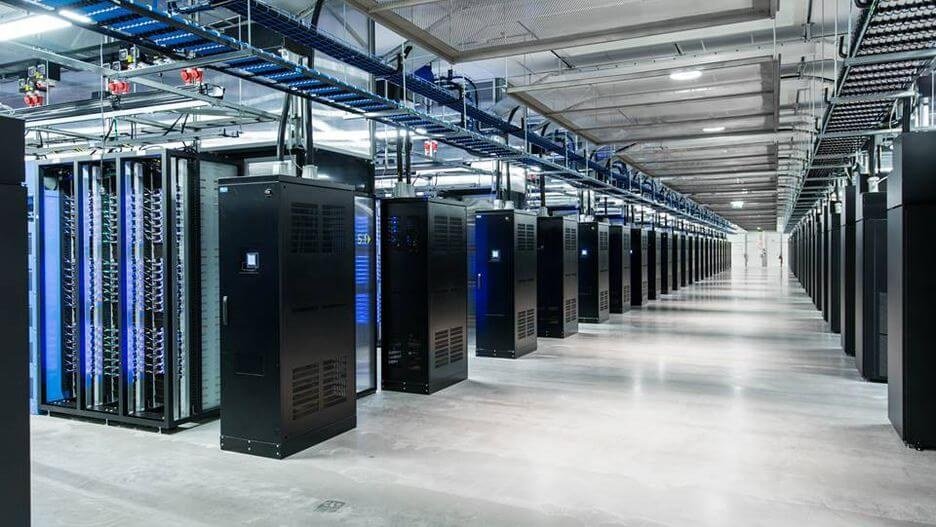
What is the environmental impact of running AI data centers? Behind every chatbot conversation and AI-generated image sits a warehouse full of power-hungry processors, drinking electricity and water at industrial scale. AI’s environmental footprint has become one of the tech industry’s most uncomfortable topics — companies that pledged carbon neutrality are now watching emissions climb as AI demand explodes. Here is an honest accounting of the impact: energy, water, carbon, and e-waste — plus what is being done about it.
Energy: the headline number
Training a single large AI model can consume as much electricity as hundreds of homes use in a year — estimates for frontier models run into tens of gigawatt-hours. But training is a one-time cost; the bigger ongoing draw is inference — the millions of daily queries. A single AI chatbot query uses roughly 10 times the energy of a traditional web search. Multiply by billions of queries and data centers’ share of electricity consumption becomes significant: data centers already consume 1-2% of global electricity, with AI projected to push that substantially higher this decade. In some regions, data center demand is now the primary driver of new power plant construction — including, controversially, extended operation of fossil fuel plants and new gas turbines. The industry’s carbon-neutral pledges are colliding with AI’s appetite in real time.
Water: the hidden crisis
Less discussed but arguably more urgent: water. Data centers cool their servers with enormous quantities of water — a large facility can consume millions of gallons daily, comparable to a small town. AI workloads run hotter than traditional computing, intensifying cooling demands. Several communities have pushed back against data center projects over water use, particularly in drought-prone regions. The industry responds that it is shifting to closed-loop cooling and air cooling, and that water consumption (evaporated) differs from withdrawal — but in water-stressed areas, the distinction offers cold comfort. As AI scales, water may become the binding constraint before electricity does.
Carbon: the net picture
The carbon story has two sides. The footprint: AI data centers’ emissions are rising fast, driven by fossil-powered grids and the sheer scale of new construction. Scope 3 emissions (supply chains, chip manufacturing) add substantially — fabricating advanced AI chips is itself enormously energy- and water-intensive, involving rare materials and ultra-pure water. The counterweight: AI also reduces emissions elsewhere — optimizing power grids, improving building efficiency, accelerating battery and solar R&D, modeling climate solutions, reducing business travel through better remote collaboration. Whether AI is net-positive for the climate depends on the race between its growing footprint and its decarbonization contributions. Right now, the footprint is winning the race, and honest accounting requires saying so.
E-waste and hardware churn
AI hardware obsoletes fast. The GPUs powering today’s models are replaced every 3-5 years as new generations deliver step-change efficiency — creating a growing stream of electronic waste containing hazardous materials alongside recoverable precious metals. Data center construction itself is resource-intensive: concrete, steel, and land. The industry’s circular-economy efforts (refurbishment, component reuse, responsible recycling) are real but nascent relative to the scale of deployment. This is the least-visible part of AI’s footprint and among the least addressed.
What the industry is doing (and whether it is enough)
- Efficiency gains: Newer chips deliver far more computation per watt; model architectures are getting leaner (distillation, quantization, mixture-of-experts). Efficiency is improving — but Jevons paradox applies: cheaper compute gets used more, so total consumption still rises.
- Clean energy procurement: Tech giants are signing massive renewable and nuclear power deals — including restarting nuclear plants — to power AI growth. Genuinely significant, though critics note it can divert clean energy from other users rather than adding new capacity.
- Location strategy: Siting data centers where clean energy and water are abundant (Nordics, Pacific Northwest) reduces impact — but latency requirements and politics limit this.
- Transparency (lagging): Most AI companies do not disclose per-model energy or water use. Without measurement, accountability is impossible. Regulatory disclosure requirements are emerging, particularly in the EU.
What is the environmental impact of running AI data centers? What you can do
Individual action matters less than systemic change here, but it is not nothing: use AI efficiently — the small model that answers your question uses a fraction of the flagship — which is also why choosing the right AI tier matters beyond cost’s energy; you rarely need the biggest model. Batch your queries — one thoughtful prompt beats ten scattered ones (better answers too). Support transparency — favor providers that disclose environmental impact. Vote and advocate — data center permitting, water rights, and grid policy are political decisions where public input matters enormously. And keep perspective: your AI queries are a rounding error — though AI’s invisible everyday presence means those rounding errors add up globally next to industrial and transportation emissions — but the industry’s trajectory is a first-order climate issue deserving serious attention.
The water footprint of your AI habit
Individual queries are trivial, but habits aggregate. A heavy daily AI user might generate hundreds of queries monthly — still negligible personally, but multiplied across hundreds of millions of users, it drives data center expansion with real local impacts on water and power. The most meaningful individual actions are collective ones: support disclosure requirements so the industry’s footprint is measured and public; weigh in on local data center proposals — these are approved by local officials who answer to residents; favor efficient models for routine tasks, since demand signals shape what gets built; and keep perspective on trade-offs — AI-assisted remote work that eliminates a commute, or AI-optimized logistics that cut freight emissions, can dwarf the footprint of the queries themselves. Judge the technology by its net effect, and push for the version of AI’s future where the benefits clearly outweigh the costs.
The bottom line
Running AI data centers carries major environmental costs — enormous and growing electricity demand, significant water consumption, rising carbon emissions, and accelerating e-waste — partially offset by AI’s contributions to efficiency and decarbonization elsewhere. The industry is investing in efficiency and clean energy, but total impact keeps rising as deployment outpaces gains. Transparency remains inadequate. The honest position: AI is an environmental problem and a potential climate tool, and which dominates depends on decisions being made right now about energy sourcing, siting, and disclosure. For the technical context, how data centers consume resources explains the infrastructure behind the numbers — and AI’s reshaping of local economies shows how these facilities transform the communities around them.