
Gaming Console vs. PC: Which Is Actually Worth Buying?
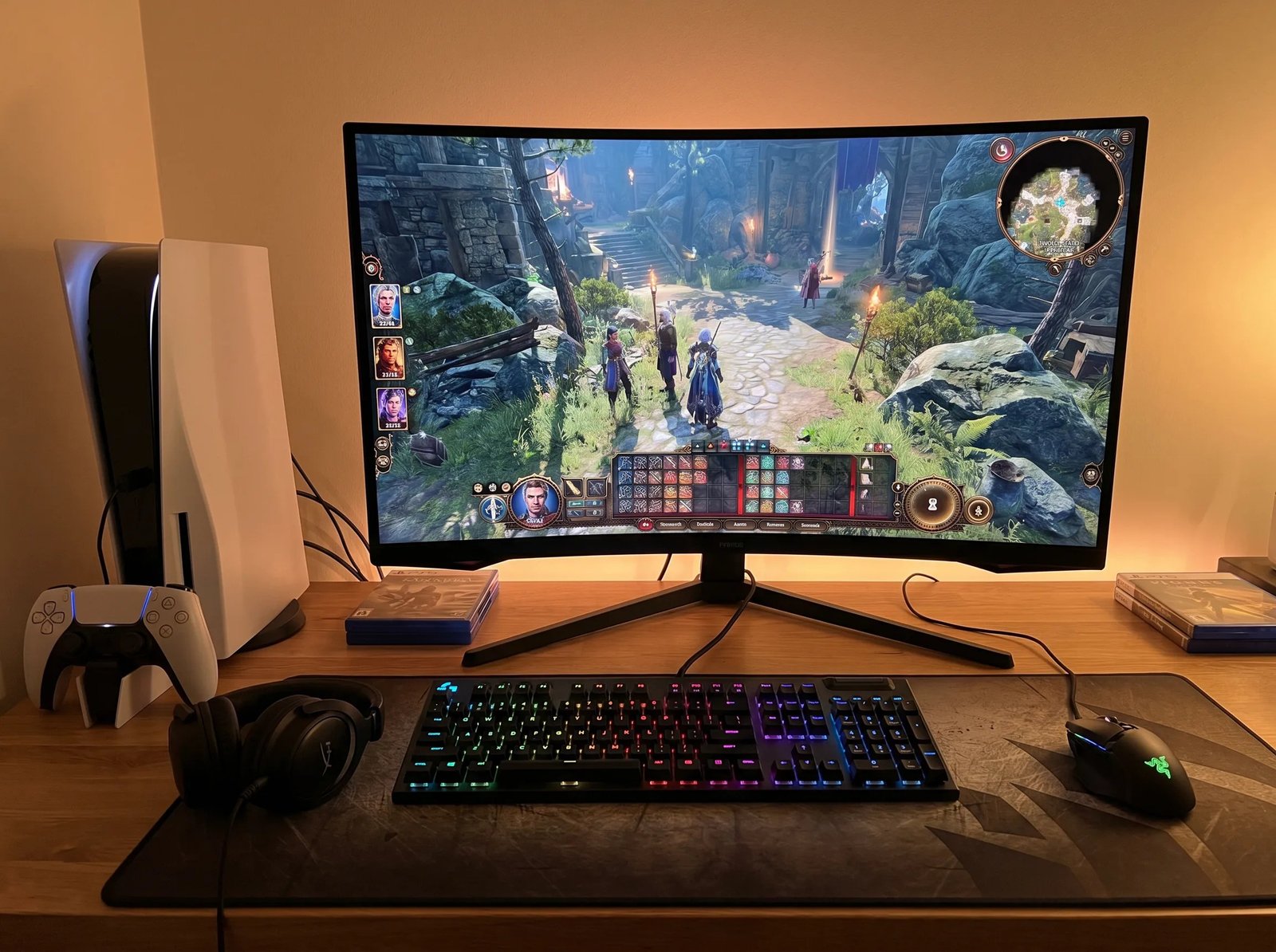
Is It Worth Buying a Gaming Console or Is PC Gaming Better?
It’s one of gaming’s eternal debates: is it worth buying a gaming console or is PC gaming better? Ask online and you’ll get tribal warfare. Ask me — someone who owns both, plays daily, and has no brand loyalty — and you’ll get a practical answer: it depends entirely on what kind of player you are, how much you want to spend, and how much tinkering you’ll tolerate. I’ve bought, built, and regretted enough hardware to give you the honest breakdown, including the real costs nobody puts in the headline.
The Real Cost Comparison
Console: a current-gen console runs $300–500, and that’s basically the total hardware cost for 5–7 years. Add $60–80/year for online subscriptions and $40–70 per game (less on sale). Five-year total for a moderate player: roughly $1,000–1,500.
PC: a capable gaming PC costs $800–1,500 to build or buy. No subscription for online play, games are cheaper (Steam sales are legendary — 50–80% off), and you can upgrade parts instead of replacing everything. Five-year total: roughly $1,200–2,000, but with a machine that also does everything else.
The honest math: consoles are cheaper upfront; PCs close the gap over time through cheaper games and no subscriptions. Anyone telling you one is “obviously” cheaper is cherry-picking the timeframe.
Is It Worth Buying a Gaming Console or Is PC Gaming Better? Category by Category
Performance and graphics
PC wins, no contest — if you pay for it. A $1,200 PC outperforms consoles clearly; a $500 PC doesn’t. Consoles punch above their price because games are optimized for fixed hardware. For most people on a normal TV, the difference is smaller than the internet suggests.
Convenience
Console wins big. Turn on, play. No driver updates, no settings menus, no “why is this crashing.” If you want gaming to feel like Netflix — instant and effortless — get a console. PC gaming involves occasional troubleshooting; it’s the price of the flexibility.
Game library and exclusives
This decides it for many people. Sony’s exclusives (story-driven blockbusters) are console-only, at least initially. Nintendo’s games are Switch-only, period. PC has the biggest overall library, strategy games, mods, and most indie titles. Microsoft has blurred the lines — Xbox “exclusives” now launch on PC too. Buy the platform that has the games you actually want to play. Everything else is secondary.
Couch vs. desk
Consoles own the living room: couch, big TV, friends over. PCs own the desk: monitor, keyboard/mouse precision. (Yes, you can connect a PC to a TV and use a controller on PC — the lines blur, but the default experiences differ.) Think about where you want to play.
Multiplayer with friends
Play where your friends play. A technically inferior platform with your whole friend group beats a superior one where you’re alone. This single factor should outweigh everything else if you have an active gaming circle.
The Hybrid Answers
The debate assumes it’s either/or, but the middle paths are strong now: the Steam Deck ($400–650) is a handheld PC that plays your Steam library portably — console convenience with PC games. Cloud gaming (GeForce Now, Xbox Cloud) streams games to any device, no hardware needed, though it demands good internet. And beginners should note: the Nintendo Switch remains the friendliest, cheapest entry point in all of gaming.
My Actual Recommendation
- Get a console if: you want simplicity, play on the couch, love PlayStation/Nintendo exclusives, or want the cheapest entry.
- Get a PC if: you also need a computer, love strategy/simulation games or mods, want the best performance, or play competitively (keyboard/mouse dominates shooters).
- Get a Steam Deck if: you want portable PC gaming without building anything.
For hardware reviews, IGN and PC Gamer do thorough testing, and the video game console article on Wikipedia covers the generations.
The Hidden Costs Nobody Mentions
Beyond the headline prices, budget for the extras. Console hidden costs: online subscriptions ($60–80/year — mandatory for multiplayer), extra controllers ($60–70 each), storage expansion (modern games are 50–150GB; the included drive fills fast), and pricier games at launch ($70 is the new standard). A “cheap” console gets expensive when you add two controllers and a year of online play.
PC hidden costs: peripherals (a decent mouse, keyboard, and headset add $100–200), the upgrade treadmill temptation (you don’t need a new GPU every generation, but the urge is real), and electricity (gaming PCs draw serious power). But also hidden savings: free online play forever, Steam sales that discount games 70–90%, free games weekly (Epic gives them away constantly), and no need for a separate computer.
The honest five-year math for a moderate gamer buying ~8 games/year: Console ≈ $450 (hardware) + $350 (online) + $1,600 (games, mixed sale/full price) + $130 (extra controller) ≈ $2,530. PC ≈ $1,100 (hardware) + $0 (online) + $800 (games, sale-heavy) + $150 (peripherals) ≈ $2,050. The PC pulls ahead over time if you buy sale games — which Steam makes irresistibly easy. But if you mostly play free-to-play games (Fortnite, Apex, Valorant), the console’s cheaper hardware wins outright since game costs drop to zero on both.
Making the Decision: A Worksheet
Answer honestly: 1. Where will I play — couch or desk? 2. Who will I play with — and what do they play on? 3. Which 3 specific games do I most want to play, and where are they? 4. Do I enjoy tinkering with settings, or do I want it to just work? 5. What’s my total first-year budget including games and accessories?
If your answers point couch + friends-on-PlayStation + exclusives + simplicity → console. If desk + strategy games + mods + tinkering-tolerance → PC. If you’re still torn, the free mobile games cost nothing to try while you decide — and the Steam Deck remains the great compromise, offering PC’s game prices with console-like simplicity in a portable form.
The Takeaway
There’s no universal winner — there’s only the right choice for you. Consoles win on simplicity and upfront cost; PCs win on performance, game prices, and versatility. Pick based on the games you want and where your friends play, and you’ll be happy either way. The wrong choice is the one you make based on internet arguments instead of your actual life.