
Is Dropshipping Still Worth Trying for Beginners?

Is dropshipping still worth trying for beginners? The YouTube gurus say it’s passive income; the Reddit forums say it’s dead. As usual, the truth is in the boring middle: dropshipping isn’t dead, but the 2017-era ‘list AliExpress products and get rich’ playbook absolutely is.
I’ve watched the model evolve for years. Here’s what’s actually true in 2026, who it works for, and what beginners should do instead or in addition.
Is Dropshipping Still Worth Trying? What’s Changed
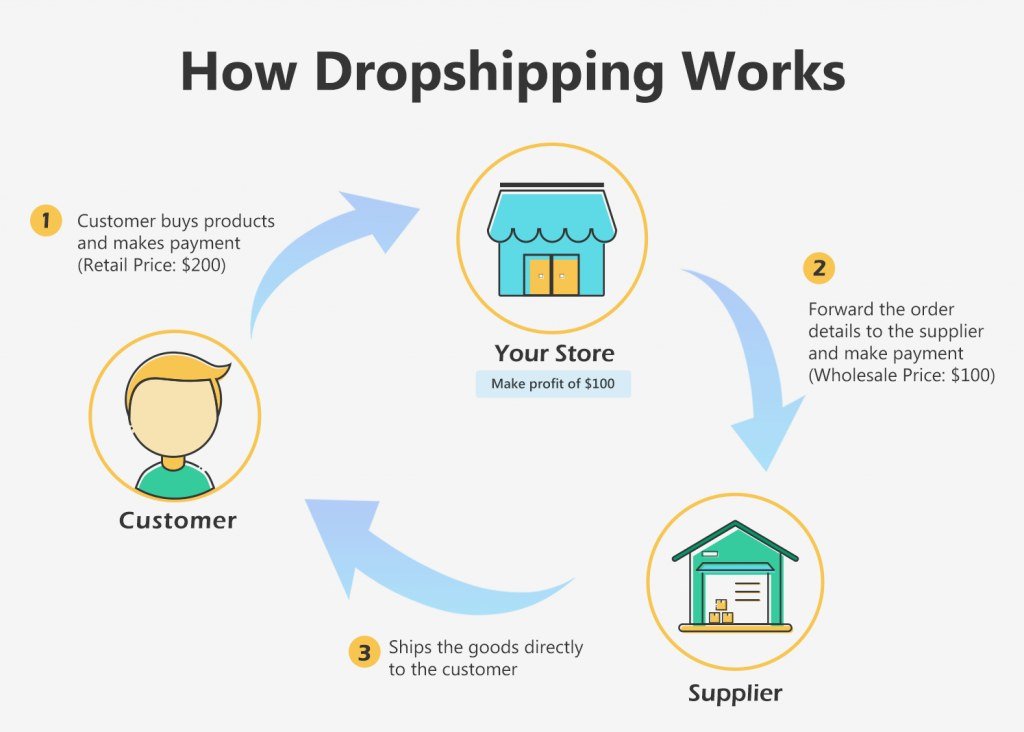
What killed the old model: ad costs tripled (customer acquisition that cost $8 in 2018 costs $25+ now), shipping times became a conversion killer (2–4 weeks from China vs. Amazon’s 2 days — customers won’t wait), and platforms cracked down (Facebook ad account bans, Shopify fraud scrutiny, payment processor holds on dropshippers). The arbitrage window — selling a $3 product for $30 with cheap ads — has closed.
What still works: the model’s actual strengths — no inventory risk, test products cheaply, run location-independent. But the bar is higher now: you need real differentiation (branding, bundling, content), faster fulfillment (US/EU suppliers or agents), and genuine marketing skill. It’s a real business now, not a loophole — which means it takes real business effort. Anyone selling you ‘passive income’ is selling the course, not the method.
The Real Costs (Beyond the Guru Math)
Honest startup budget: $500–$2,000. Platform ($29–$79/month Shopify), domain ($15/year), ad testing budget ($300–$1,000 minimum — this is tuition, not optional), apps and tools ($30–$100/month), product samples ($100–$200 — never sell what you haven’t held), and business basics (LLC, accounting). The ‘start with $50’ pitch is fiction; undercapitalized stores die in the ad-testing phase.
Ongoing reality: margins are thin (15–30% after ads on most products), supplier issues are your problem (quality complaints, shipping delays, stockouts — all land on you), and customer service load is real (dropshipping customers need more hand-holding, not less). Budget 10–15 hours a week minimum. This is a part-time job with startup risk, not passive income.
Approaches That Work in 2026
What works now: branded dropshipping — pick one niche, build a real brand around it, use quality suppliers (not random AliExpress listings), create original content. High-ticket dropshipping ($200+ products from US/EU suppliers) — fewer sales needed, margins survive ad costs, customers tolerate longer consideration. Print-on-demand (a dropshipping cousin) — your designs on blank products, no inventory, genuine differentiation through art.
Common thread: differentiation and quality. The winners look like real brands, not product catalogs. If your store could be replaced by an AliExpress search, it will be — by price. Build something with a reason to exist: curation, content, community, or design. That’s the moat the old model never needed and the new model can’t survive without.
Dropshipping 2026 reality check:
- The 2017 AliExpress arbitrage playbook is dead — ad costs and shipping killed it.
- Real budget: $500–$2,000 startup; real time: 10–15 hrs/week; real timeline: 3–6 months to traction.
- What works: branded niches, high-ticket US/EU suppliers, print-on-demand with real design.
- Differentiation is mandatory — curation, content, community, or design as your moat.
- Best-case framing: excellent e-commerce education, not passive income.
The Beginner Decision Framework
Try dropshipping if: you want to learn e-commerce with limited capital, you’re willing to treat it as a skill-building business (marketing, CRO, supplier management), and you have 10+ hours a week and $500–$2,000 you can afford to lose. It’s genuinely excellent education — you’ll learn more about online business in six months than any course teaches.
Skip it if: you need income soon (it takes 3–6 months minimum to find traction), you can’t handle losing the startup budget, or you want passive income (it isn’t, and never was). Alternatives worth considering: print-on-demand (lower ad dependence if you have design skills), flipping (buy low, sell high locally — cash flow from day one), or freelancing your way to capital (see How do I get my first clients as a new freelancer) then launching a stocked brand. The model isn’t dead — but go in with eyes open and treat the gurus’ promises as marketing for their courses.
The Bottom Line
Is Dropshipping Still Worth Trying for Beginners? Before You Decide
Before deciding, do the honest self-assessment the gurus skip: do you have 10–15 hours a week for 3–6 months, $500–$2,000 you can afford to lose completely, and the temperament for months of testing with no guarantee? If any answer is no, dropshipping right now is the wrong vehicle — and that’s fine. The model rewards the capitalized and the persistent; it punishes the hopeful and the rushed. There are better first businesses for most beginners (freelancing for cash flow, flipping for quick wins, print-on-demand for lower ad dependence).
Also: interrogate your information diet. If your entire view of dropshipping comes from people selling courses, you’re seeing survivorship bias as a business plan — the failures don’t make YouTube videos. Seek out the quiet practitioners (Reddit’s less-hyped threads, indie forums) and the ex-dropshippers; their stories contain the base rates the gurus omit. An informed decision against dropshipping beats an uninformed leap into it every time. The best business decision is often the one you don’t make.
If you proceed, document everything from day one — ad spend, conversion rates, supplier issues, customer complaints — in a simple weekly log. Most dropshippers who fail can’t tell you why, because they never measured. The ones who succeed treat it as an experiment with data, killing losers fast and scaling winners deliberately. The journal takes ten minutes a week and it’s the difference between gambling and business. Measure or guess; only one of them compounds.
Dropshipping is still viable for beginners willing to build a real brand with real differentiation — but the easy-money era is over, killed by ad costs and customer expectations. Budget $500–$2,000 and six months, pick quality suppliers, differentiate or die, and treat it as business education that might pay. If you need income fast, freelance first and fund a stocked brand later.
Dropshipping in 2026 is a real business with real costs, real timelines, and real failure rates — viable for the prepared, punishing for the hopeful. Assess yourself honestly, budget the tuition, differentiate or don’t bother, and treat the gurus’ promises as marketing. Eyes open, or don’t go.