
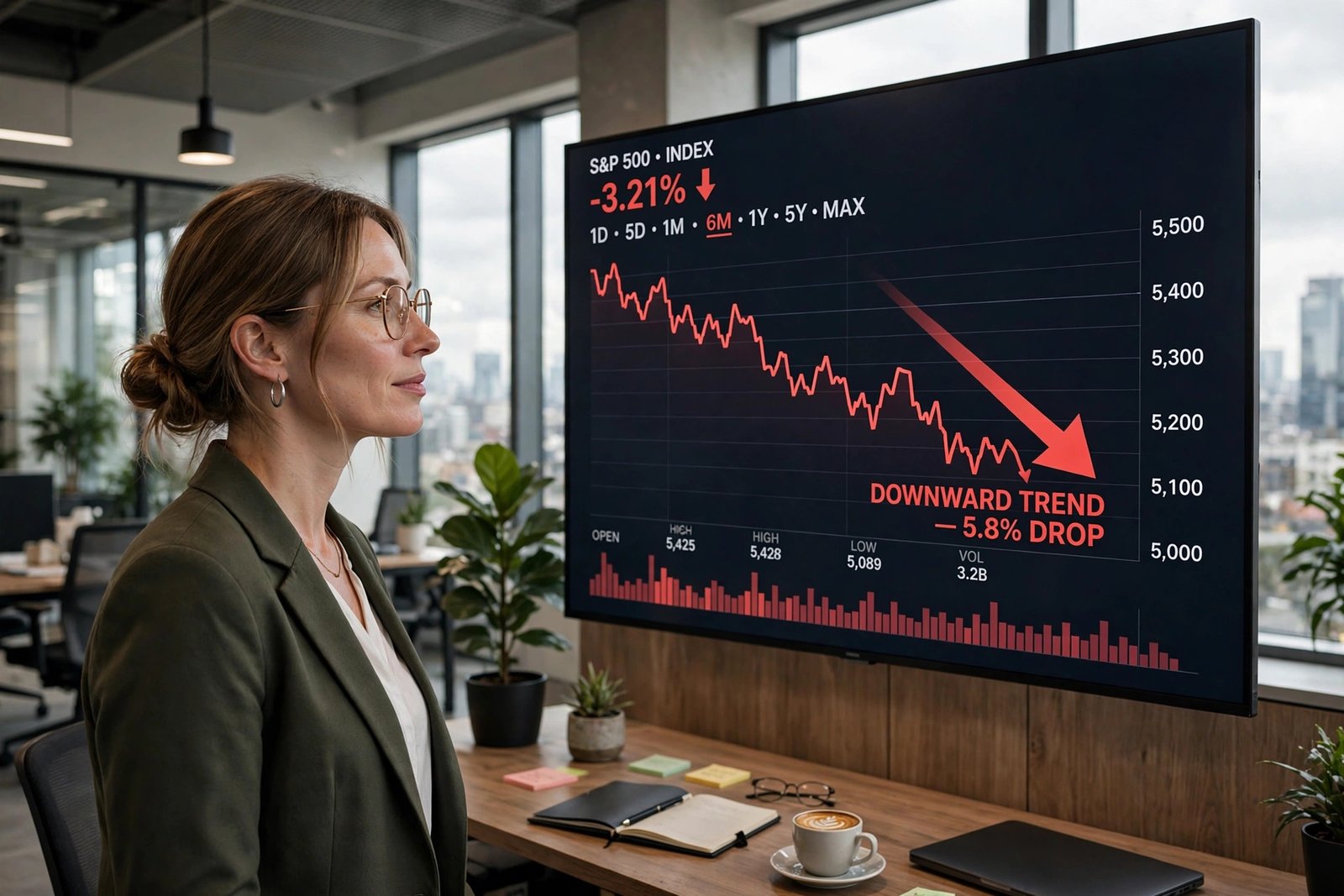
Every market crash feels unprecedented while you're inside it — and every one looks like a buying opportunity in hindsight. The investors who build real wealth aren't the ones who predict crashes; they're the ones who have a plan for what to do during them, written before fear takes over.
This is that plan. Not hype, not 'buy the dip' bravado — the evidence-based playbook for investing through a market crash with genuine confidence.
Step Zero: Secure Your Foundation First
Never invest crash cash you might need within 12 months. Before deploying a dollar into a falling market, confirm your emergency fund covers 3–6 months of expenses in cash, high-interest debt is handled, and your job situation is stable enough that you won't need the money at the worst moment. Investing during a crash with money you can't afford to lose isn't brave — it's how temporary losses become permanent ones.
Also verify your asset allocation still matches your risk tolerance. A crash is information: if you're losing sleep at 80% equities, your allocation was wrong before the crash, not because of it. Adjust to an allocation you can hold through the next crash too — because there will be a next one. Confidence comes from structure, not from predictions about where the bottom is.
Keep Buying: The Automatic Advantage
If you're employed and contributing to a 401(k) or IRA, the single most powerful crash strategy is doing nothing — keep your automatic contributions flowing. Dollar-cost averaging means your fixed contributions buy more shares as prices fall, lowering your average cost per share automatically. The 2008–2009 investors who kept contributing through the crash bought S&P 500 shares at prices that look absurdly cheap today.
For lump sums (a bonus, an inheritance, cash you've been holding), the evidence favors investing it promptly rather than waiting for the 'right' moment — lump-sum investing beats dollar-cost averaging about two-thirds of the time historically. But if a lump sum during a crash exceeds your emotional capacity, splitting it into 3–6 automatic monthly deployments is a reasonable compromise. The enemy isn't the deployment schedule; it's sitting in cash for years waiting for certainty that never arrives.
The full background is available at SEC investor education.
Rebalance: The Disciplined Way to Buy Low
Rebalancing is crash investing with the emotion removed. If your target is 80% stocks/20% bonds and stocks fall to 65%, selling bonds to buy stocks back to 80% forces you to buy low and sell high mechanically. Set rebalancing bands (e.g., rebalance when any asset class drifts 5%+ from target) or a calendar schedule (quarterly/annually), and execute without deliberation.
Tax-advantaged accounts are the ideal place to rebalance — no tax consequences for selling. In taxable accounts, use new contributions to rebalance toward underweight assets instead of selling winners. This is also the moment to check for style drift: crashes expose portfolios that quietly became 95% tech. A written investment policy statement, made in calm times, is what lets you act decisively in fearful ones.
Tax-Loss Harvesting: Getting Paid for the Pain
In taxable accounts, crashes create a valuable asset: losses you can harvest. Selling a losing position and immediately buying a similar (but not 'substantially identical' — mind the wash-sale rule's 30-day window) investment lets you bank the loss to offset gains and up to $3,000 of ordinary income per year, carrying forward indefinitely. Robo-advisors automate this; DIY investors can do it annually during downturns.
The wash-sale rule is the trap: buy the same security 30 days before or after the sale and the loss is disallowed. Use partner funds (e.g., swap one S&P 500 fund for another provider's) to stay invested while harvesting. This doesn't change your market exposure at all — it's purely a tax optimization that crashes make available. On a $50,000 harvested loss, the tax savings can reach five figures over time.
What NOT to Do During a Crash
Don't sell into the decline unless your plan requires it — the data on this is brutal. Missing just the 10 best market days over a couple of decades cuts total returns roughly in half, and the best days cluster near the worst days. Panic-selling converts paper losses into real ones and almost guarantees buying back higher later.
Don't try to time the bottom, don't concentrate into whatever crashed hardest ('it's cheap now!'), don't use leverage or options to 'make it back faster,' and don't check your portfolio daily — attention amplifies loss aversion. Also ignore crash profiteers: anyone selling certainty about the bottom, paid 'crash courses,' or miracle hedges is monetizing your fear. The confident crash investor is boring by design: funded, allocated, automatic, and patient.
For official guidance, see Forbes Advisor on investing strategy.
What Past Crashes Actually Teach
2008–2009: the S&P 500 fell 57% peak to trough. Investors who kept buying through it — automatic 401(k) contributions at 2008–2009 prices — saw those shares triple within five years. The lesson: crashes are when automatic investing earns its keep, and the investors who 'did nothing' outperformed nearly everyone who reacted. 2020: a 34% drop recovered in five months — the fastest crash-recovery in history. The lesson: speed is unpredictable; the investors who sold in March 2020 locked in losses days before the rebound.
The dot-com crash (2000–2002): the Nasdaq fell 78% and took 15 years to reclaim its peak. The lesson: diversification matters — broad-market investors recovered far faster than tech-concentrated ones, and 'buying the dip' in individual story stocks was catastrophic. Across every crash, the common thread: diversified, automatic, long-horizon investors were rewarded; concentrated, leveraged, or panicked investors were punished. You don't need to predict the next crash's shape — you need a plan that survives all shapes. That's what the playbook above is.
For more on this topic, see AI tools for budgeting and saving and saving before quitting to freelance.
Investing confidently during a market crash isn't about courage — it's about preparation. Secure your cash needs, keep automatic contributions running, rebalance mechanically, harvest tax losses, and refuse to sell in panic. Every historical crash has eventually rewarded the investors who stayed structured while others reacted. Write this plan down now; your future scared self will thank your present calm one.
Frequently Asked Questions
Should I keep investing in my 401(k) during a market crash?
Yes — automatic contributions during crashes buy shares at lower prices, which is exactly how dollar-cost averaging builds wealth. Stopping contributions locks in the worst of both worlds: you miss the recovery.
Is it better to invest a lump sum during a crash or wait?
Historically, investing the lump sum promptly beats waiting about two-thirds of the time. If the amount overwhelms you emotionally, split it into automatic monthly investments over 3–6 months.
What is tax-loss harvesting?
Selling losing investments in a taxable account to realize losses that offset gains and up to $3,000/year of ordinary income, then buying a similar (not identical) investment to stay invested. Mind the 30-day wash-sale rule.
How long do market crashes usually last?
It varies widely: the 2020 crash recovered in months, 2008 took years. The average bear market lasts around 9–14 months. Your plan should assume multi-year recoveries and still work.