
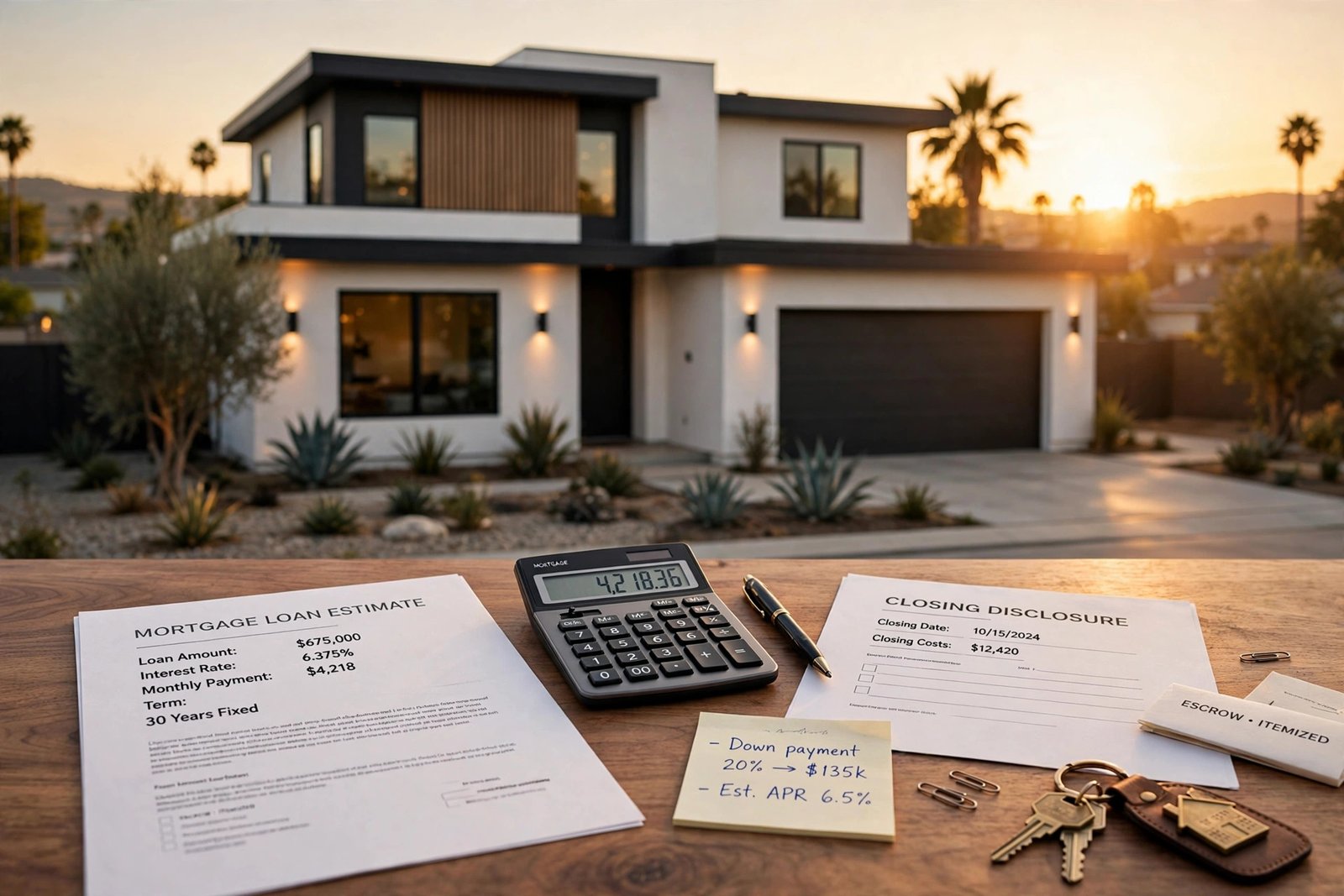
Refinancing a California mortgage in 2026 looks very different from the frenzy of 2021, when rates bottomed out and lenders were overwhelmed with applications. Today the game is slower, more deliberate, and for many California homeowners, potentially more profitable. If your current rate starts with a six or seven, a refinance could cut hundreds of dollars from your monthly payment — but only if you navigate California’s unique costs, taxes, and timing quirks the right way.
This guide walks through every step of the 2026 California refinance process: what rates look like now, how to know the math actually works for you, which loan types fit California’s pricey markets, and the state-specific traps that catch borrowers off guard.
What the 2026 Refinance Landscape Looks Like in California
Mortgage rates in 2026 have settled into a new normal — materially higher than the sub-3% era but down from the 2022–2023 peaks that froze the market. Industry watchers project the 30-year fixed hovering in the mid-6% range through much of 2026, with periodic dips into the low 6s when economic data softens. For California borrowers sitting on 7% to 8% mortgages originated during the rate spike, that’s a meaningful window.
Two dynamics make 2026 distinctive for the Golden State. First, home values in most California metros have held near record highs, which means long-time owners carry substantial equity — and equity is the currency that unlocks the best refinance terms. Second, lenders are competing hard after two lean years, so shopping around pays more than it has in years.
The rule of thumb hasn’t changed: refinancing typically makes sense when you can lower your rate by at least 0.75 to 1 percentage point, or when you’re changing the loan’s structure strategically. On a $650,000 California balance — roughly the median for recent Bay Area and coastal Southern California purchases — a single percentage point drop saves about $420 a month and over $150,000 across a 30-year term.
Know Your “Why” Before You Apply
Most California refinances in 2026 fall into one of four camps. Understanding yours keeps you from paying for a product you don’t need.
Rate-and-term refinance
The classic: same loan size, better rate or different term. This is the workhorse of 2026 and the right move if your credit has improved, your home has appreciated, or rates have fallen below what you’re paying.
Cash-out refinance
With California equity levels, cash-out refinances are surging — funding ADUs, remodels, and debt consolidation. Lenders typically cap you at 80% loan-to-value, and the new rate applies to the entire balance, so run the numbers carefully.
ARM-to-fixed conversion
Many California buyers who grabbed adjustable-rate mortgages in 2023–2024 to afford their purchase are now converting to fixed rates as those ARMs approach their reset dates. If your adjustment hits in 2026 or 2027, locking a fixed rate now may beat waiting.
Term shortening
Moving from a 30-year to a 15- or 20-year loan builds equity far faster. With California’s property values, a 15-year refinance can turn a Bay Area home into a paid-off asset while you’re still working — though the monthly payment jumps, so budget carefully.
Step-by-Step: The California Refinance Process
The mechanics mirror a purchase loan, with a few California twists. Expect 30 to 45 days from application to closing.
1. Check your credit and clean it up early
Best 2026 pricing generally requires a 740+ FICO for conventional loans. Pull your reports from all three bureaus and fix errors — a 20-point bump from removing a misreported collection can save you an eighth of a point in rate.
2. Get your home’s realistic value
Order isn’t everything, but value is: it determines your loan-to-value ratio, which drives pricing. Many 2026 California refinances qualify for appraisal waivers through Fannie Mae and Freddie Mac’s automated systems, saving you the $500–$800 appraisal fee and a week of waiting. If you get one, take it.
3. Compare at least four lenders
Get Loan Estimates from a mix of a big bank, a credit union (California credit unions like SchoolsFirst and Patelco often price sharply), an independent mortgage broker, and an online lender. Federal data consistently shows borrowers who get multiple quotes save thousands. Compare the APR and total lender fees, not just the advertised rate — California closing costs run 1–2% of the loan on average.
4. Lock strategically
Most locks run 30–60 days. In 2026’s gently trending market, a float-down option — letting you take a lower rate if one appears before closing — is worth the small fee if your lender offers it.
5. Close and fund
California refinances require a three-day right of rescission on primary residences, so funding lands a few days after you sign. Your old loan is paid off, and your first new payment is typically due on the first of the second month after closing.
California-Specific Costs and Tax Traps to Watch
The Golden State adds layers a national guide won’t mention. First, transfer taxes and recording fees: California charges modest county recording fees (typically $75–$150), and while refinances don’t trigger reassessment under Proposition 13, make sure your new loan documents don’t accidentally change title vesting in a way that does — adding or removing a borrower can be a reassessable event in rare cases.
Second, mortgage interest deductibility: California follows federal limits (interest deductible on up to $750,000 of acquisition debt), but the portion above the cap isn’t deductible on high-value homes — worth modeling with a tax professional before you cash out. If you freelance or run a business from home, it’s also worth reviewing whether you can deduct a home office on your taxes as a freelancer, since refinancing changes your interest and property-tax picture.
Third, prepayment penalties: rare on modern California conventional loans but still found in some non-QM and investor products — check your current note before assuming you can exit cleanly.
Fourth, impound/escrow quirks: California lenders often require impound accounts for property taxes and insurance at higher LTVs. If your current loan has no escrow and the new one does, your monthly payment will look bigger than the rate savings suggest — that’s not a cost increase, just a timing shift, but budget for it.
When Refinancing Is the Wrong Move
Don’t refinance just because rates dipped. Skip it if your break-even point (closing costs divided by monthly savings) stretches past how long you’ll keep the home, if your credit has slipped since origination, or if you’re planning to sell within two years. Also be cautious about restarting the 30-year clock repeatedly — “serial refinancing” keeps payments low but costs you years of equity building.
Finally, remember that a refinance is also a good moment to tidy the asset you’re borrowing against. Small upgrades that improve your home’s curb appeal on a budget can support the appraised value that your new loan-to-value ratio depends on.
How to Find the Best California Refinance Deal in 2026
Start with the Consumer Financial Protection Bureau’s mortgage resources to understand qualified-mortgage protections, use the IRS guidance on interest and tax topics to model deductibility, and check HUD’s single-family housing programs if your loan is FHA or you need counseling. Then negotiate: ask your current servicer for a “streamline” or retention offer first — keeping a customer is cheaper than finding one, and servicers sometimes match outside quotes.
Conclusion
Refinancing a California mortgage in 2026 is a math problem with a California accent: get your credit sharp, confirm your equity position, collect at least four Loan Estimates, and watch for the state’s tax and title quirks. Done right, a single refinance can save a typical California homeowner five figures in interest. Run your numbers, read every disclosure, and lock when the math, not the headlines, says go.
Frequently Asked Questions
How much does it cost to refinance a mortgage in California in 2026?
Expect 1–2% of the loan amount in closing costs — roughly $6,500 to $13,000 on a $650,000 loan. That includes lender fees, title and escrow charges, county recording fees, and possibly an appraisal ($500–$800) unless you get an appraisal waiver.
What credit score do I need to refinance in California?
Conventional refinances generally need 620 minimum, but the best rates in 2026 go to borrowers at 740+. FHA streamline refinances have more flexible requirements if your current loan is FHA.
Does refinancing trigger a Proposition 13 reassessment?
No — a straight refinance doesn’t change ownership, so your assessed value stays put. Just avoid changing how title is held (adding or removing owners) at closing without checking with your county assessor first.
Can I refinance with less than 20% equity?
Yes, but you’ll likely pay private mortgage insurance (PMI) if you go above 80% loan-to-value on a conventional loan. FHA and VA refinances have their own mortgage-insurance structures worth comparing.
How long does a California refinance take in 2026?
Most close in 30–45 days. Appraisal waivers, digital income verification, and responsive document uploads can shave that to under three weeks.