
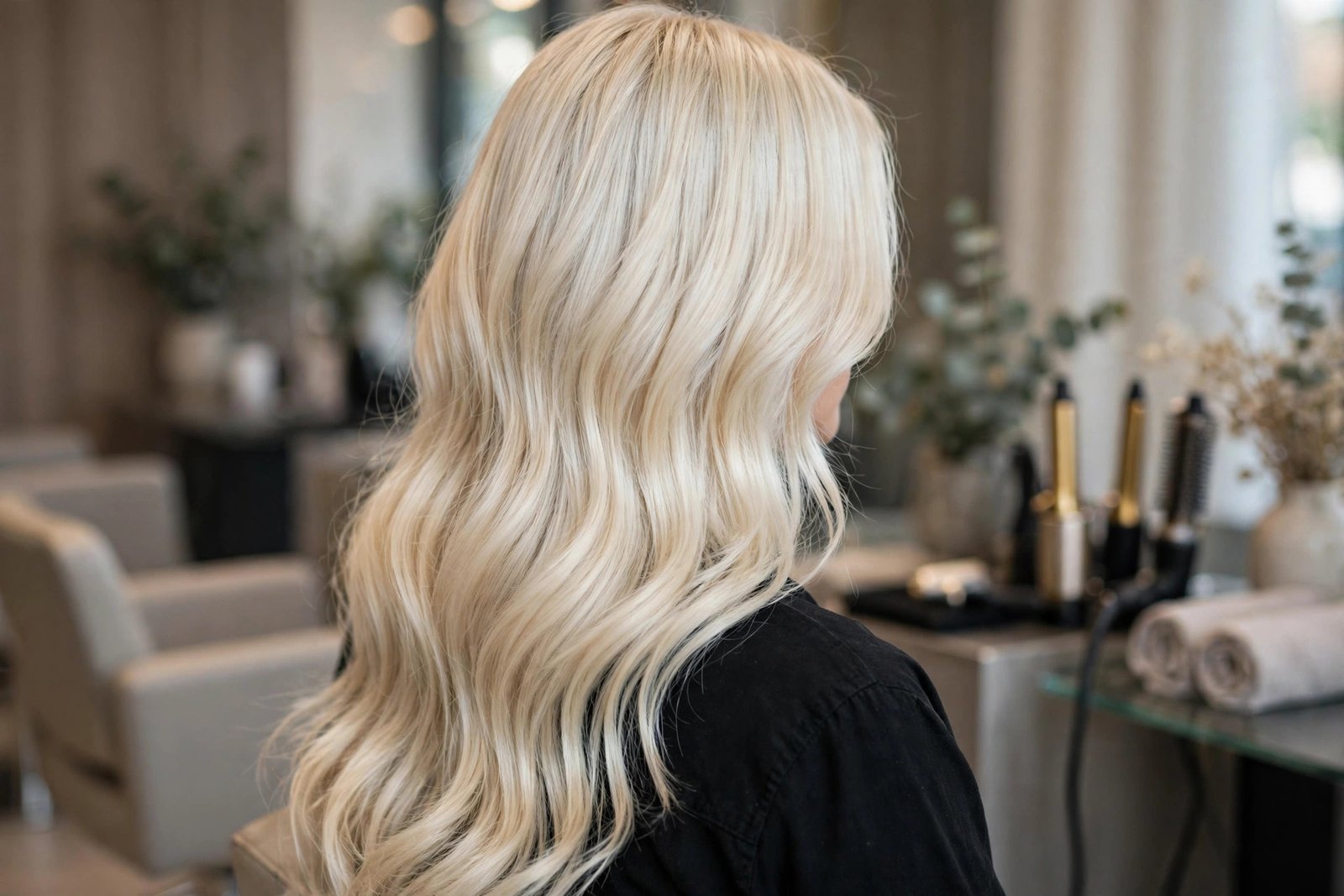
Blonde is high-maintenance by physics: lightening hair strips its natural pigment, leaving it porous and vulnerable — and porous hair grabs onto everything: minerals from water, chlorine, sun oxidation, even the wrong shampoo. The result is brassiness: those unwanted yellow, orange, and gold tones that turn expensive salon blonde into something that looks overdue for a toner.
This guide explains how to keep blonde hair from turning brassy: why it happens, the purple-shampoo rules, toners and glosses, water and heat protection, and the habits that keep blonde cool-toned between appointments.
Why Blonde Turns Brassy: The Chemistry
Lightening exposes hair’s underlying warm pigments (everyone’s hair has them — that’s why bleach goes through orange stages). Fresh from the salon, toner neutralizes those warm tones. Then life happens: UV oxidizes the hair (sun is the top brassiness accelerator), hard-water minerals (iron, copper, calcium) deposit and discolor, chlorine turns blonde green-tinged and then brassy, heat styling oxidizes toner faster, and even some shampoos and products contain ingredients that warm the tone over time.
Understanding the cause directs the fix: sun-driven brassiness needs UV protection; mineral-driven needs filtered water and clarifying; chlorine-driven needs pre-swim protection. Most blondes face all three simultaneously, which is why the full system below matters — tackling only one cause leaves the others working against you. Oxidation affects more than hair — see keeping avocados from browning for the same chemistry in your kitchen.
Purple Shampoo: Rules, Not Rituals
Purple shampoo deposits violet pigment that neutralizes yellow tones (color theory: purple cancels yellow). The rules: use 1–2x per week maximum — more frequent use over-deposits purple, leaving hair dull and lavender-tinged (the most common purple-shampoo mistake). Leave it on 3–5 minutes (not 20 — over-processing is real), focus on the most brassy areas (usually mid-lengths and ends), and follow with a good conditioner or mask (purple shampoos are drying).
Choose the right strength: light purple for maintenance, deep purple for significant brassiness. For very ashy/platinum blondes, blue shampoo (cancels orange) may suit better than purple (cancels yellow) — know which warmth you’re fighting. And purple shampoo maintains tone; it can’t create it — if your blonde is severely brassy, you need a salon toner first, then purple shampoo to maintain. Rotate with a gentle sulfate-free shampoo on other wash days; daily purple shampoo is how blondes go dull.
Toners, Glosses, and Salon Maintenance
Toner is the professional reset: a demi-permanent color that neutralizes warmth and refines tone, applied at the salon every 4–8 weeks ($50–$150 as a standalone service, often less as an add-on). Between appointments, at-home gloss treatments (clear or toned glosses like Redken Shades EQ Gloss or dpHUE) refresh tone and add shine — they’re the best at-home intervention for fading color.
Schedule reality: most blondes need full color every 8–12 weeks and toners/glosses between. Stretching appointments to save money while skipping toners is false economy — the brassiness makes the expensive color look cheap. Ask your colorist for a take-home gloss and the right purple shampoo for your specific tone; the recommendation should be personalized, not generic. Seasonal hair adjustments are normal — see transitioning for fall for the broader seasonal-refresh mindset.
Water: The Invisible Enemy
Hard water is brassiness’s silent partner: mineral deposits (especially iron and copper) discolor blonde progressively, and no amount of purple shampoo fixes mineral buildup — it needs chelating/clarifying treatments. Solutions: a shower filter ($30–$80 — reduces minerals and chlorine; the single highest-impact purchase for blondes in hard-water areas), a clarifying or chelating shampoo 1–2x monthly (removes buildup; follow with deep conditioning), and if your water is extremely hard, a salon Malibu treatment (professional mineral removal) 1–2x yearly.
Swimming: wet hair with clean water before entering the pool (saturated hair absorbs less chlorine), apply a leave-in conditioner as a barrier, wear a swim cap for serious swimmers, and rinse immediately after. Chlorine’s green tinge on blonde is copper-based — a clarifying wash post-swim prevents it from setting. Blondes who swim regularly without protection will fight a losing battle; the pre-swim routine is non-negotiable.
Heat, Sun, and Daily Habits
Heat styling oxidizes toner: always use heat protectant (it genuinely slows color fade), lower tool temperatures (blonde needs less heat than you think — try 350°F before 450°F), and reduce wash frequency (every wash fades toner; dry shampoo between washes). Sun: UV is the top brassiness driver — wear hats, use UV-protectant hair products (leave-ins with UV filters), and treat beach days like the color threat they are.
Product audit: some styling products contain ingredients that warm blonde over time — if your tone shifts after introducing a new product, suspect it. Sleep on silk or satin (reduces friction damage that makes porous hair more vulnerable), get regular trims (damaged ends grab brassiness fastest — healthy ends hold tone), and consider a filtered-water final rinse if a full shower filter isn’t feasible. How to keep blonde hair from turning brassy is a system: salon toners on schedule, purple shampoo 1–2x weekly, filtered water, heat and sun protection, and swim precautions. Do the full system consistently and the blonde stays expensive-looking.
When to See Your Colorist vs. DIY
Know the line. DIY territory: purple shampoo maintenance, at-home glosses, shower filters, heat protection, swim precautions — everything in this guide. Colorist territory: severe brassiness that purple shampoo can’t touch (needs professional toner), banding or uneven lift (needs corrective color), going significantly lighter or changing tone families (warm to ash is a colorist job), and any chemical service over previously lightened hair (overlapping bleach causes breakage — professionals know how to avoid it).
The cost-effective rhythm most colorists recommend: full appointments every 8–12 weeks, professional toners halfway between, and diligent at-home maintenance throughout. Clients who do the at-home work need fewer corrective appointments — which saves more money than skipping maintenance ever does. Build a relationship with one colorist who knows your hair’s history; blonde is a long game, and continuity beats bargain-hopping. Bring photos of your hair at its best (not just inspiration photos) so your colorist knows your target tone precisely.
Check ingredient safety information at the FDA, and browse dermatologist-reviewed explainers at Cleveland Clinic.
Frequently Asked Questions
How do I keep my blonde hair from turning brassy?
Use purple shampoo 1–2x weekly (3–5 minutes, not more), get salon toners every 4–8 weeks, install a shower filter for hard water, protect from sun and heat, and pre-wet hair before swimming. It’s a system, not a single product.
How often should I use purple shampoo?
1–2 times per week maximum. More frequent use over-deposits violet pigment, leaving hair dull and lavender-tinged. Leave on 3–5 minutes and follow with conditioner — purple shampoos are drying.
Why does blonde turn brassy?
UV oxidation, hard-water mineral deposits, chlorine, heat styling, and product buildup all warm the tone as salon toner fades. Porous lightened hair absorbs all of these faster than virgin hair.
Does a shower filter help blonde hair?
Yes — significantly in hard-water areas. Filters reduce the iron, copper, and chlorine that discolor blonde. It’s the highest-impact purchase for blondes battling mineral brassiness ($30–$80).
Purple vs. blue shampoo: which do I need?
Purple cancels yellow tones (most blondes); blue cancels orange tones (darker blondes, brunettes going lighter). Match the shampoo to the warmth you’re fighting — using the wrong one does little.