
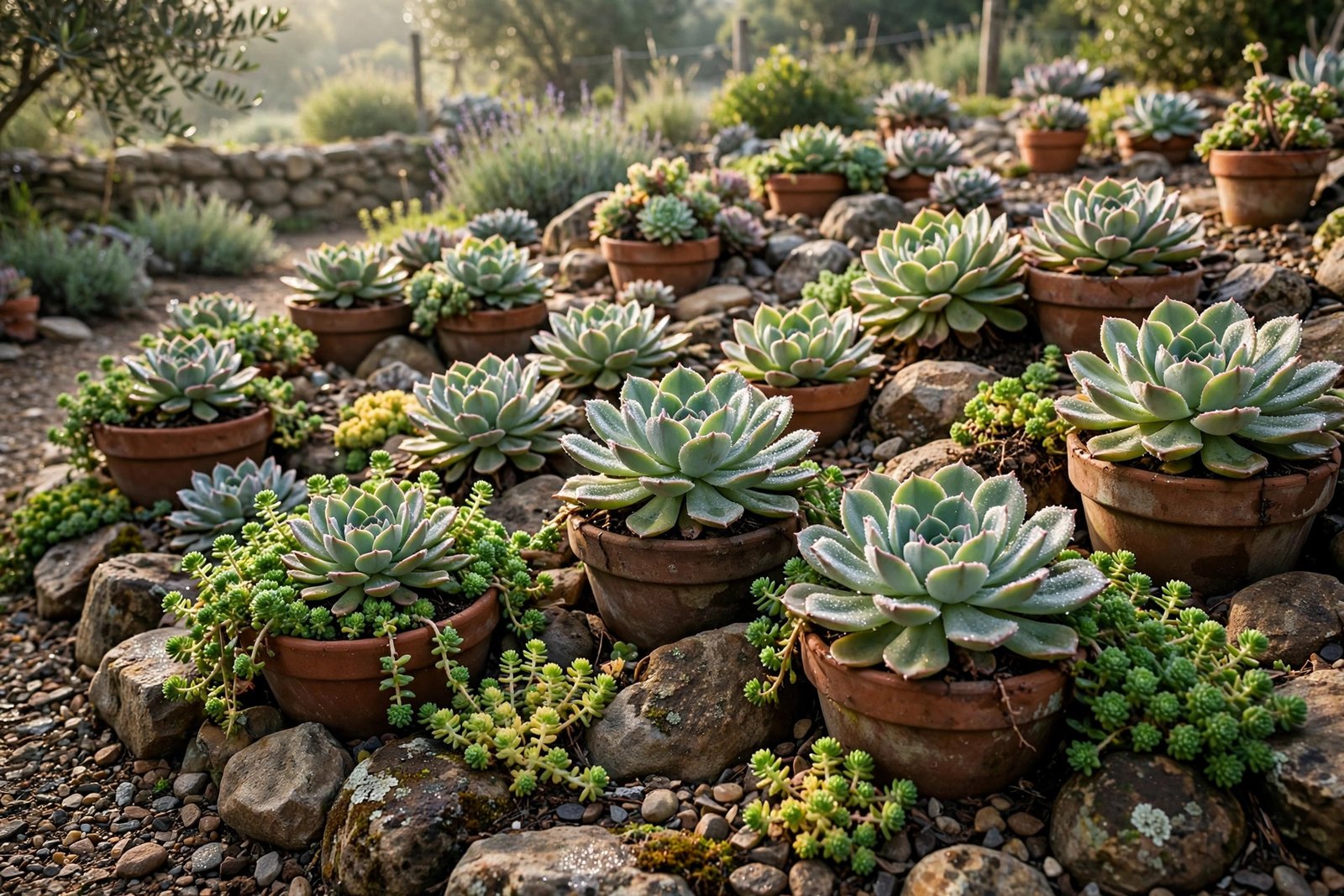
Succulents look indestructible — plump leaves, sculptural forms, the plants that thrive on neglect. And then winter arrives, and your beautiful echeveria turns to mush overnight. The truth is nuanced: many succulents are remarkably tough, surviving freezing temperatures, drought, and poor soil that would kill fussier plants. But “succulent” covers thousands of species from deserts, mountains, and coastlines worldwide, and their hardiness varies enormously. Growing them outdoors year-round is absolutely possible — if you match the plant to your climate and master the few things succulents actually demand.
How to grow succulents outdoors year round? By choosing cold-hardy varieties for your zone, engineering perfect drainage, managing sun and water seasonally, and giving winter protection where your climate demands it. Here is the complete guide.
Choose Varieties That Survive Your Winters
This is the decision that matters most. Tender succulents — echeveria, aeonium, most aloes — die below freezing and must come indoors or live only in frost-free zones (USDA zones 9–11). But a huge palette of succulents shrugs off serious cold: hens-and-chicks (Sempervivum) survive to zone 3 (−40°F), hardy stonecrops (Sedum) to zone 4, many agaves and yuccas to zone 5–7, and prickly pear cacti (Opuntia) through zone 4.
Check your USDA hardiness zone, then buy with a margin — a plant hardy to zone 6 in zone 7 has buffer for brutal winters. Local nurseries stock what survives locally; their inventory is a cheat sheet. And remember microclimates: a south-facing wall can run a full zone warmer, expanding your options dramatically. The National Gardening Association’s plant databases help verify hardiness before you buy.
Drainage: The Non-Negotiable
If succulents have one commandment, it is this: roots must never sit in water. In the ground, this means planting on slopes, in raised beds, or in amended soil — never in low spots where water pools. Amend heavy clay with 50 percent or more coarse material: pumice, perlite, or crushed gravel. The classic test: pour water on the planting area; if it has not drained within minutes, the drainage is wrong for succulents.
In containers, drainage holes are mandatory — no exceptions, no “drainage layers” of gravel (a myth that actually impedes drainage). Use a gritty mix: roughly half commercial cactus soil, half pumice or perlite. Terracotta pots outperform plastic and glazed ceramic because they breathe, wicking moisture from the soil. Outdoors year-round, elevate pots on feet so water escapes freely and winter rains do not waterlog the roots. Get drainage right and you have solved 80 percent of succulent mortality.
The Soil Recipe That Works Everywhere
A reliable all-purpose outdoor succulent mix: one part quality potting soil, one part coarse pumice or perlite, one part crushed granite or chicken grit. This drains fast, holds enough moisture for roots to drink, and does not compact over seasons. Top-dress with gravel — it keeps leaves off damp soil (preventing rot), suppresses weeds, and looks sharp. Refresh the top layer annually as it settles.
Sun, Water, and Seasonal Rhythm
Most succulents want abundant sun — six or more hours daily — but “full sun” in Phoenix differs from “full sun” in Seattle. In hot climates, afternoon shade prevents scorching; in cool coastal zones, maximum sun exposure is essential. Watch the plants: stretching (etiolation) means more light needed; bleached or brown patches mean too much, too fast. Acclimate gradually when moving plants into stronger sun.
Water deeply but infrequently — the “soak and dry” method: drench until water flows from drainage holes, then wait until the soil is completely dry before watering again. Outdoors, rainfall often suffices in wet seasons; your job is intervening during drought. In winter, most hardy succulents want to stay dry — cold plus wet is the killer combination. An overhead shelter, cold frame, or simple polycarbonate cover keeps winter rain off while allowing air flow. This seasonal attentiveness mirrors good houseplant practice generally — the same observation skills that help keep houseplants alive while traveling apply to reading outdoor succulents’ needs.
Winter Protection Strategies
For marginally hardy succulents, winter protection bridges the gap. A frost cloth (horticultural fleece) draped over plants on the coldest nights adds several degrees of protection — remove it during the day to prevent overheating and moisture buildup. Mulch with gravel (not bark, which holds moisture against stems) insulates roots while keeping drainage open.
Container succulents get VIP treatment: cluster pots together against a south-facing wall, which radiates stored heat overnight. In extreme cold snaps, move pots into an unheated garage or shed temporarily — they need cold dormancy, not tropical warmth. The goal is moderating extremes, not eliminating winter; most hardy succulents require their cold rest to thrive the following season.
Designing With Hardy Succulents
Year-round outdoor succulents shine in rock gardens, green roofs, living walls, and xeriscape borders. Combine textures: spiky agaves against soft sedum carpets, upright yuccas behind mounding sempervivum. Many hardy succulents offer winter interest — sempervivum rosettes turn ruby in cold, sedums hold structural seed heads, and some bloom spectacularly in spring.
Think in four seasons from the start: evergreen structure for winter, spring blooms, summer texture, fall color shifts. A well-designed succulent garden is not a collection of pots but a landscape — and once established, it asks less of you than a lawn while giving more back in every season.
Troubleshooting Common Problems
Even with good setup, issues arise. Mushy, translucent leaves signal overwatering or rot — unpot, trim black roots, let the plant dry for days, and repot in fresh gritty mix. Stretching (etiolation) means insufficient light; move gradually to brighter conditions, as sudden full sun scorches stressed plants. Brown crispy patches indicate sunburn — provide afternoon shade during heatwaves and acclimate slowly in spring.
Pests are usually minor outdoors: mealybugs hide in leaf joints (treat with isopropyl alcohol on a swab), and slugs occasionally chew tender new growth. Good airflow and proper spacing prevent most fungal issues. The diagnostic habit is the skill — observe weekly, act early, and remember that most succulent problems trace back to water: too much, too often, or draining too slowly. Fix the water, and the plant usually fixes itself.
Conclusion
Growing succulents outdoors year-round comes down to hardy variety selection with zone margin, ruthless drainage engineering, seasonal sun and water management, and targeted winter protection for marginal plants. Master these four, and your succulents will not merely survive the year — they will thrive through it, more beautiful each season.
Further reading: For more on this topic, see starting composting at home and Old Farmer’s Almanac planting calendars.
Frequently Asked Questions
Which succulents survive winter outdoors?
Hens-and-chicks (Sempervivum) to zone 3, hardy stonecrops (Sedum) to zone 4, many agaves and yuccas to zones 5–7, and prickly pears to zone 4. Tender types like echeveria need frost-free climates or winter shelter.
What soil do outdoor succulents need?
Fast-draining gritty mix: roughly equal parts potting soil, pumice or perlite, and coarse grit. In the ground, amend heavy soil heavily or plant in raised beds — roots must never sit in water.
How often should I water outdoor succulents?
Deeply but infrequently — soak until water drains, then wait until soil is fully dry. Outdoors, rainfall often suffices in wet seasons; intervene during droughts. In winter, keep hardy succulents mostly dry.
Do succulents need winter protection?
Hardy varieties in appropriate zones need little beyond dry conditions. Marginally hardy plants benefit from frost cloth on cold nights, gravel mulch, and sheltered placement against warm walls.