
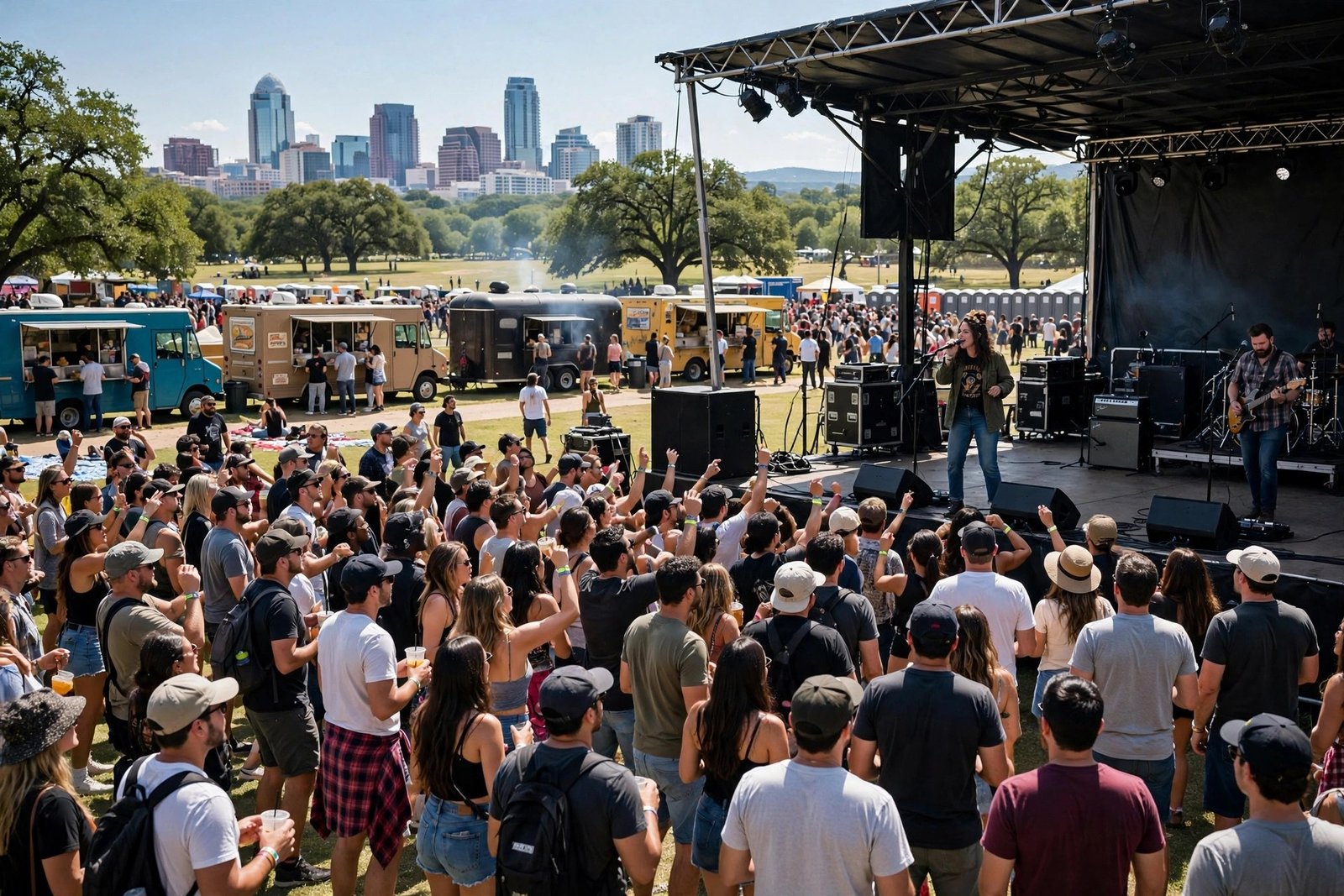
Every March, Austin, Texas becomes the center of the music universe for ten days. SXSW (South by Southwest) hosts thousands of artists across hundreds of venues — and every year, unknown artists break through: the tiny day-party set that goes viral, the showcase that lands a label deal, the chance encounter that changes everything. But with so much competition, how does an artist nobody has heard of actually get booked?
This guide covers the real paths onto SXSW stages: the official application, unofficial showcases and day parties, and the strategy that turns one trip into a career catalyst. It is competitive, but it is far from impossible.
Understand the Two SXSWs
There are really two festivals happening simultaneously. The official SXSW Music Festival — the wristbanded showcases at established venues, curated through a formal application — and the unofficial SXSW: hundreds of day parties, brand activations, and pop-up shows at bars, parking lots, and rooftops, many free and open to the public. Unknown artists most often break through the unofficial side first.
Both matter. Official showcases carry prestige and industry attendance; unofficial parties carry crowds, energy, and viral potential. Smart artists work both: apply officially, but build your trip around the unofficial circuit where access is about hustle rather than selection committees. Start by studying how the festival is organized on SXSW’s official site so you understand the structure before you plan.
The Official Application: How It Works
SXSW opens artist applications in the summer before the festival (typically June–July) through its Sonicbids-style portal. You will submit music, bio, photos, links, and performance history. A panel of industry listeners reviews every application — yes, actually listens — and selections go out in waves from fall through winter.
What gets selected? Quality and originality first, but also narrative: artists with a story, momentum, or regional buzz stand out among thousands of submissions. International artists often have an edge because SXSW values its global character. Be honest about your draw and history — the panel can spot inflation. And apply the moment applications open; early applications get more listening time before reviewer fatigue sets in.
If you do not get selected
Rejection from the official festival is the norm, not the exception — the acceptance rate is brutally low. It stings, but it changes almost nothing about your trip’s potential. Most breakout SXSW stories happened at unofficial events. Treat the official application as a lottery ticket and build your real plan around what you control.
The Unofficial Circuit: Where Unknowns Win
This is the real game. Starting in January, promoters, brands, media outlets, blogs, and collectives begin booking day parties and showcases. These range from major brand activations (free, huge crowds, real production) to a taco truck’s parking lot with a generator and a PA. Both can be career moments.
How to get on them: first, identify the parties that fit your genre — follow SXSW party announcements, Austin music media, and genre-specific blogs starting in January. Second, pitch early and professionally: a short email with streaming links, a one-line pitch, and your availability. Third, leverage every connection — ask your hometown promoters, your distributor, local press, and fellow artists who is doing what. Many bookings happen through two degrees of separation.
Fourth, consider hosting or co-hosting. Collectives of artists increasingly rent houses or partner with Austin businesses to throw their own showcases, splitting costs. It is work, but it guarantees you a stage and puts you at the center of the networking. Check the City of Austin’s official site for noise, permitting, and public-space rules if you go the DIY route.
Budgeting the Trip Without Going Broke
SXSW is expensive — that is the honest truth. Austin hotel prices quintuple during the festival, and flights spike. The artists who do it smartly: book lodging the moment dates are announced (or split an Airbnb with other artists), drive instead of fly if feasible, and eat like a local rather than a tourist. Learning to avoid tourist traps in popular cities applies double during festival week.
Budget realistically: $1,500–$3,000 per person for a full week including travel, lodging, food, and ground transport, less if you split costs aggressively. Set a hard budget before you go — the festival atmosphere encourages spending, and debt is a terrible souvenir. Many artists fund the trip through a hometown send-off show, which doubles as promotion.
Working the Week: Strategy Over Stamina
SXSW rewards strategy, not just endurance. Before you arrive, make a target list: the 20 people (bloggers, bookers, label folks, playlisters) you most want to meet, and figure out which parties they will attend. Prepare a 30-second pitch and have your music instantly playable on your phone — if someone asks to hear you, “let me find it” kills the moment.
Play every set like it is the main stage, even the 2 PM taco-truck slot — you never know who is in the crowd, and phone footage of a great small set travels further than a mediocre big one. Between sets, be a genuine participant: watch other artists, go to panels, and have real conversations. And take care of yourself — sleep, water, and vocal rest. The artists who flame out by Thursday help no one, least of all themselves.
After SXSW: Converting Buzz Into Career
The festival ends; the work begins. Within a week, follow up with every meaningful contact — a short, personal email referencing your conversation beats a mass blast. Share your best photos and videos while the SXSW hashtag still has momentum. Update your bio and press kit with “SXSW 2026 performer” (it carries weight with bookers year-round).
Most importantly, have a next step ready: a single release, a tour, a hometown show. SXSW attention evaporates fast, and artists who channel it into something concrete — rather than just posting “what a week!” — are the ones who actually level up. The festival is a catalyst, not a destination. And keep finding local live music events near you year-round back home — the relationships built in your local scene often open the SXSW doors that cold pitches cannot.
Conclusion
Getting booked at SXSW as an unknown artist means playing both games: apply officially the day applications open, then hustle the unofficial circuit starting in January with professional pitches and real relationships. Budget carefully, work the week strategically, and convert the momentum into releases and tours afterward. Thousands of unknown artists play SXSW every year — the ones who break through are not always the most talented, but they are always the most prepared.
Frequently Asked Questions
When do SXSW artist applications open?
Applications typically open in June or July of the year before the festival, with selections announced in waves from fall through winter. Apply as early as possible — early submissions get more thorough listening before reviewer fatigue sets in.
How much does it cost an unknown artist to play SXSW?
Realistically $1,500–$3,000 per person for travel, lodging, food, and ground transport for the week, less with aggressive cost-splitting. Official showcasing artists sometimes get help with lodging, but most unofficial performers cover everything themselves.
Can you play SXSW without an official showcase?
Absolutely — hundreds of unofficial day parties, brand events, and DIY showcases happen alongside the official festival, and many breakout moments happen there. The unofficial circuit is often more accessible and more fun for unknown artists than the official showcases.
Do you need a SXSW badge or wristband to perform?
Official showcasing artists receive credentials, but unofficial parties generally do not require any badge — many are free and open to the public. Do not buy an expensive badge just to attend parties; save that money for lodging and food.
What should I bring to SXSW as a performing artist?
Your instruments and essential gear, merch (it sells well), business cards or QR codes linking to your music, a phone full of charged battery for content, and comfortable shoes. Austin in March involves serious walking, and you will regret every unnecessary pound of gear.