
How to Fix a Running Toilet That Keeps Filling
Tags: How to Fix a Running Toilet That Keeps Filling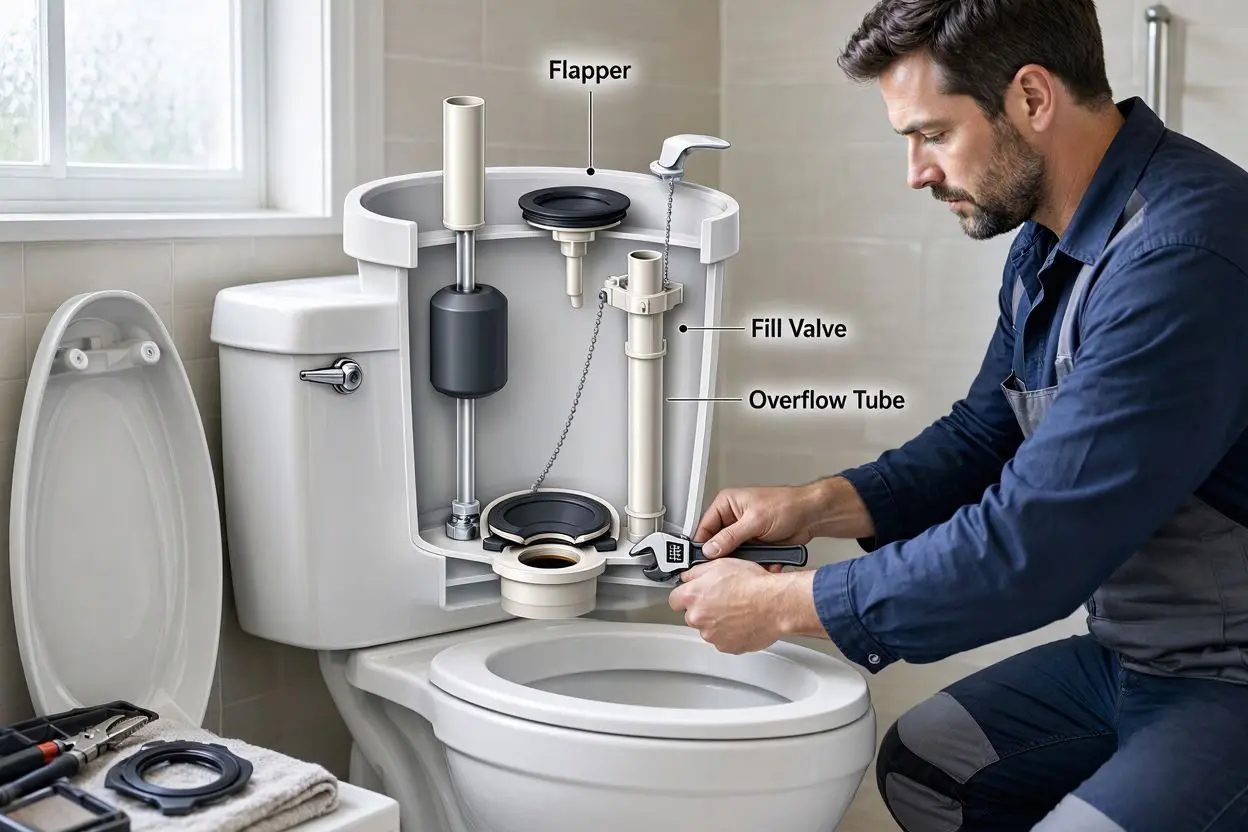
A toilet that keeps running or filling again and again is a common household plumbing problem. It may seem like a small issue, but a constantly running toilet can waste a surprising amount of water and may increase your water bill. The good news is that in many cases, you can fix the problem yourself without calling a plumber.
If your toilet keeps filling after you flush, the problem is usually related to the flapper valve, fill valve, float, or flush handle. Identifying the exact cause is the first step toward fixing a running toilet.
Why Does a Toilet Keep Running?
Before you start making repairs, it helps to understand why your toilet is continuously filling. The toilet tank is designed to fill with a specific amount of water after every flush. Once the tank reaches the correct water level, the fill valve should shut off.
If the water continues running, something is preventing the tank from reaching or maintaining the correct level.
Common causes include:
- A worn or damaged toilet flapper
- A faulty fill valve
- A float that is set too high or is stuck
- A loose or damaged flush handle
- A refill tube that is positioned incorrectly
- A leak between the tank and toilet bowl
Most of these problems are inexpensive and relatively easy to fix.
How to Fix a Running Toilet
1. Check the Toilet Flapper
The flapper is a rubber or plastic component located at the bottom of the toilet tank. It lifts when you flush and allows water to flow into the bowl. After the flush, it should create a tight seal.
Over time, the flapper can become worn, cracked, warped, or covered with mineral buildup. When it doesn’t seal properly, water slowly leaks into the bowl, causing the toilet to keep filling.
To check it:
- Remove the toilet tank lid.
- Flush the toilet and watch the flapper.
- Make sure it drops back into place after the flush.
- Check whether water continues flowing into the bowl.
- Inspect the flapper for damage or deterioration.
If the flapper looks worn or doesn’t create a proper seal, replacing it may solve the problem.
2. Adjust the Toilet Float
The float controls the water level inside the toilet tank. If the float is positioned too high, the tank may fill beyond the recommended level. Water can then flow into the overflow tube, making it appear as though the toilet is constantly running.
Look inside the tank while it is filling. If the water level rises above the recommended mark or reaches the top of the overflow tube, the float may need adjustment.
Depending on your toilet, you may have a ball float or a newer cup-style float.
For a ball float, you may be able to adjust the screw or arm connected to it. On a cup-style float, there is usually an adjustment mechanism on the fill valve.
Lower the float slightly and flush the toilet to see whether the water shuts off correctly.
3. Inspect the Fill Valve
The fill valve controls the flow of fresh water into the toilet tank. If it becomes worn out or damaged, it may fail to shut off when the tank is full.
A faulty fill valve can cause:
- Constant water flow
- A hissing sound
- Slow or repeated tank filling
- Water entering the overflow tube
If adjusting the float doesn’t solve the problem, the fill valve may need cleaning or replacement.
Before replacing it, turn off the toilet’s water supply. Flush the toilet to empty most of the water from the tank, then follow the instructions provided with the replacement fill valve.
4. Check the Flush Handle and Chain
Sometimes the problem is much simpler than a broken valve.
A loose flush handle or a chain that is too tight can prevent the flapper from closing completely. Look inside the tank and check the chain connecting the flush handle to the flapper.
The chain should have a little slack. If it is pulled too tightly, the flapper may remain slightly open.
If the handle is loose, tighten it carefully. Avoid overtightening because many toilet handle nuts are made from plastic and can crack.
5. Check the Refill Tube
The small refill tube inside the toilet tank sends water into the bowl after a flush. It should be attached to the overflow tube without being pushed too far down inside it.
If the refill tube is inserted too deeply, it can create a siphoning effect and continuously send water into the bowl.
Make sure the tube is clipped above the water level and is not submerged deep inside the overflow tube.
How to Tell If Your Toilet Has a Leak
Sometimes a running toilet is caused by a small leak that isn’t immediately obvious.
A simple way to check is to add a few drops of food coloring to the water in the toilet tank. Don’t flush the toilet for about 10 to 15 minutes.
If colored water appears in the toilet bowl, water is leaking from the tank into the bowl. In many cases, this points to a faulty flapper or another problem with the flush valve seal.
Once you finish the test, flush the toilet to remove the food coloring.
How to Replace a Toilet Flapper
Replacing a toilet flapper is one of the easiest toilet repairs for many homeowners.
First, turn off the water supply using the shutoff valve near the toilet. Flush the toilet to empty the tank.
Remove the old flapper from the overflow tube and disconnect the chain. Install the new flapper in the same position and reconnect the chain to the flush handle.
Turn the water supply back on and allow the tank to fill. Flush the toilet and check that the new flapper opens properly and then closes completely.
If the toilet stops running, the repair is complete.
How to Replace a Toilet Fill Valve
If the fill valve is defective, replacing it may be the most practical solution.
Start by shutting off the water supply and flushing the toilet. Remove any remaining water from the tank with a sponge if necessary.
Disconnect the water supply line underneath the tank. Remove the old fill valve and install the replacement according to the manufacturer’s instructions.
Reconnect the water supply and slowly turn the water back on. Adjust the new valve so that the water stops at the recommended level.
Always check for leaks around the connection after installation.
When Should You Call a Plumber?
Many running toilet problems can be fixed with basic adjustments or inexpensive replacement parts. However, you may need professional help if the toilet continues running after replacing the flapper and adjusting the fill valve.
Consider contacting a plumber if:
- The toilet tank or bowl is cracked
- Water is leaking onto the floor
- The shutoff valve doesn’t work
- The toilet is frequently overflowing
- The problem appears to involve the plumbing line
- You are uncomfortable making the repair yourself
A professional can identify hidden leaks or other plumbing problems that may not be obvious from the toilet tank.
How to Prevent a Toilet From Running Again
Regularly checking the toilet tank can help prevent future problems. Keep the tank components clean and make sure the water level is correctly adjusted.
Avoid using harsh chemical drain cleaners in the toilet because they can damage certain rubber and plastic components. If you notice a toilet becoming noisy, refilling unexpectedly, or running longer than usual after a flush, inspect it before the problem becomes worse.
Replacing an inexpensive flapper or fill valve when it begins to wear can also prevent unnecessary water waste.
Final Thoughts
Learning how to fix a running toilet that keeps filling is a useful DIY plumbing skill. In most cases, the problem comes down to a faulty flapper, incorrect float level, damaged fill valve, or a problem with the flush handle or refill tube.
Start by inspecting the easiest components first. Check the flapper, float, chain, and water level before replacing parts. With a few basic tools and the right replacement component, you can often stop a running toilet and prevent unnecessary water waste without calling a plumber.