
Introduction
Commander (also called EDH) is Magic: The Gathering’s most popular casual format — 100-card decks, one legendary commander leading your army, and multiplayer games with 40 starting life. It sounds simple until you stare at 25,000 legal cards and wonder where to start.
In this guide, I’ll show you exactly how to build a Commander deck from scratch: the rules, the deck-building formula, and the staples every beginner should own.
Direct Answer: How Do You Build a Commander Deck?
A Commander deck is exactly 100 cards with no duplicates (except basic lands), led by one legendary creature as your commander. Every card must match your commander’s color identity. A proven formula: 36–38 lands, 10–12 ramp cards, 8–10 card draw, 8–10 removal spells, 7–10 win conditions, and the rest as synergy cards that support your strategy.
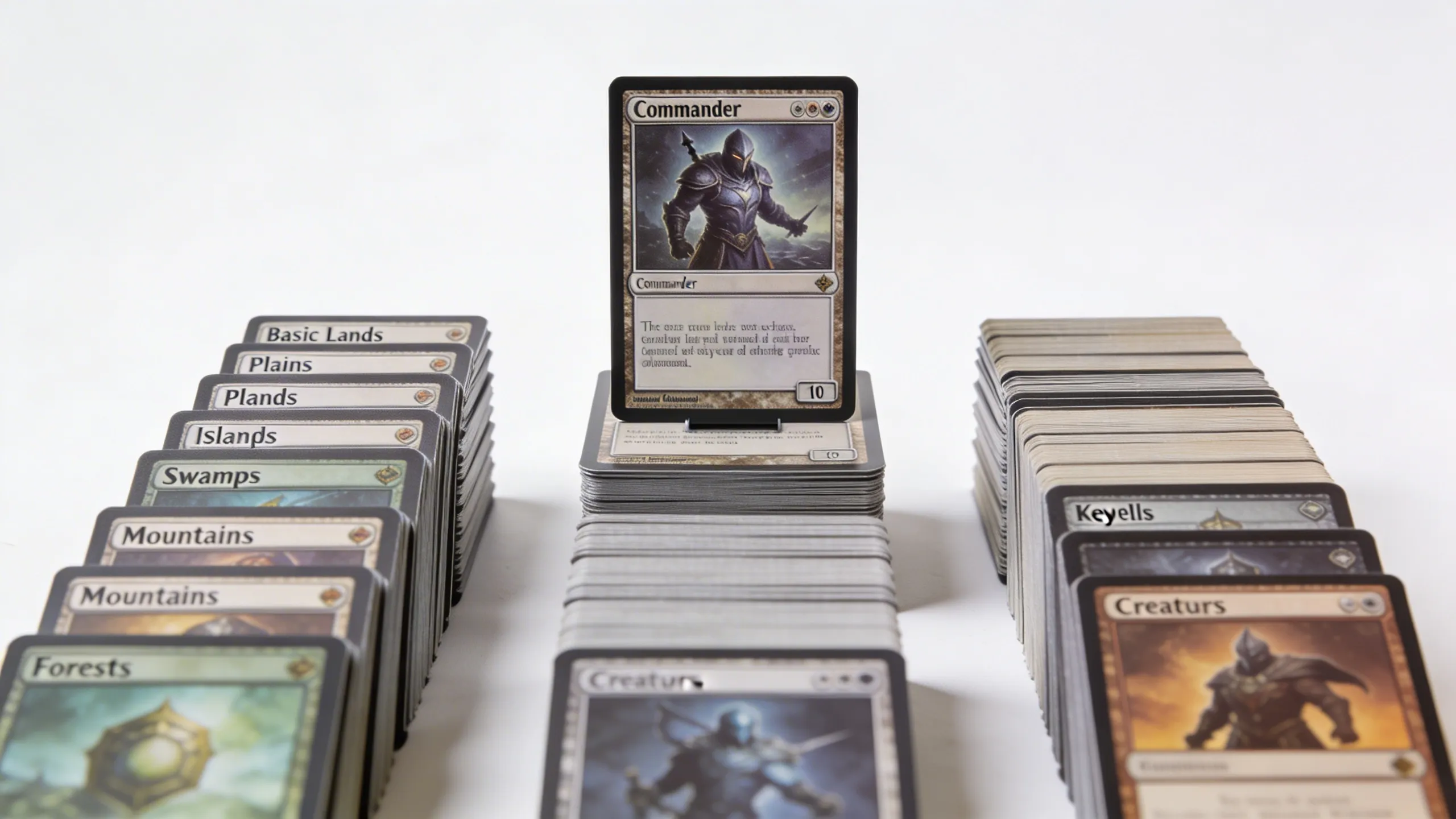
Commander Rules You Must Know
- 100 cards exactly. 99 in the main deck plus your commander, which starts in the command zone.
- Singleton. Only one copy of each card, except basic lands.
- Color identity. Every card in the deck must be within your commander’s colors.
- 40 starting life in multiplayer (instead of the usual 20).
- Commander damage. If a single commander deals 21 combat damage to you over the game, you lose.
- Commander tax. Each time you recast your commander from the command zone, it costs 2 extra colorless mana.
Step-by-Step: How to Build a Commander Deck
Step 1: Pick Your Commander
Choose a legendary creature you enjoy — your whole deck is built around it. Popular beginner picks include commanders with clear, simple game plans (tribal themes like Elves, or value engines that draw cards). Check the commander’s colors, since they lock in your whole card pool.
Step 2: Define Your Strategy
Write one sentence describing how your deck wins: “I make lots of tokens and overwhelm the table,” or “I draw cards and burn everyone out.” Every card you add should serve that plan. A deck with no plan is just 99 random cards.
Step 3: Add Your Lands (36–38)
This is where most beginners go wrong — they run too few lands and get mana screwed. Start with 36–38 lands. A quick formula: 28 + (2 × your number of colors) + your average mana value. Include lands that fix your colors (dual lands, command tower) so you can actually cast your spells.
Step 4: Add Ramp (10–12)
Ramp cards accelerate your mana — mana rocks and land-search spells. Priorities: Sol Ring and Arcane Signet first, since they work in almost any deck. Commander games go long, so you need more acceleration than in 60-card formats.
Step 5: Add Card Draw (8–10)
You need ways to refill your hand across a long multiplayer game. Include 8–10 draw engines — cards that draw when you play creatures, attack, or cast spells. Running out of gas mid-game is one of the most common ways to lose.
Step 6: Add Removal (8–10)
You must be able to answer threats — 8–10 removal spells, mixing spot removal (destroy one thing) and board wipes (reset the board). With three opponents, someone will always play something scary.
Step 7: Add Win Conditions (7–10)
Include 7–10 cards that actually close the game: big creatures, combo finishers, or alternate win effects. A deck full of value with no finishers just helps someone else win.
Step 8: Fill the Rest with Synergy
The remaining 15–20 slots are theme cards that work with your commander’s strategy. Then goldfish (playtest solo draws), tune your curve, and adjust the ratios.
Must-Have Staples for Beginners
- Sol Ring — the best mana rock ever printed; goes in nearly every deck.
- Arcane Signet — cheap, reliable mana fixing in your commander’s colors.
- Command Tower — a land that taps for any color your commander is.
- Removal staples — Swords to Plowshares, Beast Within, Chaos Warp, depending on your colors.
Tips
- Keep your mana curve low. Most of your spells should cost 4 or less — expensive cards sit dead in your hand.
- Don’t skimp on lands. 36–38 is the baseline; only drop to 34–35 with very cheap ramp and a low curve.
- Learn Rule 0. Before a game, discuss power level and house rules with your table — Commander is a social format.
- Buy a precon first. Official Commander preconstructed decks are affordable, legal out of the box, and great upgrade platforms.
Common Mistakes
- Too few lands. The #1 beginner trap. If you keep missing land drops, add more lands, not more spells.
- No removal. A deck that can’t answer threats watches someone else combo off and win.
- No win condition. Durdling with value forever loses to the first player with a finisher.
- Ignoring commander tax. Budget for recasting your commander at +2, +4, +6 mana — expensive commanders need extra ramp.
FAQs
How many lands should a Commander deck have?
36–38 in most decks. Use 28 + (2 × number of colors) + average mana value as a quick formula. Drop to 34–35 only with a low curve and heavy ramp.
Can I use any legendary creature as my commander?
Almost — it must be a legendary creature (or say “can be your commander”). Some planeswalkers qualify too.
What is the commander tax?
Each time you cast your commander from the command zone after the first, it costs 2 additional colorless mana. Third cast costs +4, and so on.
How does commander damage work?
If one commander deals 21 total combat damage to you during a game, you lose — even if your life total is higher.
Can I have duplicate cards in Commander?
No — singleton means one copy per card, except basic lands (Plains, Island, Swamp, Mountain, Forest).
What is Rule 0?
A pre-game conversation where the table agrees on power level, banned cards, and expectations. It keeps casual games fun and fair.
Should I build or buy my first deck?
Buy a precon, play it, then upgrade. It’s cheaper than building from singles and teaches you what the deck needs.
Conclusion
Building a Commander deck is easy when you follow the formula: pick a commander, define your plan, then fill 36–38 lands, 10–12 ramp, 8–10 draw, 8–10 removal, and 7–10 win conditions. Start with staples like Sol Ring and Arcane Signet, keep your curve low, and playtest. You’ll be slinging spells at the table in no time. For more card game guides, check out our beginner’s guide to Magic formats and our deck-upgrade checklist.