
How Many Calories in a Baked Potato? Complete Answer
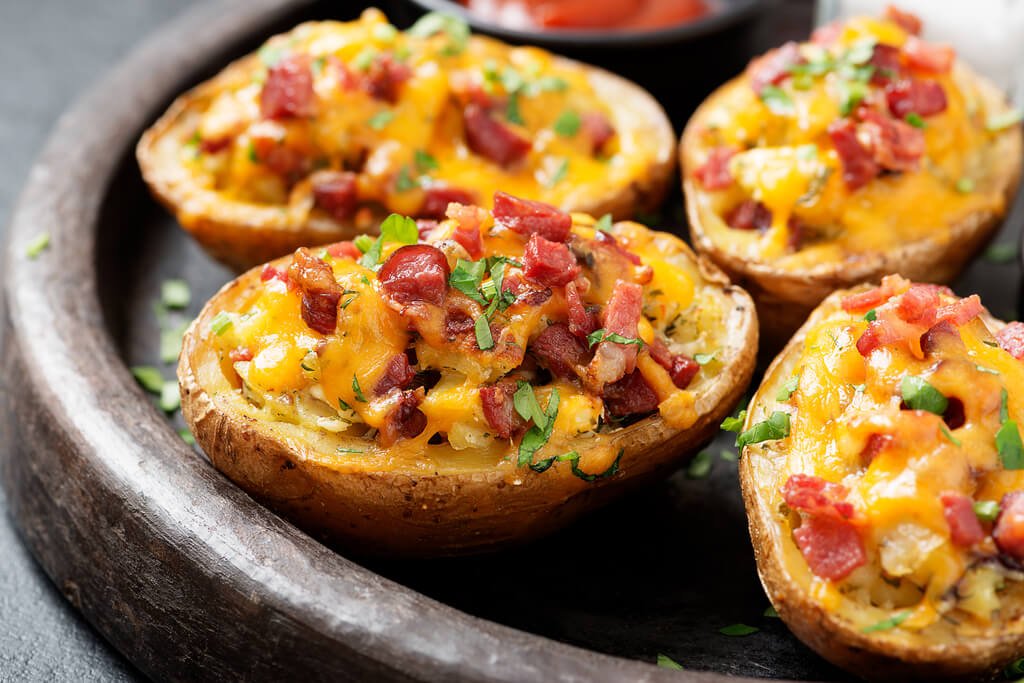
Quick answer: A medium baked potato (about 173 grams, or the size of a computer mouse) has around 161 calories. A large one has about 290 calories. Plain, with no toppings, it is a low-fat, filling food packed with potassium and vitamin C.
Baked Potato Calories at a Glance
If you just want the numbers, here they are. These counts are for a plain baked potato with the skin on and no toppings, based on data from the USDA FoodData Central.
| Potato size | Weight (approx.) | Calories |
|---|---|---|
| Small | 100 g (3.5 oz) | 93 |
| Medium | 173 g (6 oz) | 161 |
| Large | 300 g (10.5 oz) | 278 |
| Extra large (restaurant size) | 400 g (14 oz) | 371 |
Keep in mind that restaurant potatoes are often much bigger than a home-baked one. A giant steakhouse potato can easily have 350 to 400 calories before you add a single topping.
Full Nutrition Facts for a Medium Baked Potato
Calories are only part of the story. A medium baked potato (173 g, skin on) gives you:
- Calories: 161
- Fat: 0.2 g (almost none)
- Carbs: 37 g
- Fiber: 3.8 g
- Protein: 4.3 g
- Sugar: 2.2 g
- Sodium: 17 mg (very low)
- Potassium: 926 mg (about 20% of your daily needs)
- Vitamin C: 28% of your daily needs
- Vitamin B6: 25% of your daily needs
That potassium number is a big deal. One baked potato has more potassium than a banana. According to NHS guidance, starchy foods like potatoes should make up about a third of what we eat each day.
Calories by Cooking Method
The way you cook a potato changes the calorie count. Here is how a medium potato (173 g) compares across common methods:
| Cooking method | Calories | Why |
|---|---|---|
| Baked (skin on) | 161 | No oil added |
| Boiled | 150 | Water adds no calories |
| Microwaved | 161 | Same as baked |
| Roasted (1 tbsp oil) | 280 | Oil adds about 120 calories |
| French fries | 365 | Deep frying adds lots of oil |
| Mashed (with butter + milk) | 240 | Butter and milk add up |
Baking is one of the lightest ways to cook a potato. If you rub oil on the skin for crispness, add about 40 to 120 calories depending on how much you use. A light spray of oil is only about 15 calories.
How Toppings Change the Calories
The potato itself is not the problem — the toppings are. A plain baked potato is a healthy, low-fat food. But a fully loaded one can reach fast-food calorie levels. Here are the most common toppings:
| Topping | Amount | Added calories |
|---|---|---|
| Butter | 1 tablespoon | 100 |
| Sour cream | 2 tablespoons | 60 |
| Cheddar cheese | 1/4 cup shredded | 115 |
| Bacon bits | 1 tablespoon | 30 |
| Chili | 1/2 cup | 140 |
| Greek yogurt (plain) | 2 tablespoons | 20 |
| Salsa | 2 tablespoons | 10 |
| Chives | 1 tablespoon | 1 |
| Olive oil | 1 teaspoon | 40 |
Do the math: a medium potato (161) with butter (100), sour cream (60), and cheese (115) comes to 436 calories. Want the same comfort with fewer calories? Try Greek yogurt instead of sour cream and salsa instead of cheese. You will save over 150 calories. For more smart swaps, see our healthy comfort food swaps.
Sweet Potato vs. Regular Potato
People often ask how a baked sweet potato compares. A medium baked sweet potato (about 150 g) has roughly 130 calories — a little less than a white potato. It also has more vitamin A and a slightly sweeter taste. Both are healthy choices. Pick the one you enjoy more, because the best food is the one you will actually eat. Learn more from our sweet potato vs white potato comparison.
Is a Baked Potato Healthy?
Yes, a plain baked potato is a healthy food. Here is why:
- Very low fat. Less than half a gram of fat in a medium potato.
- High in fiber. The skin holds most of the fiber, so eat the skin.
- Rich in potassium. Helps keep blood pressure in a healthy range.
- Good source of vitamin C. Supports your immune system.
- Filling. Potatoes rank high on the satiety index, which means they keep you full longer.
The Wikipedia article on potatoes notes that potatoes were a staple food for entire populations for centuries — they are cheap, filling, and nutritious. The problems only start with frying and heavy toppings.
What About Blood Sugar?
Potatoes are high in carbs, so they raise blood sugar faster than some other foods. If you have diabetes or watch your blood sugar, eat a smaller potato, keep the skin on, and add protein or fat (like cheese or Greek yogurt) to slow things down. Cooling a cooked potato and reheating it also lowers its effect on blood sugar slightly.
Tips for a Healthier Baked Potato
- Eat the skin. That is where most of the fiber and nutrients live. Just scrub it well before baking.
- Swap sour cream for Greek yogurt. Same creamy feel, more protein, fewer calories.
- Use salsa or steamed veggies as toppings. They add flavor and volume for almost no calories.
- Watch the size. Restaurant potatoes can be twice the size of a medium one. Consider eating half.
- Skip the oil rub or use a light spray. You still get crispy skin with far fewer calories.
Looking for a full meal idea? Try our baked potato bar for family dinners with healthy topping choices everyone can pick from.
Common Mistakes People Make
- Counting only the potato. Always count the toppings. They often add more calories than the potato itself.
- Guessing the size. That huge steakhouse potato might be 400 calories, not 160. When in doubt, compare it to your fist — a medium potato is about fist-sized.
- Thinking all potatoes are equal. Frying, roasting in oil, and mashing with butter all add calories. Baking plain is the lightest method.
- Skipping the skin. Throwing away the skin throws away fiber, potassium, and vitamin C.
- Loading up “healthy” toppings without measuring. Even olive oil and cheese add up fast. A drizzle can turn into 200 calories before you know it.
Frequently Asked Questions
How many calories are in a baked potato with butter?
A medium baked potato with 1 tablespoon of butter has about 261 calories (161 for the potato plus 100 for the butter). Two tablespoons of butter brings it to about 361 calories.
How many calories are in a loaded baked potato?
It depends on the toppings. A typical loaded potato with butter, sour cream, cheese, and bacon has 400 to 550 calories. A large restaurant loaded potato can reach 600 calories or more.
Is a baked potato good for weight loss?
It can be. Potatoes are very filling, so a plain baked potato can keep you full on few calories. The key is to keep toppings light — Greek yogurt, salsa, and veggies instead of butter, cheese, and bacon.
Does a baked potato have more calories than a boiled potato?
Not by much. A medium baked potato has about 161 calories, while a medium boiled potato has about 150. The difference is small because neither method adds fat.
How many calories are in a baked potato from a restaurant?
Restaurant potatoes are usually extra large, so a plain one is around 350 to 400 calories. With classic toppings like butter, sour cream, and cheese, expect 600 to 800 calories.
Are the calories different if I eat the skin?
The skin itself adds only about 10 to 20 calories, but it adds a lot of fiber and nutrients. Always eat the skin if the potato is clean and well scrubbed.
How many calories are in a baked sweet potato?
A medium baked sweet potato (about 150 g) has roughly 130 calories. It is slightly lower in calories than a white potato and much higher in vitamin A.
Conclusion
So, how many calories in a baked potato? About 161 for a medium one, eaten plain with the skin on. It is a low-fat, filling, and nutritious food — the toppings are what make or break it. Keep them light, eat the skin, and enjoy one of the simplest comfort foods there is. For more nutrition guides, browse our healthy eating basics.