
Introduction
Boiled chicken breast is a simple, healthy base for soups, salads, and sandwiches. But the timing confuses a lot of cooks. Boil it too little and it is unsafe. Boil it too long and it turns dry and rubbery.
In this guide, I will give you the exact times for every type of chicken breast, show you the simple step-by-step method, and share tips that keep the meat juicy and flavourful.
Direct Answer: How Long Do You Boil Chicken Breasts?
Boil boneless, skinless chicken breasts for 12 to 15 minutes, and bone-in breasts for 25 to 30 minutes. The chicken is done when it reaches an internal temperature of 165°F (74°C) at the thickest part. Let it rest for 5 minutes before slicing.
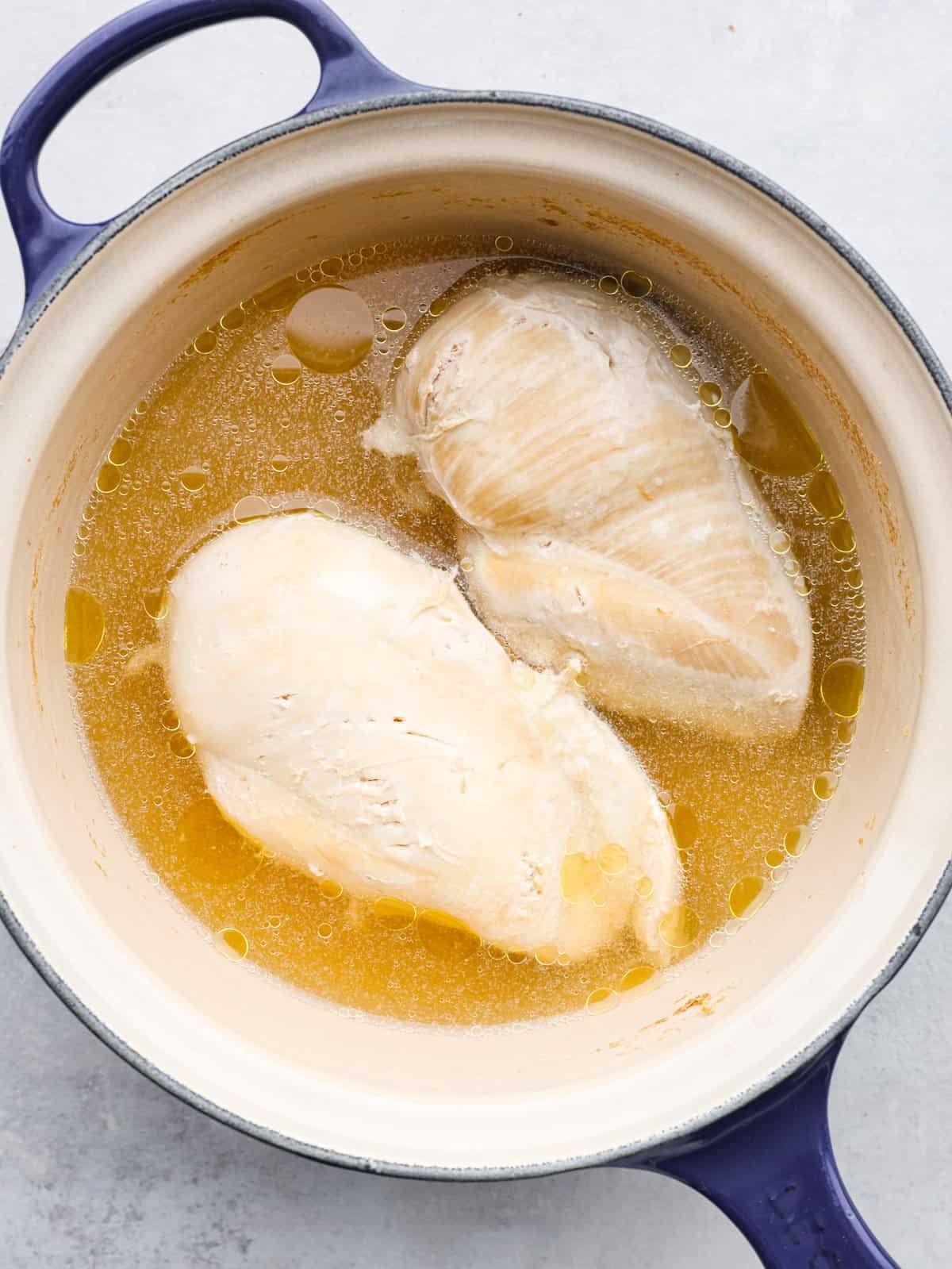
Boiling Times at a Glance
Timing depends on the size and cut of the chicken. Here are the standard times:
- Small boneless breasts (5-6 oz): 10 to 12 minutes
- Average boneless breasts (8 oz): 12 to 15 minutes
- Large boneless breasts (10-12 oz): 15 to 20 minutes
- Bone-in breasts: 25 to 30 minutes
- Frozen boneless breasts: add 8 to 10 extra minutes (20 to 25 minutes total)
These times assume the water is at a gentle boil. A hard, rolling boil can make the meat tough, so keep it gentle once the water comes up to temperature.
Step-by-Step: How to Boil Chicken Breasts
Step 1: Prepare the Chicken
Rinse the chicken breasts under cold water and pat them dry with paper towels. If some breasts are much thicker than others, pound the thick ends gently so the pieces cook evenly.
Step 2: Fill the Pot
Place the chicken in a large pot in a single layer. Add enough cold water to cover the chicken by at least 1 to 2 inches. Starting with cold water helps the chicken cook more evenly.
Step 3: Season the Water
Plain water gives plain chicken. Add flavour with:
- 1 teaspoon of salt per quart of water
- A bay leaf
- Half an onion, quartered
- A few peppercorns and a crushed garlic clove
Step 4: Bring to a Boil, Then Simmer
Bring the pot to a boil over medium-high heat. Once it boils, reduce the heat to low so the water holds a gentle simmer. Cover the pot with a lid.
Step 5: Time It
Start your timer based on the cut: 12 to 15 minutes for average boneless breasts, 25 to 30 minutes for bone-in. Do not lift the lid constantly — it drops the temperature.
Step 6: Check the Temperature
Insert an instant-read thermometer into the thickest part of the largest breast. It must read 165°F (74°C). If it is lower, simmer for 3 to 5 more minutes and check again.
Step 7: Rest and Serve
Remove the chicken from the water and let it rest on a cutting board for 5 minutes. This lets the juices settle. Then slice, shred, or dice as your recipe needs.
How to Tell When Chicken Is Done
A thermometer is the only reliable way. But these signs help too:
- No pink inside: cut into the thickest part — the meat should be white all the way through
- Clear juices: pierce the chicken and the juices should run clear, not pink
- Firm texture: properly cooked breast feels firm but springs back when pressed
If you see any pink or the juices run pink, put it back in the pot for a few more minutes.
Common Mistakes to Avoid
- Boiling at full blast the whole time. A hard boil makes chicken tough and stringy. Gentle simmer is the secret.
- Skipping the thermometer. Guessing leads to undercooked (unsafe) or overcooked (dry) chicken. A 10-dollar thermometer fixes this forever.
- Cooking uneven pieces together. A huge breast and a small one in the same pot means one is dry before the other is done. Pound thick ends flat first.
- Not resting the meat. Slicing straight out of the pot lets the juices run out. Five minutes of rest keeps it moist.
- Boiling in plain water. Salt and aromatics in the water make a big difference in flavour for almost zero effort.
Tips for Juicy Boiled Chicken
- Save the broth. The cooking liquid is now light chicken broth — strain it and use it for soup, rice, or sauces.
- Shred while warm. Two forks shred warm chicken in seconds. Cold chicken is harder to pull apart.
- Cool quickly for storage. Get leftovers into the fridge within 2 hours. They keep 3 to 4 days.
- Slice against the grain. Cutting across the muscle fibres gives tender, short bites instead of chewy strips.
For more kitchen basics, see how long to cook burgers on grill and how to defrost steak.
Frequently Asked Questions
Can I boil frozen chicken breasts?
Yes. Add 8 to 10 minutes to the normal time, so roughly 20 to 25 minutes for boneless breasts. Make sure the centre reaches 165°F (74°C). The texture is slightly less even than thawed chicken, but it is perfectly safe.
Should I start chicken in cold or boiling water?
Cold water is better. Starting cold lets the chicken heat up gradually, which cooks it more evenly from edge to centre. Dropping chicken into already-boiling water can overcook the outside before the inside is done.
Why is my boiled chicken rubbery?
Usually one of three reasons: the water was at a hard boil the whole time, it cooked too long, or it was not rested. Keep the simmer gentle, pull it at 165°F, and rest it for 5 minutes.
How do I add flavour to boiled chicken?
Season the cooking water with salt, bay leaves, onion, garlic, and peppercorns. You can also add a splash of soy sauce or a stock cube. The chicken absorbs flavour as it cooks.
How long does boiled chicken last in the fridge?
3 to 4 days in an airtight container. It also freezes well for up to 3 months — shred or dice it first so it thaws faster.
Is boiled chicken healthy?
Yes. Boiling adds no fat, and chicken breast is high in protein and low in calories. It is a favourite of meal preppers for exactly this reason.
Can I reuse the boiling water?
Absolutely. Strain it and you have a light, flavourful broth. Use it within 3 to 4 days or freeze it in portions for soups and sauces.
Conclusion
Boiling chicken breasts is easy once you know the times: 12 to 15 minutes for boneless, 25 to 30 for bone-in, always to 165°F. Start in cold seasoned water, keep the simmer gentle, and rest the meat before slicing.
Do that, and you will have juicy, safe chicken ready for any meal — plus free broth as a bonus.