
How Is AI Changing the Way Doctors Diagnose Patients?
How is AI changing the way doctors diagnose patients? Walk into a modern radiology department and you will see it: AI systems flagging suspicious spots on mammograms, prioritizing urgent scans in the worklist, and drafting preliminary reports — all before the radiologist has finished their coffee. This is not a future scenario; it is Tuesday. AI is reshaping diagnosis across specialties right now, and understanding how it works (and where its limits are) matters whether you are a patient, a clinician, or just curious about where medicine is heading.
Where AI diagnosis works today
Medical imaging: the flagship success
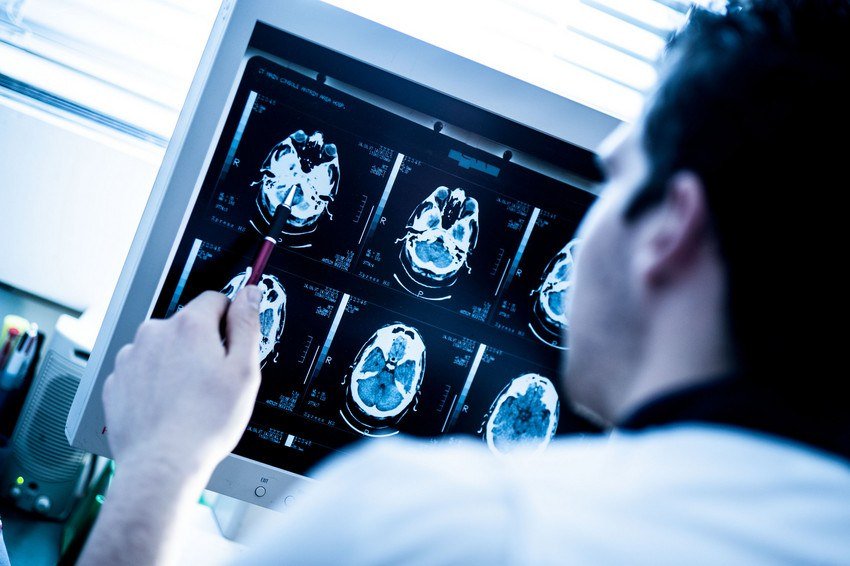
Radiology, pathology, dermatology, and ophthalmology lead because they are image-based — and AI excels at images. FDA-cleared systems now detect diabetic retinopathy in eye photos, flag strokes on CT scans in seconds, identify skin cancers from smartphone photos with dermatologist-level accuracy, and spot early breast cancers on mammograms that human eyes miss. The pattern is consistent: AI as a tireless first reader that never gets fatigued at 2 a.m., surfacing candidates for the human expert to confirm. Studies repeatedly show the combination of AI plus doctor outperforms either alone — which tells you everything about where this is heading.
Beyond images: prediction and triage
AI also works on data, not just pictures. Hospitals use machine learning to predict which patients are likely to deteriorate, who is at risk of sepsis hours before obvious symptoms, and which emergency room cases need immediate attention. These “early warning” systems quietly save lives by catching what busy humans miss. In primary care, AI scribes and symptom-checkers are changing the diagnostic conversation itself — for better and worse.
How it actually changes the doctor’s job
The fear is “AI replaces doctors.” The reality so far is “AI changes what doctors spend time on.” Three shifts stand out. First, diagnosis gets faster and more sensitive — AI catches subtle patterns across thousands of data points no human could hold in mind simultaneously. Second, the doctor’s role shifts toward judgment and communication — confirming AI findings, weighing them against the whole patient, and having the human conversations about what it all means. Third, new failure modes appear — automation bias (trusting the AI too much), alert fatigue (ignoring the AI because it cries wolf), and deskilling (losing the ability to spot what the AI misses). Good hospitals train for these explicitly; the technology is only as good as the workflow around it.
The limits and risks patients should know
- AI can be confidently wrong. The same hallucination problem affecting chatbots applies to medical AI — a system can flag the wrong region or miss the obvious while catching the subtle. Human oversight is not optional.
- Bias in training data is a health equity issue. AI trained mostly on data from one population can underperform for others — the dermatology AI trained on light skin is the canonical example. Diverse training data is a medical necessity, not a nicety.
- Regulation lags the technology. The FDA clears AI medical devices, but the pace of AI development strains traditional review. “Continuously learning” systems that update after deployment pose genuinely new regulatory questions.
- Your data is the fuel. Medical AI needs vast patient datasets. Understand who holds your health data and how it is used — the privacy questions here are even sharper than sharing info with chatbots, because health data is uniquely sensitive and valuable.
- Liability is murky. When AI contributes to a missed diagnosis, who is responsible — the doctor, the hospital, or the AI vendor? Courts and legislatures are still working this out.
How is AI changing the way doctors diagnose patients? What it means for you
Practically speaking: AI involvement in your care is increasingly likely and generally good news — it means a more thorough, less fatigued set of eyes on your case. But stay engaged. Ask your doctor how AI was used in your diagnosis if you are curious; good clinicians welcome the question. Get second opinions for major diagnoses regardless of AI involvement. And understand that AI is a tool for probability, not certainty — “the AI flagged this region” is the start of a diagnostic conversation, not the end of one.
The bigger picture
Zoom out and the trend is clear: medicine is moving from doctor-as-solo-detective to doctor-as-AI-supervised-decision-maker. The best outcomes come from the partnership — AI’s pattern recognition at scale plus human judgment, context, and accountability. Medical education is already adapting, training future doctors to work with AI critically rather than defer to it blindly. Related frontiers like AI in mental health support show the same pattern: powerful augmentation, real risks, human judgment still central.
Questions to ask your doctor about AI in your care
As AI enters more clinical settings, patients benefit from asking direct questions. “Was AI involved in my diagnosis, and how?” — a reasonable question any clinician should welcome. “What data was the system trained on, and does it work well for people like me?” — especially relevant if you belong to a group historically underrepresented in medical datasets. “What happens to my data?” — understand who holds your scans and records beyond your care team. “What is the AI’s accuracy rate for this specific task?” — vendors publish validation studies; your doctor should know the numbers. These questions are not confrontational — they make you an engaged partner in your own care, which is associated with better outcomes regardless of AI involvement.
One more thing: bring this curiosity to every AI-assisted medical encounter going forward. The technology will keep improving, but your role as an informed, questioning patient remains irreplaceable — no algorithm can advocate for you the way you can.
The bottom line
AI is changing diagnosis by making it faster, more sensitive, and more data-driven — catching things humans miss while creating new risks around bias, over-reliance, and accountability. The winning model is not AI replacing doctors but AI plus doctors outperforming either alone. As a patient, the takeaway is reassuring and empowering: your care is getting a tireless assistant, but the human doctor — with judgment, context, and responsibility — remains essential. For the technical background, AI’s expanding role in healthcare documents how far this transformation has already come.