
How Do I Write a Professional Invoice That Gets Paid on Time?

How do I write a professional invoice that gets paid on time? Here’s a sobering stat: freelancers and small businesses lose thousands yearly to late payments, and half the problem is invoices that are confusing, incomplete, or easy to ignore. A good invoice isn’t just paperwork — it’s a payment-collection tool.
I’ve sent hundreds of invoices and been paid late enough times to systematize this. The invoice itself does half the work; the process around it does the rest.
How Do I Write a Professional Invoice? The Essential Elements
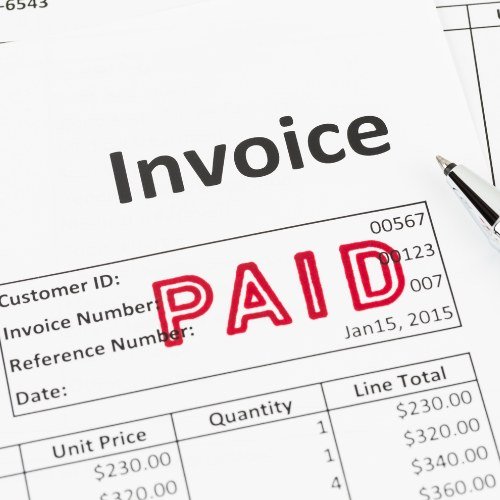
Every invoice needs: your business name, address, and contact info; the client’s name and billing address; a unique invoice number (INV-2026-001 format); issue date and due date (not ‘upon receipt’ — an actual date); itemized line items with descriptions, quantities, and rates; subtotal, taxes, and total; and payment instructions (how exactly to pay you — account details, payment link, accepted methods).
The two most-skipped elements are the due date and payment instructions — and they’re the two that most affect payment speed. ‘Due upon receipt’ is legally vague and psychologically ignorable; ‘Due November 15, 2026’ is a deadline. And if paying you requires emailing to ask how, you’ve added friction that delays every payment. Make paying you the easiest part of the client’s day. Free tools like Wave (see What is the best free accounting software for small businesses) generate all of this automatically.
Payment Terms That Speed Things Up
Terms matter enormously. Net 15 beats Net 30 — shorter terms get paid faster, full stop. For new clients, consider 50% upfront, especially on project work; it filters out non-serious clients and protects your cash flow. For ongoing work, due-on-receipt with a late fee is standard.
Late fees: state them on the invoice (‘1.5% per month on overdue balances’) — you may rarely enforce them, but their presence accelerates payment dramatically. Early-payment discounts (2/10 net 30 — 2% off if paid in 10 days) work well with corporate clients whose AP departments love capturing discounts. And always accept the payment methods clients actually use: bank transfer, card, and digital wallets. Every ‘we don’t take cards’ is a delayed payment. For collecting from US clients specifically, our What is the best way to collect payments from clients in the US guide compares the payment rails.
Invoice elements checklist:
- Unique invoice number, issue date, and a specific due date (not ‘upon receipt’).
- Itemized lines, subtotal, tax, total — no mystery charges.
- Exact payment instructions: how, where, which methods accepted.
- Payment terms: Net 15, late fee stated (1.5%/month), consider 50% upfront.
- Automated reminders at 1, 7, 14, 30 days — let the system be the bad guy.
The Follow-Up System (Without Awkwardness)
Late payment is usually disorganization, not malice — so systematize the nudges. Day 1 after due: friendly reminder (‘just checking this didn’t get lost’). Day 7: firmer, with the invoice re-attached. Day 14: phone call — calls resolve what emails don’t. Day 30: formal notice mentioning the late fee and pausing further work until caught up.
Automate this: most invoicing tools send scheduled reminders automatically, which removes the emotional burden entirely — it’s the system following up, not you nagging. And set the precedent early: clients trained to pay late in month one will pay late forever. The first invoice sets the relationship’s payment culture; make it professional and prompt, and most clients match your energy.
Preventing Payment Problems Before They Start
The best invoice is one that never goes late, and prevention starts at the contract stage: payment terms, late fees, and kill fees agreed in writing before work begins (see What should I include in a freelance contract to protect myself). Vet new clients — a quick search for reviews or payment reputation takes two minutes and has saved me from two notorious non-payers.
For large projects, milestone billing (25% upfront, 25% at midpoint, 50% on delivery — never 100% on delivery) keeps cash flowing and limits exposure. And know your escalation path: small claims court handles most freelancer non-payment efficiently ($30–$75 filing fees, no lawyer needed), and collection agencies take 25–30% but recover what you’d write off. Most disputes never get there — the system above collects 95%+ without drama.
The Bottom Line
How Do I Write a Professional Invoice That Gets Paid on Time? What Most People Get Wrong
What most freelancers get wrong: treating invoicing as an afterthought instead of a system. The invoice sent three weeks late, the follow-up that feels too awkward to send, the payment terms never discussed upfront — these aren’t minor admin lapses, they’re the direct causes of most late payment. Professional invoicing is a process: invoice same-day, terms agreed before work, automated reminders scheduled, escalation path defined. Build it once and it runs itself.
Second mistake: being embarrassed about money. The awkwardness around asking for payment is the most expensive emotion in freelancing — it delays invoices, softens follow-ups, and lets late payers drift. Reframe it: invoicing promptly and following up firmly is professional respect for your own work, and good clients expect it. The clients who react badly to professional billing practices are telling you exactly who they are. Listen, and adjust your client roster accordingly.
Offer multiple payment options on every invoice — bank transfer details, a card payment link, and digital wallet options — because every friction point in paying you delays payment. The data is clear: invoices with one-click payment links get paid dramatically faster than those requiring manual transfers. Yes, card fees cost you 3%; getting paid three weeks earlier is worth far more than 3%. Make paying you the easiest thing your client does all week.
A professional invoice has a real due date, itemized clarity, and frictionless payment instructions — plus terms agreed before work starts and automated follow-ups after. Most late payment is disorganization, not villainy; make paying easy, remind systematically, and set the payment culture with your very first invoice. The paperwork does the collecting so you don’t have to.
Getting paid on time is a system, not a personality trait: clear terms upfront, professional invoices same-day, automated reminders, firm escalation. Build the system once and the money arrives without awkwardness. Your work has value; the invoice is just the mechanism for collecting it. Use it confidently.