
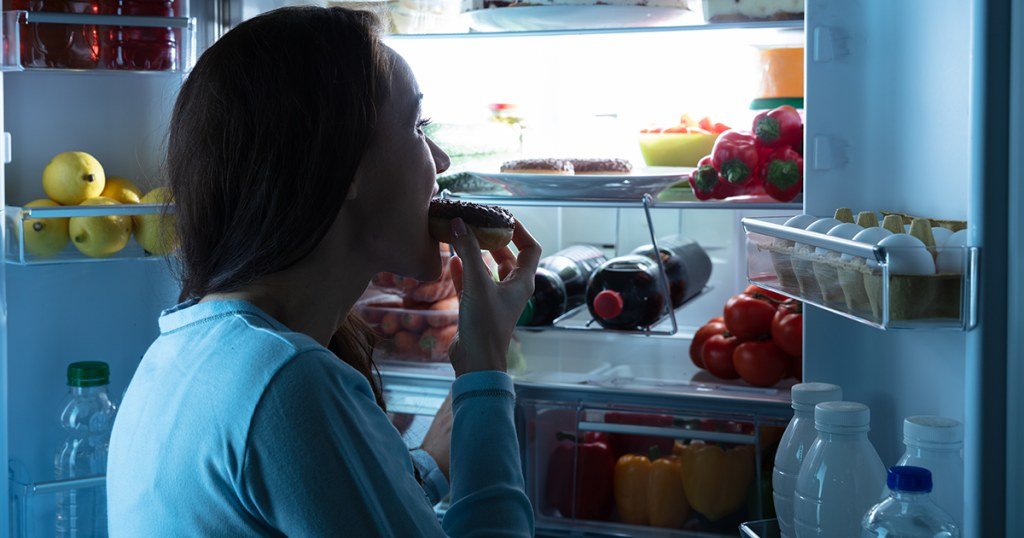
How Do I Stop Snacking Late at Night?
How do I stop snacking late at night? If you eat perfectly all day and then inhale half a pantry at 10 p.m., you are not weak — you are experiencing one of the most predictable patterns in human eating behavior. Nighttime snacking has specific biological and psychological drivers, and willpower-only approaches fail because they fight those drivers head-on. The good news: once you understand why it happens, targeted strategies work far better than white-knuckling. Here is the playbook.
Why nighttime is snacking prime time
Several forces converge after dinner: Decision fatigue — after a day of choices, your prefrontal cortex is tired and impulse control drops. The evening you is neurologically less disciplined than the morning you. Undereating earlier — the number-one driver. Skimp at breakfast and lunch, and your body demands compensation at night. Nighttime hunger is often legitimate hunger from daytime restriction. Habit loops — TV + couch + chips becomes an automatic sequence; the couch cues the craving before hunger even registers. Emotional eating — the day’s stress, boredom, or loneliness seeks soothing, and food is the fastest soother available. Hormonal shifts — ghrelin (hunger hormone) can rise in the evening, and poor sleep the night before amplifies next-day cravings, especially for high-calorie foods.
How do I stop snacking late at night? Strategy 1: eat enough during the day
This is the highest-leverage change and the one most people resist. If you are genuinely hungry at 10 p.m., the answer is usually more food earlier — particularly protein and fiber at breakfast and lunch, which stabilize blood sugar and satiety hormones all day. Add a planned afternoon snack (Greek yogurt, apple with peanut butter, handful of nuts) to bridge the dinner gap. People who fear “eating more will make me gain weight” discover the opposite: adequate daytime eating reduces total intake by preventing the nighttime binge. If weight management is the goal, the healthiest non-diet approaches work with your biology instead of against it.
Strategy 2: Redesign dinner
Dinner composition predicts nighttime snacking. A dinner of mostly refined carbs (pasta, white rice, bread) spikes blood sugar and crashes it 2-3 hours later — right at snack o’clock. Rebuild dinner around: a solid protein portion (palm-and-a-half), fiber-rich vegetables or legumes, some healthy fat, and moderate whole-food carbs. This combination digests slowly and keeps you full for 4+ hours. Also consider timing: eating dinner too early (5:30 p.m.) creates a long vulnerable window; shifting to 7 p.m. shortens it. And eat mindfully — distracted eating (TV dinner) reduces satiety signaling; you will feel less full from the same food.
Strategy 3: Break the habit loop
For purely habitual snacking (not hungry, just… snacking), disrupt the cue-routine-reward cycle: Change the routine: brush your teeth right after dinner — the minty “kitchen closed” signal is weirdly powerful. Change the environment: do not bring trigger foods into the house; you cannot eat what is not there, and the friction of going out defeats most cravings. Replace, do not just remove: herbal tea, sparkling water with lemon, or a small planned snack (see below) gives the ritual without the damage. Move the TV habit: if couch + TV = chips, try reading, a puzzle, or a walk for two weeks to decouple the association. The 10-minute rule: when a craving hits, set a timer for 10 minutes and do something engaging. Most cravings peak and fade within that window.
Strategy 4: Handle the emotions
If nighttime eating is stress or loneliness eating, food strategies alone will not fix it — you need alternative soothing. Build an evening wind-down that addresses the actual need: a hot shower or bath (physical relaxation), journaling the day’s stress out (mental offloading), calling a friend (connection), or the sleep techniques that calm a racing mind. The question to ask mid-craving: “Am I hungry, or am I feeling something?” If you would not eat an apple right now, you are not hungry — you are seeking comfort. Name the feeling; address it directly.
The planned-snack compromise
Perfection is not required. A planned, portioned evening snack beats a “no snacking” rule you break nightly — because the rule-breaking triggers the “already ruined it” binge. Good options: Greek yogurt with berries, apple with a tablespoon of peanut butter, a small handful of nuts, air-popped popcorn, or cottage cheese. Portion it in the kitchen (never eat from the bag), sit down, enjoy it. Planned snacking is not failure; it is strategy. What you are eliminating is the unplanned, unconscious eating — the standing-in-front-of-the-fridge kind.
When to look deeper
Occasional nighttime snacking is normal human behavior. But consider professional help if: you regularly eat large amounts at night feeling out of control (possible binge eating disorder or night eating syndrome — real, treatable conditions, not character flaws); nighttime eating disrupts your sleep or causes significant distress; or it is tied to depression, anxiety, or trauma responses. A therapist or registered dietitian specializing in eating behaviors can help far more than another diet plan. There is no shame in it — these patterns are common and treatable.
Rewire the evening: replacement rituals
The most durable fix is not removing the snacking ritual but replacing it with a better one. Design an evening sequence you genuinely enjoy: the tea ritual — a specific herbal blend in a favorite mug, brewed slowly; the preparation itself becomes the wind-down. The walk ritual — a 15-minute after-dinner walk aids digestion, burns glucose, and breaks the couch cue entirely. The project ritual — puzzles, reading, crafts, journaling; engaged hands do not wander to the pantry. The connection ritual — calling a friend or family member in the evening fills the loneliness that drives comfort eating. The bath ritual — warm water plus dim lights is physiologically relaxing in ways snacks only pretend to be. Pick one, practice it for two weeks until it feels like “your evening,” and watch the pantry lose its gravitational pull.
The bottom line
Stopping late-night snacking works best as a systems approach: eat adequately during the day (the root fix for true hunger), build dinners that sustain fullness, disrupt the habit loop with environmental changes, address the emotions driving comfort eating, and allow a planned snack instead of demanding perfection. Start with the daytime eating fix — it resolves a surprising majority of cases on its own. Be patient; habit loops took months to form and take weeks to rewire. For the nutrition science behind satiety, how satiety signaling works explains why protein, fiber, and mindful eating outperform willpower every time.