
How to Start a Gaming Channel on YouTube From Scratch
How Do I Start a Gaming Channel on YouTube From Scratch?
Gaming is YouTube’s biggest category, which means the opportunity is enormous and the competition is brutal. How do I start a gaming channel on YouTube from scratch in 2026 without disappearing into the void? I’ve studied channels that broke through in the last two years — not the MrBeast-level outliers, but the 10k–500k subscriber channels built by regular people — and they share a playbook. It’s not about expensive gear or viral luck. It’s about niche, consistency, and understanding what the algorithm actually rewards. Here’s the real starter guide.
Step 1: Pick a Niche (This Decides Everything)
“Gaming channel” is not a niche — it’s a continent. The channels that grow pick a specific corner: a single game (especially new or underserved ones), a format (challenge runs, no-commentary walkthroughs, lore explanations, funny moments), or an angle (budget gaming, retro games, gaming news for a specific community). The riches are in the niches because: you face less competition, the algorithm knows who to recommend you to, and viewers subscribe for a specific promise. “I post Elden Ring challenge runs” beats “I play games” every time. Validate the niche: search YouTube for it — you want existing demand (videos with views) but not saturation (every video by a million-subscriber channel).
Step 2: Gear — Start Cheap, Upgrade With Revenue
You need less than you think:
- Recording: OBS Studio is free and what most YouTubers use. Console players need a capture card (~$150 for a good one).
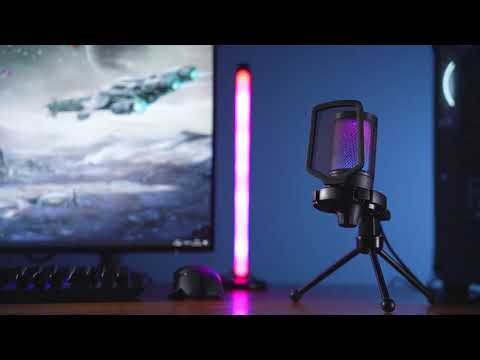
- Audio: this is where to spend first. A $70–100 USB mic (like the popular entry-level condensers) beats a $500 camera upgrade for viewer retention. Bad audio makes people click away; bad video doesn’t.
- Editing: DaVinci Resolve is free and professional-grade. Learn cuts, pacing, and captions before effects.
- Thumbnails: Canva’s free tier or Photopea (free Photoshop alternative). Bold text, expressive faces, high contrast.
Total startup cost: $0–250 if you already game on something. Don’t buy gear as procrastination — your first 20 videos will be rough regardless of equipment, and that’s fine.
Step 3: The Content Strategy That Works
Lead with searchable content
New channels grow through search and suggested videos, not subscribers (you have none). Make content people are actively looking for: guides, tutorials, “how to beat X,” game news, tier lists. A “how to” video for a new game can pull views for years. Entertainment-only content (funny moments, let’s plays) needs an existing audience — save it for later.
Consistency beats frequency
One quality video per week, every week, beats daily uploads that burn you out in a month. The algorithm rewards consistent publishing patterns and, more importantly, viewers subscribe to reliable schedules. Pick a cadence you can sustain for a year — because that’s the real timeline.
Packaging is half the battle
Title and thumbnail determine whether anyone clicks. Study what works in your niche: specific numbers, curiosity gaps, clear value propositions. “I Beat Elden Ring Without Taking Damage” outperforms “Elden Ring Gameplay Part 47” by orders of magnitude. Spend as long on the title/thumbnail as you think is reasonable, then spend longer.
Step 4: Understand the Metrics That Matter
YouTube promotes videos based on click-through rate (do people click?) and retention (do they stay?). Everything else is secondary. This means: hook viewers in the first 15 seconds (state the payoff upfront), cut ruthlessly (if a section bores you editing it, it’ll bore viewers), and end with a reason to watch the next video. Ignore subscriber count early — a channel with 500 subs and 60% retention will outgrow a 5,000-sub channel with 20% retention.
The Honest Timeline
Expect: 0–100 subs in months 1–3 (friends, luck, search trickle), 100–1,000 in months 4–9 (if you’re consistent and improving), 1,000+ (monetization threshold, also requiring 4,000 watch hours) somewhere in months 6–18. Most channels that quit do so at month 3 — right before compounding kicks in. If you’re new to gaming itself, consider documenting the learning journey — “adult learns gaming” is an underserved niche with built-in narrative.
For platform guidance, YouTube’s Creator Academy is genuinely useful, and Wikipedia’s YouTuber overview covers the industry’s evolution.
Content Ideas for New Gaming Channels
Stuck on what to make? These formats work for small channels: Beginner guides for new games — published in a game’s launch week, these ride the search wave. “I tried the hardest challenge” videos — the struggle is the entertainment. Hidden details and secrets — “10 things you missed in [game]” formats perform reliably. News and updates for a specific game community — become the trusted source for one game’s players.
Retro and niche coverage: underserved games have hungry audiences and minimal competition. Comparison and tier lists: weapons, characters, levels ranked — simple to produce, highly clickable. Story explained: lore summaries for complex games attract both players and the curious. Challenge runs with a twist: “beating the game with [absurd restriction]” — the restriction is the hook.
The common thread: specificity. Every successful small channel can be described in one sentence. “Dark Souls boss guides.” “Cozy game news.” “Speedrunning [game].” If you can’t describe your channel in one sentence, neither can the algorithm — or potential subscribers. Pick your sentence, then make 50 videos proving it. Compare notes with our console vs. PC guide if your niche involves hardware choices — tech content pairs well with gaming channels.
Avoiding Burnout: The Sustainability Guide
Most gaming channels die from burnout, not failure. Batch your work: record multiple videos in one session, edit in another — context-switching is exhausting. Build a backlog: having 2–3 finished videos banked removes the weekly panic. Take real breaks: scheduled weeks off (announced in advance) prevent the resentful grind that kills channels.
Separate playing from working: keep one game that’s just for fun, never recorded. When every gaming hour becomes content, the hobby dies — and viewers can tell. Ignore the numbers early: check analytics weekly, not hourly. Daily fluctuations are noise; trends are signal. And remember why you started: the channels that last are run by people who’d make videos even without an audience. Cultivate that intrinsic motivation deliberately — it’s the only sustainable fuel.
How Do I Start a Gaming Channel on YouTube From Scratch? Quick Answer
Pick a specific niche (one game or format), start with free tools (OBS, DaVinci Resolve) plus a decent mic, publish one searchable video per week, and obsess over titles, thumbnails, and retention. Expect slow growth for 3–6 months — most channels quit right before compounding kicks in. Commit to a year.
The Takeaway
Pick a specific niche, start with free tools and a decent mic, publish searchable content weekly, obsess over titles and retention, and commit for a year. The barrier isn’t talent or gear — it’s outlasting the 90% who quit at month three.