
How to Make a Smoothie That Actually Keeps You Full
How Do I Make a Smoothie That Actually Keeps Me Full?
We’ve all been there: a big, delicious smoothie for breakfast, and you’re raiding the pantry by 10 a.m. How do I make a smoothie that actually keeps me full? I spent years making what I now realize were just fruit milkshakes — banana, berries, juice, done — and wondering why I was starving an hour later. The problem wasn’t the smoothie concept; it was the formula. A smoothie that satisfies needs three things: protein, fat, and fiber. Miss any one of them and you’re drinking a sugar delivery system. Here’s the formula that finally kept me full until lunch, plus the recipes I rotate through.
Why Most Smoothies Fail at Satiety
A fruit-and-juice smoothie is essentially pre-chewed sugar. Without protein to slow digestion, fat to trigger fullness hormones, and fiber to add bulk, your blood sugar spikes and crashes — leaving you hungrier than if you’d eaten nothing. The fix isn’t less fruit; it’s adding the other three pillars. Think of it as building a meal in a glass, not blending a dessert.
How Do I Make a Smoothie That Actually Keeps Me Full? The Formula
Every satisfying smoothie follows this template. Pick one from each category:
Protein (aim for 20g+)
- 1 cup Greek yogurt (20g) — the MVP
- 1 scoop protein powder (20–25g)
- ½ cup silken tofu (10g, undetectable in the blend)
- 1 cup milk + 2 tablespoons peanut butter (14g)
Fat (1–2 tablespoons)
- Nut butter (peanut, almond — also adds protein)
- ¼ avocado (incredibly creamy; see our guide to keeping avocados fresh)
- A tablespoon of coconut oil or a handful of nuts
Fiber (the secret weapon)
- 1–2 tablespoons chia seeds or ground flaxseed (also add omega-3s)
- A handful of oats (blend them first for smoothness)
- Extra vegetables: spinach, frozen cauliflower (tasteless, adds creaminess), zucchini
Fruit and liquid (flavor)
1–1.5 cups frozen fruit (frozen makes it thick without ice diluting flavor), plus milk, water, or coconut water to blend. Frozen banana is the creaminess king; frozen mango and berries are runners-up.
3 Recipes That Prove the Formula
Peanut butter banana power smoothie: 1 banana, 2 tablespoons peanut butter, 1 cup Greek yogurt, 1 tablespoon chia seeds, 1 cup milk, ice. Tastes like a milkshake, keeps you full for four hours.
Green machine (that doesn’t taste green): 1 cup spinach, ½ avocado, 1 cup frozen mango, 1 scoop vanilla protein powder, 1 tablespoon flaxseed, coconut water. The mango completely hides the spinach — I promise.
Chocolate cherry recovery: 1 cup frozen cherries, 1 scoop chocolate protein powder, 1 tablespoon almond butter, 1 cup milk, handful of oats. Dessert for breakfast, minus the crash.
Mistakes That Sabotage Your Smoothie
- Juice as the base: a cup of orange juice adds 20+ grams of sugar with zero fiber. Use milk or water instead.
- Too much fruit, nothing else: three bananas and a cup of berries is a sugar bomb. Cap fruit at 1.5 cups and add your pillars.
- Skipping the fat: “low-fat” smoothies digest fast and leave you hungry. The fat is doing real work — don’t fear it.
- Protein powder overload: more than one scoop usually just adds chalky texture. One is plenty alongside yogurt or nut butter.
Make-Ahead Tricks
Smoothie packs are a lifesaver for busy mornings: portion fruit, greens, seeds, and nut butter into freezer bags on Sunday. Each morning, dump a pack in the blender, add yogurt and liquid, blend. Sixty seconds, zero decisions. Packs keep a month in the freezer.
For the nutrition science, the smoothie article on Wikipedia covers varieties, and Harvard’s Nutrition Source explains satiety and macronutrients well.
Smoothie Mistakes Even Healthy Eaters Make
Beyond the missing-macronutrient problem, a few subtler mistakes sabotage smoothies. Too-large portions: a 32-ounce smoothie can easily hit 600+ calories — fine as a meal replacement, not as a “snack” alongside breakfast. If you’re drinking it with food, keep it to 12–16 ounces. Drinking too fast: satiety signals take 15–20 minutes to register. Sipping a smoothie over half an hour keeps you fuller than chugging it in five minutes. Use a straw, take your time.
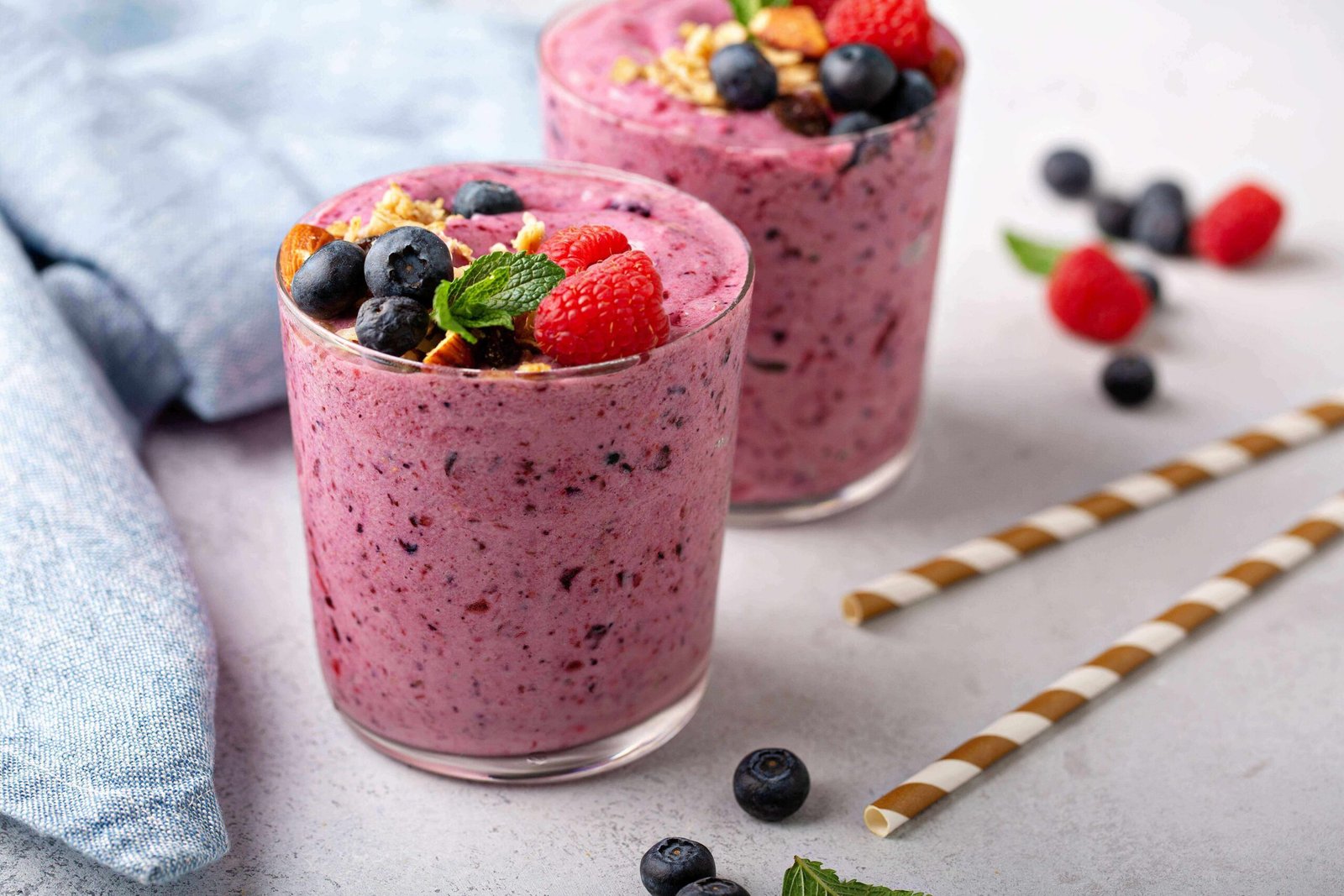
Forgetting to chew (sort of): the act of chewing contributes to fullness. Add toppings you have to chew — a sprinkle of granola, cacao nibs, or chopped nuts on top turns your smoothie into a smoothie bowl and meaningfully increases satisfaction. Same-flavor fatigue: rotating flavors prevents the boredom that kills healthy habits. Keep 3–4 recipes in rotation and switch weekly.
Protein powder pitfalls: not all powders are equal. Whey isolate blends smoothest; plant powders (pea, hemp) can be gritty — blend them longer, or choose blends formulated for smoothness. Watch for powders with 15g+ of added sugar per scoop; unflavored or lightly sweetened versions let your fruit do the sweetening. And one scoop is enough — doubling the powder usually just doubles the chalkiness without doubling the satisfaction.
Smoothies for Specific Goals
Post-workout: prioritize fast-digesting protein (whey) plus carbs (banana, mango, honey) within an hour of training — your muscles want both. Weight management: emphasize fiber and volume — more greens, more ice, chia seeds — for maximum fullness per calorie. Breakfast on the run: the full formula (protein + fat + fiber) matters most here since it’s your whole meal. Kids: hide the nutrition — spinach disappears into berry blends, cauliflower into mango, and they’ll never know.
The Texture Secret: Frozen Everything
The difference between a good smoothie and a great one is temperature and thickness. Use frozen fruit exclusively — never ice, which dilutes flavor as it melts. Frozen banana is the foundation of creaminess; freeze ripe bananas in chunks (peeled!) so they’re always ready. Add liquid gradually, starting with less than you think — you can always thin a too-thick smoothie, but you can’t un-water a thin one. Blend the greens and liquid first, then add frozen ingredients; this prevents leafy flecks and gives the blades something to work with. Thirty extra seconds of blending makes a noticeably silkier result. Thick, frosty, spoonable — that’s the target.
The Takeaway
Protein + fat + fiber + fruit = a smoothie that actually satisfies. Build every blend on that formula and you’ll stop wondering why your “healthy breakfast” never lasts. Your 10 a.m. cravings don’t stand a chance.
[…] drinks; the crash isn’t worth it when you’re behind the wheel. For longer hauls, our filling smoothie formula makes a great pre-departure breakfast that holds you for […]