
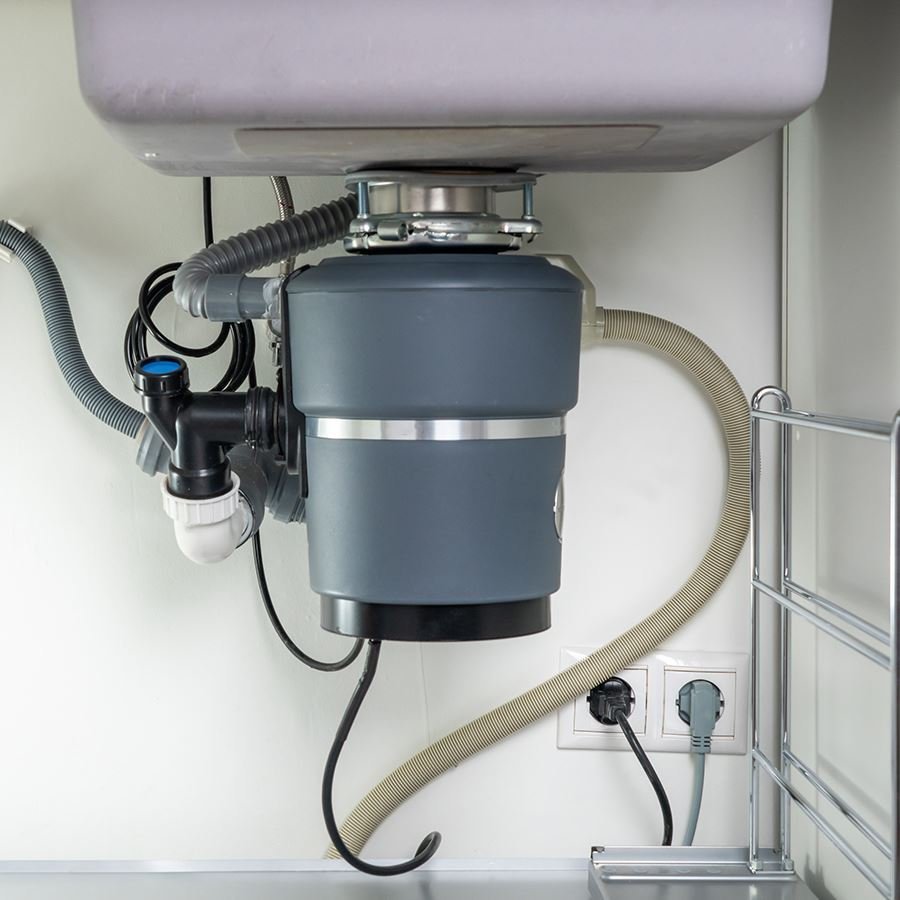
How Do I Fix a Garbage Disposal That Will Not Turn On?
You flip the switch. Nothing. No hum, no grind, just silence — and a sink full of dishes. Before you call a plumber or buy a new disposal, know this: if you’re asking how do I fix a garbage disposal that will not turn on, the fix is usually a single button press that takes ten seconds. Most “dead” disposals aren’t dead at all — they’ve just tripped their built-in reset.
Step 1: Press the Reset Button (Fixes Most Cases)
Garbage disposals have a thermal overload protector — a safety switch that trips when the motor overheats or jams. When it trips, the disposal goes completely silent.
- Turn the wall switch OFF.
- Crawl under the sink and find the small red (sometimes black) reset button on the bottom or side of the disposal unit.
- Press it firmly. If it clicks, it had tripped.
- Turn the wall switch back on and test with cold water running.
This alone fixes the majority of silent disposals. The reset trips from overload (too much food at once), running without water, or a minor jam — all normal occurrences, not malfunctions.
Step 2: Free the Jam (If Reset Doesn’t Hold)
If the disposal hums but doesn’t spin, or the reset trips again immediately, something’s jamming the flywheel:
- Turn the switch OFF and unplug the disposal (or flip its breaker). Verify it’s dead.
- Never put your hand inside. This rule has no exceptions — use tools only.
- Insert the Allen wrench (usually 1/4″, often taped to the disposal or in your junk drawer) into the hex socket on the bottom center of the unit.
- Work it back and forth to manually rotate the flywheel and dislodge the jam. You’ll feel resistance give way.
- Shine a flashlight into the drain from above and remove the obstruction with tongs or pliers — bottle caps, bones, utensils, and fruit pits are the usual suspects.
- Press the reset button, restore power, and test with cold water running.
Step 3: Check Power
If there’s no hum at all and the reset didn’t help:
- Check the breaker. Disposals can trip the circuit breaker. Reset it once — if it trips again immediately, there’s an electrical fault; call an electrician.
- Check the plug. Many disposals plug into an outlet under the sink (often controlled by the wall switch). Make sure it’s firmly seated — vibrations loosen plugs over time.
- Check the wall switch itself. Switches fail. If you have a non-contact voltage tester, verify the switch is sending power. Our light switch replacement guide covers the same safety protocol.
- Test the outlet with another device to rule out a dead receptacle or tripped GFCI.
How Do I Fix A Garbage Disposal That Will Not Turn On?
Most disposal deaths are murders, not natural causes. Never put in:
- Grease, oil, or fat — solidifies and clogs drains downstream
- Coffee grounds in quantity — they pack into sludge
- Fibrous foods: celery, artichokes, corn husks, onion skins — they wrap around the mechanism
- Starchy foods: pasta, rice, potato peels — they expand into paste
- Bones (beyond small fish/chicken bones), fruit pits, eggshells in large amounts
- Non-food items: obviously, but bottle caps and twist ties are the #1 “how did that get in there”
And always run cold water before, during, and 15 seconds after grinding — cold keeps fats solid so they flush through instead of coating pipes.
When to Replace Instead of Repair
- Age 10–12+ years with declining performance — disposals last about a decade
- Frequent resets needed — the motor is wearing out
- Leaking from the unit itself (not the connections) — internal seals have failed; replacement time
- Persistent bad smells that cleaning doesn’t fix — the grinding chamber may be damaged
- It trips the breaker repeatedly — electrical fault, not worth chasing in an old unit
Replacement cost: $80–$200 for the unit plus $150–$300 pro install, or DIY in 1–2 hours if you’re comfortable with basic plumbing and electrical connections. A 3/4 HP continuous-feed model is the sweet spot for most households.
The 30-Second Monthly Maintenance Routine
Disposals last longer with tiny regular care: weekly: grind a tray of ice cubes (sharpens the impellers and scours the chamber) followed by cold water for 30 seconds. Monthly: grind citrus peels (lemon, orange — freshens and the citric acid cuts grease), then flush with cold water. Always: run cold water before, during, and 15 seconds after use; feed food gradually, not all at once; and never run it dry. Never: use chemical drain cleaners in a disposal (they corrode the unit and can splash dangerously), put your hand inside (ever), or grind fibrous/starchy foods. This routine takes 30 seconds a week and doubles the practical life of the unit — most “worn out” disposals were actually just never maintained.
Septic Systems: Special Warning
If your home has a septic system, your disposal needs extra caution. Food waste dramatically increases the solid load on your septic tank — the EPA and most septic professionals recommend minimizing disposal use with septic: scrape plates into the trash or compost instead. Heavy disposal use means more frequent pump-outs ($300–$500 each) and risks system overload. Some jurisdictions restrict or prohibit disposals on septic entirely — check local code. If you do use one: run plenty of cold water, avoid grease absolutely (septic systems handle grease terribly), and consider an enzyme additive designed for septic systems to help break down the extra organic load. When in doubt, the trash can is the septic-safe choice.
If these steps don’t revive it, this troubleshooting guide for a disposal that won’t turn on walks through the reset button and hex-key fixes in more detail.
The Takeaway
How do you fix a garbage disposal that will not turn on? Press the red reset button under the unit (fixes most cases), free jams with the bottom Allen-wrench socket (never your hand), then check the breaker, plug, and switch. Ten minutes, zero dollars, and it’s usually running again.
And going forward: cold water always, no grease or fibrous foods, and respect the reset button — it’s saving your motor’s life. Kitchen plumbing acting up elsewhere? Our drain unclogging guide handles the sink side of things.