
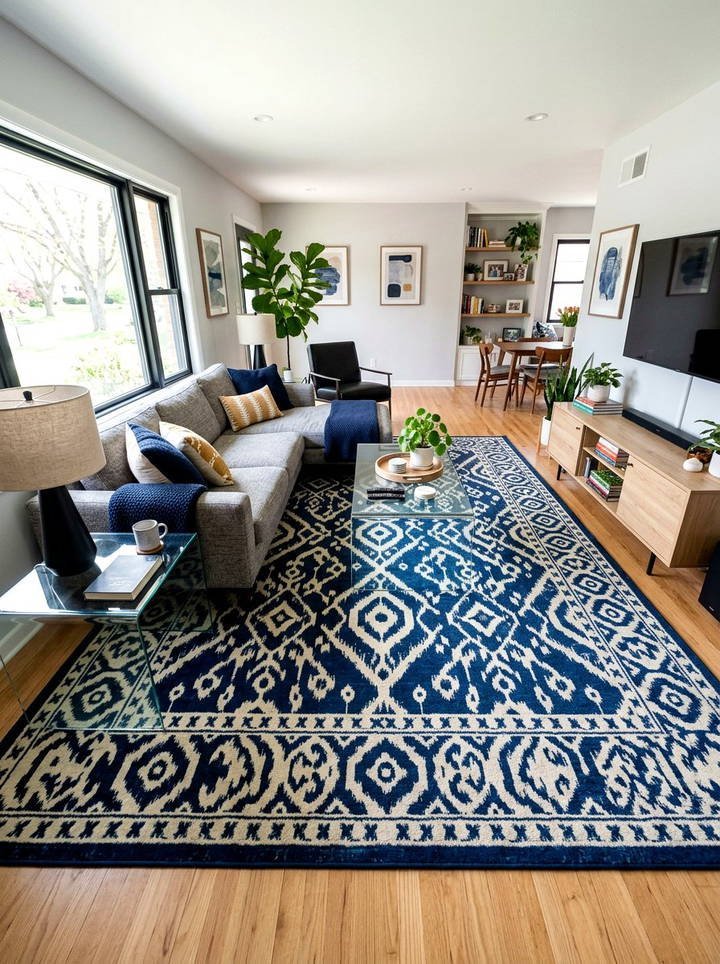
How Do I Choose the Right Size Area Rug for a Living Room?
The most common rug mistake isn’t the color or pattern — it’s the size. Walk into most living rooms and you’ll find a rug that’s too small, floating lonely in the middle of the floor like a postage stamp. Interior designers agree: when people ask how do I choose the right size area rug for a living room, the answer is almost always “bigger than you think.”
The Golden Rule: Front Legs On
The standard designer rule: at least the front legs of all main seating (sofa, chairs) should rest on the rug. This anchors the furniture grouping and makes the room feel cohesive. A rug that only sits under the coffee table, touching nothing, visually shrinks the room and looks like an afterthought.
Even better: all legs on the rug for a luxurious, intentional look — especially in larger rooms. The minimum acceptable is front-legs-on. Anything less is a bath mat with ambitions.
How Do I Choose The Right Size Area Rug For A Living Room?
- 5’x8′: small living rooms, apartments, or under a loveseat + coffee table. The minimum for a real seating area — and often too small, honestly.
- 8’x10′: the most popular living room size. Fits a standard sofa + two chairs with front legs on, plus coffee table. The safe default for average living rooms.
- 9’x12′: larger living rooms. Allows all furniture legs on the rug with room to spare. If you’re between sizes, go here.
- 10’x14′ / 12’x15′: great rooms and open-plan spaces. Defines the living zone within the larger space.
When choosing what size area rug for a living room, measure your seating arrangement first, then buy the rug to fit it — not the other way around. Leave 12–18 inches of bare floor between the rug edge and the walls (8″ minimum in small rooms). Wall-to-wall rugs defeat the purpose.
The Tape Trick: Visualize Before You Buy
Here’s the foolproof method: use painter’s tape to outline candidate rug sizes on your floor. Live with the outlines for a day. Walk around them. You’ll immediately see whether 8’x10′ swallows the room or floats awkwardly. This five-minute exercise prevents the most common rug regret. I’ve never met anyone who taped it out and bought too small — but I’ve met dozens who skipped this and did.
Special Layouts
- Open-plan spaces: the rug defines the living zone. Go large — 9’x12′ minimum — so the seating area reads as its own room. All furniture legs on.
- Sectional sofas: the rug must extend under the chaise/long section. Measure the full footprint including the chaise.
- Small rooms: don’t shrink the rug to “fit” — a larger rug actually makes small rooms feel bigger by unifying the floor. Just maintain that 8″+ border at walls.
- Fireplace focal point: center the rug on the fireplace, extending under the facing seating.
- Layering: a large natural-fiber rug (jute/sisal) with a smaller patterned rug on top is a designer trick that adds texture and lets you use a smaller “pretty” rug over a bigger affordable base.
Beyond Size: Quick Selection Notes
- Pile height: low pile for high-traffic and under furniture that moves; plusher for cozy, low-traffic zones. Doors need clearance over thick rugs.
- Material: wool (durable, naturally stain-resistant, pricey), synthetic (budget-friendly, very stain-resistant — great with kids/pets), natural fiber (texture, casual, harder to clean).
- Pattern: busy patterns hide stains and wear; solid light colors show everything. With dogs or kids, pattern is camouflage — see our best flooring for homes with dogs for the full pet-proofing picture.
- Rug pad: always use one. Prevents slipping, adds cushion, extends rug life, protects floors. $30–$80, non-negotiable.
Rug Materials: The Honest Breakdown
Wool: the gold standard — naturally stain-resistant (lanolin), durable for decades, soft underfoot, and it doesn’t show dirt. Cons: expensive ($500–$2,000+ for 8×10), sheds initially, and needs professional cleaning for big spills. Worth it for primary living spaces if the budget allows. Synthetics (polypropylene, nylon, polyester): the practical choice — very stain-resistant, affordable ($100–$400 for 8×10), and nearly indestructible. Modern synthetics look far better than the plastic-feeling rugs of the past. Best for kids, pets, and high-traffic zones. Natural fibers (jute, sisal, seagrass): beautiful texture and eco-friendly, but rough underfoot, stain permanently, and can’t get wet. Best as a layering base under a softer rug, not as the main rug. Cotton: soft, washable, affordable — but thin, wrinkles, and wears fast. Good for layering, poor as a standalone living room rug.
Vintage vs. New: The Character Question
Genuine vintage rugs (Persian, Turkish, Moroccan) bring character no new rug can match — the patina, the craftsmanship, the one-of-a-kind patterns. They’re also often better value than you’d expect: a hand-knotted vintage wool rug can cost less than a new designer synthetic, and it’ll outlast it by decades. Where to look: estate sales, reputable online vintage rug dealers (with return policies), and local rug shops’ back rooms. What to check: even wear (not threadbare in spots), no musty/mothball smell that won’t air out, fringe intact, and colors you actually like (don’t buy “investment” rugs in colors you hate). Caution: the vintage market has fakes — “vintage-style” new rugs distressed to look old. Buy from dealers who guarantee age, and remember that a good new wool rug beats a bad old one every time.
The Fireplace and TV Exceptions
Two rooms break the standard rules slightly. With a fireplace: center the rug on the fireplace and extend it at least 12 inches beyond the hearth on each side — and use a fire-resistant rug pad. Keep the rug’s edge well clear of the firebox opening; sparks and wool don’t mix. With a wall-mounted TV: the seating (not the TV) determines rug placement — anchor the sofa and chairs per the front-legs rule, and don’t stretch the rug to “reach” the TV wall. The rug defines the conversation zone; the TV just happens to be on its edge. In both cases, the principle holds: the rug serves the seating, not the focal point.
Still torn between sizes? This room-by-room rug size guide has visual examples for living rooms, dining rooms, and bedrooms.
The Takeaway
How do you choose the right size area rug for a living room? Measure your seating area, buy big enough for at least front legs of all furniture on the rug (8’x10′ for standard rooms, 9’x12′ when in doubt), leave 12–18″ of floor at the walls, and tape the outline on the floor before buying. When torn between sizes, go larger.
A correctly sized rug transforms a room more than almost any other single purchase — it just has to be big enough to do its job. Room coming together? Our room painting cost guide covers the walls to match.